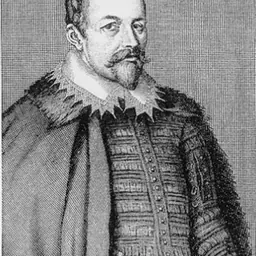
About Francis Aungier, 1st Baron Aungier of Longford
Lived 1558 – 1632 (aged 73–74). Francis Aungier, 1st Baron Aungier of Longford was an English politician.
Francis Aungier, 1st Baron Aungier of Longford (1558–1632), also known as Lord Aungier, was the progenitor of the Earldom of Longford, member of the House of Lords, Privy Councillor for Ireland and Master of the Rolls in Ireland under James I and Charles I.
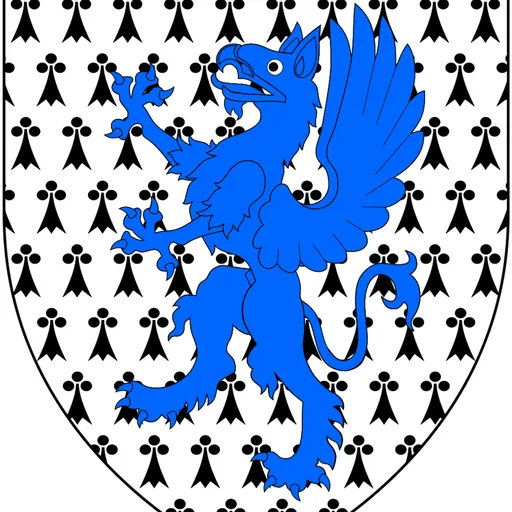
Career Youth and education, 1558-1584 Francis was born in 1558 (baptized 14 May) in Coton, Cambridgeshire, the eldest son (of six) of Richard Aungier, Esq. of Cambridge and his wife Rose, daughter of William Steward. His father Richard matriculated from Pembroke College, Cambridge in 1545, becoming an original Fellow of Trinity College, Cambridge in the following year: he was a barrister and a member of Gray's Inn (admitted 1551), as well as a substantial landowner. Richard, one of the executors of Thomas Butts in 1592, was a benefactor of Corpus Christi College, contributing to the glazing of the old chapel there: his arms (Ermine a griphon segreant azure beaked and membered or) appeared in glass later relocated to the oriel window of the college hall. Francis Aungier, his eldest son, attended Westminster School, where he was a Queen's Scholar in 1570; he was elected to Trinity College, Cambridge in 1573, where he matriculated and was admitted scholar in 1574. Admitted to Gray's Inn in 1577, and allowed admittance to his father's chambers in his absence in 1579, he was called to the bar on 17 June 1583. (His brother John Aungier followed in his footsteps to Westminster and Trinity, where he became a Senior Fellow.) He settled at East Clandon, where he became a friend of Sir William More of Loseley. The children of his first marriage were baptized at East Clandon during the 1590s, and being a governing member of that Society of long standing, was murdered in his own chambers. The body, which had been thrown into the Thames, was recovered and was buried in the chapel of St Thomas of Canterbury at East Clandon on 17 December 1597. Francis Aungier's youngest child of his first marriage was baptized at very much the same time, and Francis sat in parliament for Haslemere from September 1597 to February 1597/98. In his own profession, Francis became a member of several jurisdictions, justice of the peace for Surrey from 1592/93, and, after becoming Reader of Gray's Inn in 1602, j.p. for Guildford in 1604-1609 . He was a commissioner for the Plantation of escheated lands in Ulster proclaimed in August 1610, and in 1611, with Sir John Denham and others, he compiled the Judges' Report of existing statutes against the extolling, advancement or maintaining of the See of Rome within the Kingdom of Ireland. By 1611, he was sworn to the Privy Council for Ireland. Early in 1612 the Earl of Kildare died: the King appointed that when Gerald, his newborn heir, should reach the age of five, then Sir Francis Aungier and Donogh O'Brien, 4th Earl of Thomond should have care of his education.
Aungier became very assiduous and indefatigable in the circuits of the Assizes, being noted for his attention to detail and, where necessary, for his severity, by which he helped to implement and enforce the Plantations of Ireland. In March 1613/14, for example, he appears as Justice of Assize and Gaol Delivery for the trial of prisoners in County Cavan, province of Ulster, including one case of treason resulting in execution, but also with many acquittals. He attended the House of Lords in 1614; he served as commissioner for the Plantation of Munster in 1616 and for County Longford in 1620. In March 1615, with Sir John Davies, Attorney-General for Ireland, he conducted that important inquisition by which the spoliation of the liberties and endowments of the city of Limerick (which had been leased among themselves at low rents by members of the Corporation, at the cost of the citizenry), was identified and exposed. He advised in the inquiry begun under Arthur Chichester into the Earl of Ormonde's title in the liberties of Tipperary in 1615-1616, finding that title to be very weak: under Lord Deputy Oliver St John, as a Council signatory in February 1617 he approved commissioners for the seizure of the liberties of Waterford in readiness for its new royal charter.
Sir Francis made his third marriage in or after 1614. Margaret, a daughter of Sir Thomas Cave (died 1613) of Stanford-on-Avon, Northamptonshire, was first married to (Sir) John Wynn (c. 1584-1614), eldest son of Sir John Wynn, 1st Baronet, of Gwydir Castle (1553-1627). That marriage is said to have been unhappy, and John Wynn, who took to travelling in Italy, died at Lucca in Tuscany at a young age. Margaret then took Sir Francis Aungier as her second husband, and was his consort through his career in Ireland, but the union brought no further issue. (Having survived him, she afterwards married Sir Thomas Wenman of Dublin, provost-marshal of Munster 1629-1637.) Aungier was granted proprietorship of the town of Longford by James I around 1615; in 1617-1618 he purchased the manor of Granard in the Annaly of County Longford from Dame Mary Shane, and was granted licence to hold a second market and two fairs there.
In Dublin, Aungier's residence was in a mansion at the site of the White Friars, the dissolved Carmelite Friary. Although many accounts state that he held this in the time of Queen Elizabeth, the patent of licence for alderman Robert Ball to alienate the house and all its hereditaments to Aungier's nominee of choice, to the use of Sir Francis and his heirs forever, is dated to 1 February in the 14th year of James I (i.e. 1617/18). In 1619, briefly, during the vacancy created by the death of the Lord Chancellor of Ireland Archbishop Thomas Jones, he was jointly a commissioner of the Great Seal of Ireland with Sir William Jones and Sir William Methold, until the appointment of Adam Loftus, 1st Viscount Loftus as Chancellor. As a member of the Council of Lord Deputy Henry Cary, 1st Viscount Falkland, he subscribed to the Proclamation of 1623 for the banishing of Jesuits and priests from Ireland.
He was re-appointed Master of the Rolls for Ireland by King Charles I in 1625, who made him a further grant of lands in County Longford and County Leitrim in 1626. He was deputized Lord High Steward of Ireland in June 1628 to preside in the trial by his peers of Lord Dunboyne, who was acquitted of his indictment for manslaughter. Also in 1628 Aungier's second son Ambrose was appointed Treasurer of St Patrick's Cathedral: the next year Ambrose was inducted to a Cathedral prebend, and at about this time married Archbishop Bulkeley's daughter Grisell.
Late in 1628 Aungier took offence at the King's disparagement, before the Council in Westminster, of his testimony concerning the Earl of Cork's behaviour in Chancery: Charles, advised of Aungier's special worth, reconsidered his own words and sent him assurances of princely favour. In 1629 Lord Aungier was called to administer the oaths of governance and supremacy to Adam Loftus and Richard Boyle as Lords Justices. In 1629 and 1630 Aungier was occupied in the suit of Sir James Barrett of Castlemore, County Cork, seeking restitution of his lands at the Cork Assizes, where the jury found a corrupt verdict against him upon wholly inadequate premisses: Aungier relocated the hearings to Waterford, to obtain an acceptable verdict.
Death and estate Lord Aungier died in Dublin in 1632, leaving a will dated 1628. Subject to his wife lady Margaret's free enjoyment of estates and hereditaments designated as her jointure (including lands at Marsland in Cambridgeshire), he entailed his manors and estates in England and Ireland (in Dublin and Longford) upon his sons, first upon Gerald and upon his lawful male issue, and in default of such issue upon his son Ambrose and his male heirs; or in default, upon his son George and his male heirs; or in default, upon Francis and his male heirs. Gerald was to ensure a good conveyance was to be made to this effect, even though some of the four sons were of half-blood to the others (George and Francis being sons of his second wife). Gerald was to have all his history books and "books of discourse", Ambrose to have his divinity books, and Francis all his law books: it was evidently a worthwhile library. In 1637 one Ralph Leventhorpe, Esq., was a landowner and churchwarden in St Werburgh's parish, Dublin, living in Gun Alley, and from 1639 to 1649 he was M.P. for Ennis.
Lord Aungier requested a simple burial "in the little Chappell neere my dwellinge house in Dublin privately without funerall pompe",
Marriage and issue Aungier was married three times, and had several children through his marriages.
He married first, on 12 August 1584 at Rushbrooke, West Suffolk, to Douglas Fitzgerald ("Douglas Garret"), (died 1600), sister of the future 14th Earl of Kildare. The East Clandon register, recording her burial there on 1 June 1600, describes her as "mulier pietate, virtute et stemmate honoris florens", a woman flowering in piety, virtue and honourable descent. (Sir Ambrose Copinger (died 1604), of Dawley Court, Middlesex, a grandson of Sir Thomas Jermyn of Rushbrooke, had married Douglas's sister Lettice FitzGerald weeks previously. The names Lettice and Ambrose derived from this example, as the East Clandon register shows.) They had issue: Elizabeth Aungier (baptized 12 December 1585). She married (1) in January 1607/08, to Simon Caryll (c. 1577-1619), son of John Caryll and Lettice Lane, (2) in February 1619/20, to Richard Barne, son of Sir George Barne (died 1593) and Anne Gerrard, and (3) in February 1624/25, to John Machell (c. 1580-1647), (son of Mathew Machell and Mary Lewknor) of Great Tangley, Shalford, Surrey. Elizabeth died in 1650. Lettice Aungier (baptized 25 May 1591), (2) Sir William Danvers, and (3) Sir Henry Holcroft, Secretary for the Irish Causes. She was living in 1639, when addressed in a printed funeral sermon for her niece, and apparently so in 1649 when Holcroft made his will, of which she was an executor. Frances Aungier (baptized 2 November 1592, buried 11 November 1604), daughter. and relict of Sir Edward Carr of Hillingdon. Gerald was an accomplished student of antique and oriental languages, and both a patron and student of his near kinsman William Oughtred, who wrote very highly of him. Ambrose Aungier (baptized 12 September 1596), Thomas Aungier (baptized 27 November 1597).
He married secondly Anne Barne, daughter of Sir George Barne (died 1593) and Anne Garrard, and relict of Walter Marler, citizen and Salter of London, and had issue: George Aungier, living in 1628 (third of the four sons named in Lord Aungier's will, written 1628). he died in 1652. Robert Aungier (baptized 6 April 1609).
He married thirdly Margaret Cave, daughter of Sir Thomas Cave (died 1613) of Stanford Hall and Eleanor St. John. Margaret Cave married first, Sir John Wynn (eldest son of Sir John Wynn, 1st Baronet), who died 1614; second Sir Francis Aungier (died 1632); and third Sir Thomas Wenman of Dublin, provost-marshal of Munster. They had no issue.
Don’t just read it —
keep it.
Full-length biographies made to live with: read them, listen on the way to work, watch them tonight.
- E-book
- Audio
- Video
Instant download · yours to keep · every purchase keeps this site free
Important facts
People in Francis Aungier, 1st Baron Aungier of Longford's life
Named in this biography and alive at the same time




Related people
Same field, nearest in time

Contemporaries
People whose lives overlapped Francis Aungier, 1st Baron Aungier of Longford's


Frequently asked questions
Who was Francis Aungier, 1st Baron Aungier of Longford?
English politician
When was Francis Aungier, 1st Baron Aungier of Longford born?
Francis Aungier, 1st Baron Aungier of Longford was born in 1558 in Cambridge.
When did Francis Aungier, 1st Baron Aungier of Longford die?
Francis Aungier, 1st Baron Aungier of Longford died in 1632 in Dublin.
What was Francis Aungier, 1st Baron Aungier of Longford's occupation?
Francis Aungier, 1st Baron Aungier of Longford was a politician.
What nationality was Francis Aungier, 1st Baron Aungier of Longford?
Francis Aungier, 1st Baron Aungier of Longford was English.
Sources & further reading
· Wikipedia: Francis Aungier, 1st Baron Aungier of Longford
· DBpedia: Francis Aungier, 1st Baron Aungier of Longford
Cite this page
APA: Biography.guide. (2026). Francis Aungier, 1st Baron Aungier of Longford. https://biography.guide/francis-aungier-1st-baron-aungier-of-longford/
MLA: "Francis Aungier, 1st Baron Aungier of Longford." Biography.guide, https://biography.guide/francis-aungier-1st-baron-aungier-of-longford/.
Chicago: "Francis Aungier, 1st Baron Aungier of Longford." Biography.guide. https://biography.guide/francis-aungier-1st-baron-aungier-of-longford/.
Data last updated: 2026-09-22 · Spot an error? Report a correction.
Portrait: Wikimedia Commons · author & licence
Page generated 2026-09-27 05:04 UTC