
About Francesco Zirano
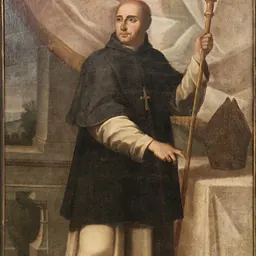
Lived 1564 – 1603 (aged 38–39). Francesco Zirano was an Italian catholic priest and monk.
Francesco Zirano, OFM Conv. (1565 – 25 January 1603) was a Roman Catholic priest from Sardinia and a professed member of the Order of Friars Minor Conventual. He is recognized as a martyr in the Catholic Church. Born and raised in Sardinia, he became an ordained priest in 1586. When Barbary pirates abducted and enslaved his cousin, Zirano raised funds over the course of several years to pay the ransom for his cousin's freedom. He traveled to Algiers in 1602 and helped four Christian slaves escape to freedom, but soldiers later targeted and imprisoned him. The Grand Council of Algiers sentenced him to death for his role in helping the slaves escape and for being a spy for the city's enemies, but his captors offered to spare his life if he would convert to Islam. He refused, and they executed him by flaying.
Zirano's beatification cause commenced in 1731, and Pope Francis eventually approved him for beatification in 2014. Cardinal Angelo Amato presided over his beatification in Sassari on 12 October 2014.
Biography Early life Zirano was born in about 1564 in Sassari, in the Kingdom of Sardinia (once part of Spain and today Italy) to a family of modest farmers. Historians have not been able to discover the name of his father, who they believe died in a plague epidemic that claimed twenty thousand victims in Sassari in 1582. His mother, Margherita, lived until 1598. He most likely had two sisters and one brother. At the age of about 33, official papers described him as "a man [...] of short stature, black eyes, and brown beard." In an era where the majority of the population was illiterate, it was exceptional when he began receiving an education from the monastery of Santa Maria di Betlem at the age of 14.
In 1580, Zirano became a professed member of the Order of Friars Minor Conventual, and received his ordination to the priesthood in 1586 at the Cathedral of San Nicola from the Archbishop of Sassari Alfonso de Lorca.
In Sardinia, the right to arrange for the ransom of captives was reserved for members of the Order of the Blessed Virgin Mary of Mercy, so in late 1597 or early 1598, Zirano presented a petition to Pope Clement VIII in late 1597 to be granted the right to raise funds to pay the 200 scudi in ransom that Serra's master demanded in exchange for his freedom. Zirano also wanted to raise funds to free other Christian slaves in the area.
In Algiers, the situation was tense due to the anticipated war with the Kingdom of Kuku. Word reached the city that a large number of Spanish warships had been spotted near the island of Ibiza east of Spain. When Algerian authorities arrested a smuggler from Kuku within the city, they discovered letters written by Matteo de Aguirre, addressed to Zirano as well as to other Christians in Algiers. Zirano was added to a list of people who were searched for to be captured in the city, but he remained safely on the outskirts of the city. He helped four Christian slaves escape from their masters, and returned to Kuku with them in September. However, on the way to the port city of Azeffoun, the soldiers who were escorting him through the mountains deserted him, possibly as part of a plot to betray him to Algerian soldiers. and he was held for a ransom of three thousand gold ducats, However, the Pasha refused, hoping to receive the ransom for Zirano himself. After several days of disagreement, the Janissaries and the Pasha agreed to have the Grand Council of the city decide Zirano's fate.
Death After being informed of the sentence, Zirano's captors offered him freedom if he converted to Islam, which he refused.
In 1926, the postulator general, Giuseppe Vicari, requested all of the available information about Zirano from the provincial minister of Sardinia. After World War II, a new postulator, Antonio Ricciardi, attempted to advance the process, but was instructed to seek further documents. Cardinal Angelo Amato presided over the beatification on the pope's behalf in Sassari on 12 October 2014. In attendance was the Sassari Archbishop Paolo Maria Virgilio Atzei and the then-Archbishop of Algiers Ghaleb Moussa Abdalla Bader. The postulator for this cause is the Conventual Franciscan priest Angelo Paleri.
Don’t just read it —
keep it.
Full-length biographies made to live with: read them, listen on the way to work, watch them tonight.
- E-book
- Audio
- Video
Instant download · yours to keep · every purchase keeps this site free
Important facts
Related people
Same field, nearest in time


Contemporaries
People whose lives overlapped Francesco Zirano's




Frequently asked questions
Who was Francesco Zirano?
Sardinian catholic priest
When was Francesco Zirano born?
Francesco Zirano was born in 1564 in Sassari.
When did Francesco Zirano die?
Francesco Zirano died on 25 January 1603 in Algiers.
What was Francesco Zirano's occupation?
Francesco Zirano was a catholic priest and monk.
What nationality was Francesco Zirano?
Francesco Zirano was Italian.
Sources & further reading
Cite this page
APA: Biography.guide. (2026). Francesco Zirano. https://biography.guide/francesco-zirano/
MLA: "Francesco Zirano." Biography.guide, https://biography.guide/francesco-zirano/.
Chicago: "Francesco Zirano." Biography.guide. https://biography.guide/francesco-zirano/.
Data last updated: 2026-09-20 · Spot an error? Report a correction.
Page generated 2026-09-27 05:02 UTC