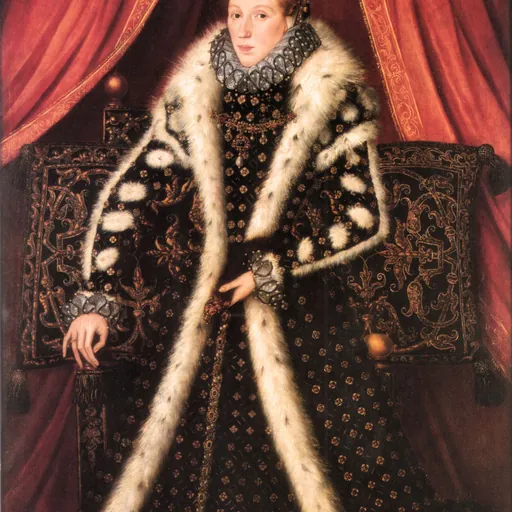
Frances Radclyffe, Countess of Sussex
Foundress of Sidney Sussex College, Cambridge
About Frances Radclyffe, Countess of Sussex
Lived 1531 – 1589 (aged 57–58). Frances Radclyffe, Countess of Sussex was an English lady-in-waiting.
Frances Radclyffe, Countess of Sussex ( Sidney; 1531–1589) was a Lady of the Bedchamber to Queen Elizabeth I and the founder of Sidney Sussex College, Cambridge. She was the daughter of Sir William Sidney, of Penshurst Place in Kent, a prominent courtier during the reign of King Henry VIII, and his wife, the former Anne Packenham. She was the sister of Sir Henry Sidney, and aunt to both the poet Sir Philip Sidney and the first Sidney Earl of Leicester.
In 1555, she married (as his second wife) Thomas Radclyffe, Viscount FitzWalter, 'to be called the Lady Frances Sidney Sussex College'. Her executors, Sir John Harington and Henry Grey, 6th Earl of Kent, supervised by Archbishop John Whitgift, founded the college seven years after her death.
Her arms are used by Sidney Sussex College, Cambridge, and a mascot of the college is a blue and gold porcupine, taken from a crest of the Sidney family.
Early life Frances Sidney was born in or around 1531 at Penshurst Palace in Kent to Sir William Sidney and Anne Pagenham. She was their fourth and youngest daughter and thus had a number of siblings including Mary Margaret Sidney, Lucy Sidney, Anne Sidney, and Sir Henry Sidney.
The Sidneys became wealthy in the mid-fifteenth century as landowners in the Sussex-Surrey region. Frances' father, Sir William Sidney, lived between 1482 and 1554 and was a Courtier to Henry VII and Henry VIII. Consequently, the Sidneys were well known by the Royals.
Marriage Frances married Thomas Radclyffe, Lord Fitzwalter, at Hampton Court between 26 and 29 April 1555. The marriage was celebrated by a tournament in which the jure uxoris King of England, King Philip, participated in the jousts.
Thus, it was essential he find a new suitor to produce an heir to his patronage, so much so that he expeditiously married Frances three months after the death of his wife in January 1555. Eager to produce an heir, in 1556 Lady Sidney travelled to Ireland with her husband as he had just been appointed Lord Deputy of Ireland. This union, however, was also childless. Lady Sussex was therefore motivated to devote her estate towards her passion for education and the development a new eponymous college at the University of Cambridge.
English administration in Ireland
Residence A 24-year-old Lady Sidney accompanied the 30-year-old Lord Fitzwalter to Ireland, arriving “upon the quay of Dublin on Whit Sunday” in 1556. Thomas Radclyffe, Lord Fitzwalter, served as the Lord Deputy of Ireland from 1556 to 1560, earning the title of 3rd Earl of Sussex in 1557 (thus stylising Frances Sidney as Lady Sidney, Countess of Sussex), and later as Lord Lieutenant from 1560 to 1564.
Dublin Castle has been described as “ruinous, foule, filthie, and greatlie decaied” at the time of their arrival in 1556. Alternatively, and following in the example of Lord Deputy Anthony St Leger before them, Lord Fitzwalter and Lady Sidney occupied the priory of Kilmainham. While this property was four kilometres outside of Dublin, it avoided the awful living conditions of Dublin and had been renovated at the price of £100 some years prior. It served the Lord Deputy Sussex well until Sir Henry Sidney later renovated Dublin Castle in order to return the seat of English Government to its traditional position in Ireland.
Life in Ireland Life was difficult for Lady Sidney in Ireland, her lack of children impacted her status in the Irish public eye. The Leicesters were firm critics of the Sussexes contemporaneously, and retrospectively, Brady criticises Lady Sidney's efforts. When Frances arrived in Ireland she was young and inexperienced. While the specifics are unclear, it is understood that Maguire presented Lady Sidney with two of his finest hawks, a symbolic gift often offered in Anglo-Irish diplomacy.
Court of Elizabeth I The Earl of Sussex and the Earl of Leicester were said to be rivals for the favour of Elizabeth. Lady Sidney's brother, Sir Henry Sidney, married Mary Dudley, the eldest daughter of the Duke of Northumberland and sister of the Queen's favourite, Robert Dudley, 1st Earl of Leicester. Arms of Frances Sidney, Countess of Sussex, namely Radclyffe (Argent, a bend engrailed sable) impaling Sidney (Or, a pheon point down azure). Also the arms of Sidney Sussex College, Cambridge, founded by her
There is no reference of Frances fulfilling any role in the Courts of Edward VI or Mary 1. In 1578 Lady Sussex received her first appointments as a lady of the chamber of the queen.
On his deathbed, the Earl of Sussex warned Lady Sidney of the Earl of Leicester: ‘I am now passing into another world, and must leave you to your fortunes and the Queen's graces; but beware of the ‘Gypsy’; for he will be hard for you all. You know not the beast as well as I do’In the last year of the Earl and Countess of Sussex's marriage, before his death, their relationship was frustrated by “malicious speeches and unconscionable extremities”; it is thought the Leicesters
Death and legacy The Earl of Sussex died on 9 June 1583. on 15 April 1589.
Sidney Sussex College, Cambridge
Lady Sidney had maintained passion for education throughout her time in the Court of Elizabeth. In Thomas Rogers' translation of Niels Hemmingsen's The Faith of the Church Militant, a powerful and scholarly Protestant work, Rogers included a dedication to Lady Sidney's support of education. In her will dated 6 December 1588 Lady Sidney stated she wished to use the estate she had inherited from her husband “to erect some good and godly monument for the maintenance of good learning”. Lady Sidney made arrangements to pay a perpetual annuity of £20 for the appointment of a biweekly lecturer at Westminster Abbey for ever, £100 to be distributed amongst the “godly ministers” of London, and £5000 for the erection and foundation of a new college at the University of Cambridge. The Earl of Kent and Sir John Harrington encountered considerable fiscal strain when establishing the college, in the event the funds were insufficient for the foundation of a college, Lady Sidney had also allowed the funds to go to the improvement of the existing Clare College, Cambridge. Were the latter the case, the college were to be renamed “Clare and Lady Frances Sidney Sussex College”.
Although the will was contested by relatives of Lady Sidney,
The porcupine appears on her 24 foot high marble and alabaster funerary monument in the chapel of St Paul, Westminster Abbey. In this monument, suspected to have been designed by Ralph Symons and sculpted by Richard Stevens, she is depicted in the coronet of a countess.
Don’t just read it —
keep it.
Full-length biographies made to live with: read them, listen on the way to work, watch them tonight.
- E-book
- Audio
- Video
Instant download · yours to keep · every purchase keeps this site free
Important facts
People in Frances Radclyffe, Countess of Sussex's life
Named in this biography and alive at the same time








Related people
Same field, nearest in time



Contemporaries
People whose lives overlapped Frances Radclyffe, Countess of Sussex's






Frequently asked questions
Who was Frances Radclyffe, Countess of Sussex?
foundress of Sidney Sussex College, Cambridge
When was Frances Radclyffe, Countess of Sussex born?
Frances Radclyffe, Countess of Sussex was born in 1531 in Penshurst.
When did Frances Radclyffe, Countess of Sussex die?
Frances Radclyffe, Countess of Sussex died on 8 March 1589 in Bermondsey.
What was Frances Radclyffe, Countess of Sussex's occupation?
Frances Radclyffe, Countess of Sussex was a lady-in-waiting.
What nationality was Frances Radclyffe, Countess of Sussex?
Frances Radclyffe, Countess of Sussex was English.
Sources & further reading
· Wikipedia: Frances Radclyffe, Countess of Sussex
· DBpedia: Frances Sidney, Countess of Sussex
Cite this page
APA: Biography.guide. (2026). Frances Radclyffe, Countess of Sussex. https://biography.guide/frances-radclyffe-countess-of-sussex/
MLA: "Frances Radclyffe, Countess of Sussex." Biography.guide, https://biography.guide/frances-radclyffe-countess-of-sussex/.
Chicago: "Frances Radclyffe, Countess of Sussex." Biography.guide. https://biography.guide/frances-radclyffe-countess-of-sussex/.
Data last updated: 2026-09-26 · Spot an error? Report a correction.
Portrait: Wikimedia Commons · author & licence
Page generated 2026-10-05 02:12 UTC