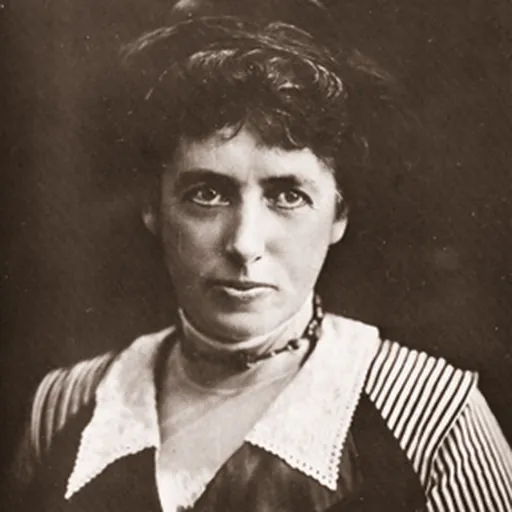
About Frances Hodgkins
Lived 1869 – 1947 (aged 78). Frances Hodgkins was a New Zealand and British painter, designer and artist.
Frances Mary Hodgkins (28 April 1869 – 13 May 1947) was a New Zealand painter chiefly of landscape, and for a short period was a designer of textiles. Born in Dunedin, she was educated at Dunedin School of Art, then became an art teacher, earning money to study in England.
A modernist artist, Hodgkins' artworks were known for abstracted, simplified forms and a strong emphasis on colour values and relationships. Hodgkins was considered to be a key figure in British Modernism, also considered one of New Zealand's most prestigious and influential painters. However, it is the work from Hodgkins' life in Europe, rather than her home country, on which her reputation rests.
Early life and education Hodgkins was born in Dunedin, New Zealand, in 1869, the daughter of Rachel Owen Parker and W. M. Hodgkins, a lawyer, amateur painter, and a leading figure in the city's art circles.
She and her sister, Isabel (later Field) attended Braemar House, a private girls' secondary school; both sisters demonstrated artistic talent early on and each became a successful landscape painter in their own right. In 1895–96 Hodgkins attended the Dunedin School of Art and subsequently became an art teacher, earning money to study in England.
Career In 1901, Hodgkins left New Zealand for Europe, enrolling in art school in London but also travelling and painting in France, the Netherlands, Italy and Morocco in the company of friend and fellow artist Dorothy Kate Richmond; whom she described as "the dearest woman with the most beautiful face and expression. I am a lucky beggar to have her as a travelling companion." While in Britain she intermittently met up with Margaret Stoddart, another expatriate artist. In 1903, one of Hodgkins' watercolours from this period (Fatima) became the first work by a New Zealander to be hung "on the line" at the Royal Academy of Arts in London. Later that year she moved to Paris. In In 1910 she began teaching in Paris at Academie Colarossi as the first woman to be appointed instructor in the school. She also founded a School for Water Colour in Concarneau. During this time she exhibited numerous watercolours at the Paris salon and came in contact with Canadian artist, Emily Carr, whom she taught while working on seascapes at Concarneau in Brittany.
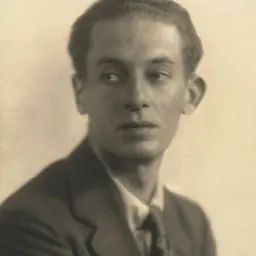
During World War I she spent some time in Zennor, Cornwall, where she worked with the Swansea painter, Cedric Morris, who painted her portrait in 1917. She herself began to paint in oils in 1915.
In 1919, after the WWI, Hodgkins went to France, where she was influenced by Matisse and Derain, but developed her own highly personal style, which made a strong impact at her one-person show in London at the Claridge Gallery in 1928. While in France she visited Nice in 1924 and there met Margaret Butler, a notable New Zealand sculptor.
In 1925, Hodgkins started work as a fabric designer at the Calico Printers' Association (CPA) in Manchester and during her employment visited the Exposition Internationale des Arts Decoratifs in Paris.
From the late 1920s on her style came to embrace modernist hallmarks such as abstracted, simplified forms and a strong emphasis on colour values and relationships. Although Hodgkins continued to paint people, her work from this period also evidences an interest in fusing conventions of landscape with still life painting. In 1929 she joined the Seven and Five Society and worked alongside younger artists including Barbara Hepworth, Ben Nicholson and Henry Moore. In 1930, she "goaded" her friend Lucy Wertheim into opening her gallery in London to exhibit "artists who had not yet arrived".
During the 1930s Hodgkins exhibited with many prominent London galleries and gained a contract from the Lefevre Gallery to produce work for a full-scale exhibition every second year. In 1931 she became a painting companion of fellow New Zealand artist Maude Burge and painted still lifes at Burge's Villa in the garden terrace. Saint-Tropez. Her experimentation with mixing artistic genres continued, resulting in paintings that conflate still life with self-portraiture to sidestep physical appearance in self-representation. In 1939 she was invited to represent Britain at the 1940 Venice Biennale, but wartime travel restrictions meant that her work could not be transported to Venice. She was highly regarded by British avant-garde society and in the later stages of her career was known as a key figure in British Modernism.
Because of World War II Hodgkins spent the rest of her life in Britain. She continued to paint into her seventies, despite suffering from rheumatism and bronchitis. She died in Dorchester, Dorset on 13 May 1947. When she died she was regarded as one of Britain's leading artists.
Legacy
In 1948 Myfanwy Evans (later Piper) wrote a concise book entitled Frances Hodgkins, as part of the 'Penguin Modern Painters' series, and the two were the only woman author and woman artist in the series of eighteen books.
The Christchurch City Council finally accepted the watercolour Pleasure Garden (1932) into the collection of the Robert McDougall Art Gallery in 1951. The painting had been offered and refused in 1948 and was the subject of considerable controversy over the intervening years. The painting was regarded as being too modern and was initially declined due to it being "artistically unworthy of acceptance".
Hodgkins was featured in a 2025 episode of the thirteenth series of BBC's art documentary programme Fake or Fortune, presented by art dealer Philip Mould and journalist Fiona Bruce.
In 2025 she was one of the artists included in the Dangerously Modern exhibition at the Art Gallery of New South Wales of works created by Australian women artists in Europe between 1890 and 1940.
Fellowship The Frances Hodgkins Fellowship, established in 1962 at the University of Otago in Dunedin, New Zealand, is named after her.
Works in collections
The Dunedin Public Art Gallery, in Dunedin, New Zealand, contains a major collection of almost sixty of Hodgkins' works, and has a dedicated gallery space which displays works by Hodgkins, often alongside works by her contemporaries.
Gallery
Don’t just read it —
keep it.
Full-length biographies made to live with: read them, listen on the way to work, watch them tonight.
- E-book
- Audio
- Video
Instant download · yours to keep · every purchase keeps this site free
Important facts
People in Frances Hodgkins's life
Named in this biography and alive at the same time



Related people
Same field, nearest in time

Contemporaries
People whose lives overlapped Frances Hodgkins's



Frequently asked questions
Who was Frances Hodgkins?
New Zealand painter (1869–1947)
When was Frances Hodgkins born?
Frances Hodgkins was born on 28 April 1869 in Dunedin.
When did Frances Hodgkins die?
Frances Hodgkins died on 13 May 1947 in Dorchester.
What was Frances Hodgkins's occupation?
Frances Hodgkins was a painter, designer and artist.
What nationality was Frances Hodgkins?
Frances Hodgkins was New Zealand and British.
Sources & further reading
Cite this page
APA: Biography.guide. (2026). Frances Hodgkins. https://biography.guide/frances-hodgkins/
MLA: "Frances Hodgkins." Biography.guide, https://biography.guide/frances-hodgkins/.
Chicago: "Frances Hodgkins." Biography.guide. https://biography.guide/frances-hodgkins/.
Data last updated: 2026-09-22 · Spot an error? Report a correction.
Portrait: Wikimedia Commons · author & licence
Page generated 2026-09-27 05:03 UTC