
Foster Fyans
British Army soldier, penal colony administrator and public servant
About Foster Fyans
Lived 1790 – 1870 (aged 79–80). Foster Fyans was a politician.
Foster Fyans (September 1790 – 23 May 1870) was an Irish military officer, penal colony administrator and public servant. He was acting commandant of the second convict settlement at Norfolk Island, the commandant of the Moreton Bay penal settlement at Brisbane, the first police magistrate at Geelong, and commissioner of crown lands for the Portland Bay pastoral district in the Port Phillip District of New South Wales. He is the great-great-grandfather of actor Sam Neill.
Early life Fyans was born and baptised as an Anglican at Clontarf, Dublin in 1790, his father being a carpenter and a coach-maker in that city. He was educated at Drogheda Grammar School and at the Prospect School in Blackrock, Dublin.
Peninsula War Fyans joined the British Army in 1811, being assigned the junior rank of ensign in the 67th Regiment of Foot. His battalion was soon deployed to assist in the Peninsula War. Fyans was present at both Cádiz and Cartagena while these cities were under siege from Napoleonic forces. He was stationed for most of the war period at Gibraltar where he saw little action, but was promoted to lieutenant.
Norfolk Island In early 1833 Fyans arrived with the 4th Regiment of Foot at Sydney, New South Wales. He quickly manoeuvred himself into being on good terms with Governor Richard Bourke and was soon posted to the penal colony of Norfolk Island as captain of the guard. He arrived at Norfolk Island in March 1833 which was then under the command of Colonel James Thomas Morisset, a depressed man with a disfigured face and a reputation for brutal discipline. The harsh treatment of the convicts under Morisset's reign coincided with a turbulent period on the island with several violent episodes and prisoner mutinies occurring. In September 1833, Fyans witnessed the hanging of three convicts for murder while another six were sentenced to death for stealing a boat.
Morisset's mental and physical health declined and on 7 January 1834, he gave full authority to Fyans to act as Commandant on the island. Fyans found the convicts at Moreton Bay very docile compared to those at Norfolk Island and had little need to order severe punishments upon them. The most trouble he had was trying to prevent the male soldiers and free-men in the colony from accessing the female convict barracks, known as the female factory. He had to move these barracks to Eagle Farm and construct a 17 foot high stockade around it.
Police Magistrate at Corio Bay In July 1837, the 4th Regiment were ordered to India and Fyans was replaced as commandant at Moreton Bay by Lieutenant-General Sydney Cotton. Fyans decided to stay in Australia and sold out of his army commission. His patron, Governor Bourke, gave Fyans the civilian post of police magistrate at the newly colonised Corio Bay area near Melbourne in September 1837, settler pastoralists in the region having requested the colonial government for protection against Aboriginal raids.
The arrival of Fyans and his constables failed to curb frontier conflict in the area. William Yuille and other colonists dispersed a camp of local Aboriginal people with gunfire after his Murgheboluc property was ransacked of supplies. While in December 1837, George Russell's Clyde Company property at Inverleigh was attacked by a large group of Aborigines with Russell's employees shooting dead two native men. These incidents were reported to Fyans but he did little about it. In April 1838, a shepherd named Teddy McManus who was employed by the pastoralist Thomas Learmonth was killed by an Aboriginal man near Buninyong. This man was caught and chained up by the local colonists but was drowned before Fyans could start a murder investigation. Fyans was of the opinion that "intimacy" between the settlers and the Aboriginal women and the spread of venereal disease was the basis of much of the conflict.
In late 1837, Fyans received instructions to select a site for a major township in the Corio region. He concluded that the spot where David Fisher of the Derwent Company had established his hut as the best place and in 1838 this site was proclaimed as the township of Geelong. The ford stopped the inflow of salt water to the fresh water river, thus supplying the town with fresh river water. Fyans also established for himself a cattle property on the west bank of Lake Colac which he sold in 1842.
Investigation at Portland Bay In 1839, Fyans was ordered to Portland Bay to investigate official reports of deliberate massacring of Aboriginal men and women by raiding parties led by Edward Henty, as well as the "interference with native women" by the employees of the Henty Brothers, who were the pioneer squatters in that region. Fyans decided to travel overland to Portland Bay and trail-blaze a road from Geelong to that settlement. Surveyor H.W.H. Smythe and several mounted troopers accompanied him. They travelled through stony and swampy country which was occupied by a large number of Aboriginal people who caught fish and eels through the use of a system of weirs. At times, they dispersed these people with their horses and swords.
While he considered himself a "friend to the natives", when referring to the investigation and capture of Aborigines for trial he wrote to Charles La trobe:Its a difficult thing to apprehend natives, with great risk of life on both sides. On the Grange, and many parts of the country, it would be impossible to take them; and in my opinion, the only plan to bring them to a fit and proper state is to insist on the gentlemen in the country to protect their property, and to deal with such useless savages on the spot.
Eumeralla Wars
By 1840, white settlers in the Portland Bay district had perpetrated multiple massacres of Aboriginal people during their colonisation of the region. A few settlers had also been killed including Patrick Codd, who was employed by John Cox at the Mount Rouse property. It was assumed that an Aboriginal man named Figara Alkapurata (also known as Rodger) was the killer. Codd's death resulted in the colonial authorities taking formal action with Fyans and his troopers sent in to capture the ringleaders of Aboriginal resistance.
Extermination of the Gadubanud people In 1846, a workman employed by the surveyor George Smythe was killed by a Gadubanud man at Cape Otway. Smythe returned to Geelong and reported the case to Fyans, who organised a well-armed militia of ten Barrabool men to be sent to the Otways to deal with the Gadubanud. Fyans and Smythe led the group into the region, where the Barrabool troopers killed all the known members of the Otway tribe, male and female, except for one girl who was taken back to Geelong. This girl was later found dead near a fence at Drysdale.
Magistrate at Geelong In 1849, Fyans was re-appointed to the position of police magistrate at Geelong and was nominated as the inaugural mayor of the Geelong Town Council. He became a Justice of the Peace and a judicial magistrate the following year, later being appointed as deputy sheriff for the Geelong region. He retired from public life in 1855. A favourite punishment meted out by Fyans in his judgements was to order the accused to be locked into the public stocks outside the court at Geelong.
Family In January 1843 Fyans married Elizabeth Alice Cane and they had three daughters and a son, one of the daughters was intellectually disabled and died after setting herself on fire. He was buried at the Eastern Cemetery in Geelong. Places such as Fyansford and Mount Fyans are named after him, while Foster, Fyans and West Fyans streets in Geelong are also named in his honour. His estate home of Balyang is now the Balyang Sanctuary.
Don’t just read it —
keep it.
Full-length biographies made to live with: read them, listen on the way to work, watch them tonight.
- E-book
- Audio
- Video
Instant download · yours to keep · every purchase keeps this site free
Important facts
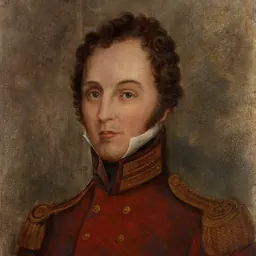
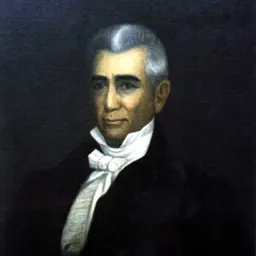
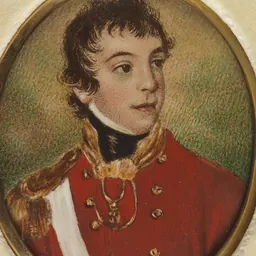
People in Foster Fyans's life
Named in this biography and alive at the same time





Related people
Same field, nearest in time
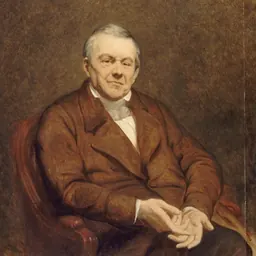


Contemporaries
People whose lives overlapped Foster Fyans's


Frequently asked questions
Who was Foster Fyans?
British Army soldier, penal colony administrator and public servant
When was Foster Fyans born?
Foster Fyans was born in 1790.
When did Foster Fyans die?
Foster Fyans died in 1870.
What was Foster Fyans's occupation?
Foster Fyans was a politician.
Sources & further reading
Cite this page
APA: Biography.guide. (2026). Foster Fyans. https://biography.guide/foster-fyans/
MLA: "Foster Fyans." Biography.guide, https://biography.guide/foster-fyans/.
Chicago: "Foster Fyans." Biography.guide. https://biography.guide/foster-fyans/.
Data last updated: 2026-09-25 · Spot an error? Report a correction.
Page generated 2026-09-27 05:07 UTC