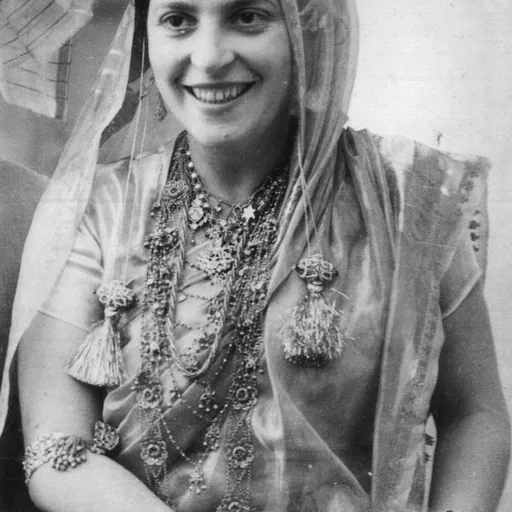
Fori Nehru
Hungarian-born Indian social worker
About Fori Nehru
Lived 1908 – 2017 (aged 108). Fori Nehru was an Indian.
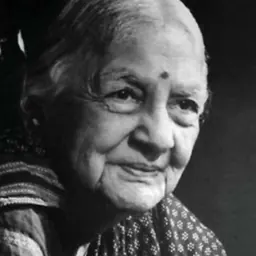
Shobha Nehru, commonly known as Fori Nehru and Auntie Fori (born Magdolna Friedmann; 5 December 1908 – 25 April 2017), was a Hungarian-born Indian social worker and the wife of the Indian civil servant Braj Kumar Nehru of the Nehru family.
In 1947, following the partition of India, Nehru was the only female member on the Emergency Committee, to assist in the protection and transport of Muslims in Delhi who had sought refuge in the camps at Purana Qila and Humayun's Tomb. She co-founded an employment campaign to sell stitched and embroidered works made by refugee women. Later she became a member of the All India Handicrafts Board and for several years worked voluntarily at the Central Cottage Industries Emporium in Delhi, promoting crafts made in India.
Nehru accompanied her husband on his travels during his civil service career and between 1958 and 1968, she was present with him when he was appointed India's ambassador to the United States, was in London when he became high commissioner there, and is mentioned in several memoirs as a hostess. When her husband was appointed governor of Assam in the late 1960s, she contributed to the supervision of refugees in Bengal during the 1971 war. In 1976, she was one of a very few close to the then Prime Minister of India, Indira Gandhi, that confronted her about the forces used during the Emergency. Nehru was noted to speak a high standard of Hindi and for always wearing a saree. In 1989, she moved to Kasauli with her husband, where they lived their remaining lives.
In 1998, after asking her son's university friend and Winston Churchill's official biographer, Sir Martin Gilbert, to recommend a book about the history of the Jews, he responded by writing Nehru a letter every week for 140 weeks, each addressed "Dear Auntie Fori". The letters were published in a collection titled Letters to Auntie Fori (2002), in which he traced 5,000 years of Jewish history.
Early life and education
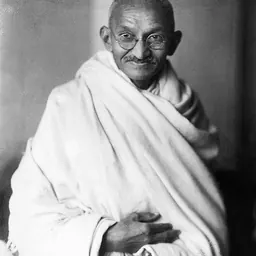
Fori Nehru, sometimes spelled Fory, and also known as Auntie Fori, was born Magdolna Friedmann on 5 December 1908 in Budapest, then part of the Austro-Hungarian Empire. Her father, Armin Friedmann, had a seat somewhere between row three and five at the Dohány Street Synagogue and her mother Regina, née Hirshfeld, was a member of the notable wealthy Bettelheim family, who made toys and earned the right to use the prefix von. In 1930 in the LSE history library she met and fell in love with B. K. Nehru, a Kashmiri Pandit of the Nehru family, who was studying for the Indian Civil Service exams. She married B. K. Nehru in Lahore on 25 January 1935 and was renamed Shobha. According to her husband, to ensure the marriage was widely known about, photographs of the wedding were featured in several newspapers. During these years Mahatma Gandhi inspired her to learn about Indian handicrafts. She later recalled that when she first came to India, wealthy women wore French chiffons, "there was hardly anything made in India. Isn't it strange that at that time no Indian craft was considered beautiful – only things imported from England and Paris".
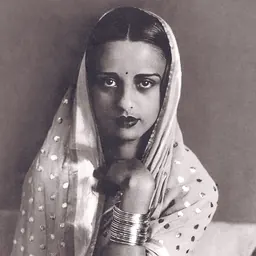
During the interwar years and subsequent years, Nehru lost many friends in the Holocaust. All her immediate family survived. Later, she would salvage some of the paintings by Antoinette's daughter, Amrita Sher-Gil, who died in 1941; one was a famous self-portrait. By the time of India's independence, she had lived in several Indian cities including Allahabad, Delhi, Hissar, Ambala and Lahore. When one of the trains that she helped board with families were all dragged off and killed, she couldn't face sending another for several days, she recalled. The three housewives took materials to the refugee women, who used their skills in embroidery, needlework, sewing and cutting. They later moved to a shop on Barakhamba Road, which continued to operate until 1952, when it moved to Janpath and merged with the Central Cottage Industries Emporium. That year, Nehru became a member of the All India Handicrafts Board (AIHB) at the request of Kamaladevi Chattopadhyay. Thousands of displaced women in the Delhi camps had contributed to producing the handicrafts, including the one at Kingsway. The founders of Fabindia, became interested after seeing some samples of the Indian work when Nehru met one of them in 1953, but any further progression in promoting them was hampered by the 90% import duty on embroidered crafts at the time in the US. In 1954, she returned to India, where she remained until 1958. On 22 March 1965, after Sanger's death, she addressed an audience of 1,000 at a ceremonial dinner in her honour, describing Sanger as "single-handedly carried the torch of responsible motherhood".
Between 1958 and 1968, as the wife of India's ambassador to the US, Nehru would act as hostess. In one memoir, Marian Cannon Schlesinger called her more Indian than the Indians. She was noted to speak a high standard of Hindi and for always wearing a saree. According to him, the story of the efforts in the relief operations is incomplete without mentioning her. The story of how she presented Gandhi with a list of names of men who had been forcibly sterilised is told in Nehru's husband's memoirs. In response, he wrote her one letter every week for 140 weeks, each addressed "Dear Auntie Fori", tracing the course of Jewish history over 5,000 years. The letters were collectively published in a book titled Letters to Auntie Fori: The 5,000-Year History of the Jewish People and Their Faith (2002). Gilbert's Letters to Auntie Fori (2002) are dedicated to her.
Some of Nehru's experiences and contributions to the lives of those displaced in the Delhi camps after partition are included in Development Retold: Voices from the field (1999). Her oral history (2013) of partition is held in the 1947 Partition Archives at Stanford Libraries.
Footnotes
Don’t just read it —
keep it.
Full-length biographies made to live with: read them, listen on the way to work, watch them tonight.
- E-book
- Audio
- Video
Instant download · yours to keep · every purchase keeps this site free
Important facts
Family & relationships
People in Fori Nehru's life
Named in this biography and alive at the same time

Contemporaries
People whose lives overlapped Fori Nehru's



Frequently asked questions
Who was Fori Nehru?
Hungarian-born Indian social worker
When was Fori Nehru born?
Fori Nehru was born on 5 December 1908 in Budapest.
When did Fori Nehru die?
Fori Nehru died on 25 April 2017 in Kasauli.
What nationality was Fori Nehru?
Fori Nehru was Indian.
Sources & further reading
Cite this page
APA: Biography.guide. (2026). Fori Nehru. https://biography.guide/fori-nehru/
MLA: "Fori Nehru." Biography.guide, https://biography.guide/fori-nehru/.
Chicago: "Fori Nehru." Biography.guide. https://biography.guide/fori-nehru/.
Data last updated: 2026-09-22 · Spot an error? Report a correction.
Portrait: Wikimedia Commons · author & licence
Page generated 2026-09-27 05:01 UTC