
Floyd Allen
Convicted murderer
About Floyd Allen
Lived 1856 – 1913 (aged 56). Floyd Allen was an American.
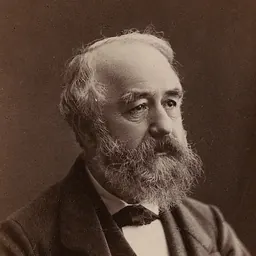
Floyd Allen (July 5, 1856 – March 28, 1913) was an American landowner and patriarch of the Allen clan of Carroll County, Virginia. He was convicted and executed for murder in 1913 after a notorious courthouse shootout the previous year that left a judge, prosecutor, sheriff, and three others dead, although the validity of the conviction has been a source of debate within Carroll County for decades. Allen, who was before the bar for sentencing after being convicted of taking a prisoner from a deputy sheriff, allegedly triggered the shooting at the Carroll County Courthouse in Hillsville on March 14, 1912.
Early life and activities Floyd Allen was born in 1856 and spent much of his life living in Cana, Virginia, located below Fancy Gap Mountain in Carroll County. He was the patriarch of the county's most prominent family, which, in addition to owning large tracts of farmland and a prosperous general store, were also active in local politics as proud Southern Democrats. Both Allen and his brother Sidna held legal licenses for the production of alcohol.
Allen was noted for his generosity, but also his quick temper and easily injured pride. He had a history of violent altercations, including killing a black man who was supposedly hunting on his property in North Carolina, beating a police officer in Mount Airy and later shooting his own cousin. In July 1889, the Carroll County court indicted Floyd for assault as well, but in December of that year the Commonwealth's Attorney dropped the case. Floyd's body bore the scars of thirteen bullet wounds, five of them inflicted in quarrels with his own family.
Despite their history of violence, the Allens held considerable political power, and Allen had a reputation for courage. In 1908, while serving as special deputies, Allen and a relative, Henry "H.C." Allen, were charged with unlawful assault upon prisoners held in their custody who they claimed had resisted arrest. On February 1, 1908, the Allens were convicted of the charge and sentenced to ten days in jail and a fine of $10.
However, times were changing: Virginia's judicial structure was altered in a series of legal reforms, particularly the county court system, which was replaced by circuit courts. The new system appointed a full-time judge to hold court at scheduled intervals in a circuit of several counties. While the state legislature still appointed circuit judges, the new system reduced the ability of individual delegates to ensure that their preferred judge was selected for their particular county; furthermore, judges could no longer practice law for private clients while on the bench, and as regional judges their susceptibility to local influence and public opinion was reduced. Rather than face arrest, the two men fled over the state line to North Carolina, where they found jobs in a granite quarry. The deputy clerk of Carroll County, Dexter Goad, obtained a new warrant for the brothers' arrest, notifying the sheriff in Surry County, North Carolina, who soon arrested both men.
A Carroll County deputy sheriff, Thomas Samuels, and his driver, Peter Easter, traveled in Easter's four-seater buggy to the state line and received the brothers from Sheriff Haynes and Deputy Oscar Monday, who had arrested the brothers at work. There was only one set of handcuffs, and because Sidna Edwards had tried to escape a couple of times, Wesley was handcuffed in the front seat of the buggy and Sidna was tied in the back seat. On the way to the courthouse, the buggy passed by several properties owned by the Allens.
Foster called upon a grand jury to investigate the escape/pistol-whipping incident. Floyd Allen agreed to testify and admitted 'roughing up' Samuels, but denied intending to release the prisoners: "That there Samuel was abusing the boys. He had them handcuffed and tied up with a rope. I just can't bear to see anyone drug around."
Nonetheless, the grand jury indicted Floyd Allen, Sidna Allen and Barnett Allen for interfering with the deputies, and Floyd Allen was also indicted for assault and battery upon Samuels. Sidna Allen was never tried for his part in the altercation, while Barnett Allen was acquitted at trial.
When Floyd Allen's case was set for trial, rumors arose that he had sent word to Deputy Samuels that he would kill Samuels if the deputy testified against him. Allen later denied this, but the reported threat caused Samuels to leave the state the same night it was delivered.
The rumor that the Allens were intimidating witnesses was called to the attention of the court. Judge Thornton L. Massie called Constable Jack Allen (and Floyd Allen, who had been deputized by Massie about six months earlier) to the bar and proceeded to question them about the alleged intimidation. Jack Allen denied all responsibility for the allegations of intimidation, which he stated were untrue and insisted neither he nor his brother was guilty of wrongdoing. In response, the judge told the two men that if the law could not be faithfully enforced in Carroll County by the county's deputized officers he would bring in state troops if necessary to maintain order. A witness later testified that Floyd Allen had remarked that he "would not let any man talk to me that way."
Trial and shooting
After close to a year of delays, Floyd was finally brought to trial on March 13, 1912. Judge Thornton L. Massie, who had deputized Floyd six months earlier, presided. Floyd Allen was well represented by a two-attorney team. Both, Walter Scott Tipton and David Winton Bolen, were retired Carroll County judges.
Samuels' departure forced Commonwealth's Attorney William M. Foster to rely on testimony from Deputy Easter. The jury could not agree on a verdict immediately as the trial ended, and were sequestered in a local hotel overnight.
Fearful of the Allens' reaction, and having received death threats, many officials of the court armed themselves. At least two of the participants, Judge Massie and Sheriff Webb, had told friends that they expected trouble. Many of the Allen clan members were spectators in the courtroom, most of them armed with pistols. Sidna Allen and Claude Allen stood on benches in the courtroom's northeast corner to see over the crowd. Friel Allen sat in the back of the room, and the Edwards boys stood on benches next to the north wall. When the jury returned a guilty verdict against with a sentence of one year in the penitentiary, Floyd Allen is reported to have said to Judge Massie: "If you sentence me on that verdict, I will kill you." The judge immediately sentenced Floyd Allen to one year's imprisonment. At this point, shots broke out in the courtroom.
Accounts differ as to who actually fired the first shot. Many accounts claim that Allen initiated the confrontation by pulling a gun in court. In his defense testimony, Floyd Allen stated that Sheriff Lew F. Webb fired first, but that the shot missed Allen, at which point Deputy Clerk Goad, the Clerk of Court, fired and hit Allen, causing him to fall. (When Floyd fell, wounded, he landed on top of his lawyer David Bolen, who had ducked to the ground as soon as the shooting started, and who is reported to have said, "Floyd, they are going to kill me shooting at you!")
Seven others were wounded, including Deputy Clerk Goad and Floyd Allen. Floyd, wounded too badly in the hip, thigh and knee to leave town, instead spent the night in the Elliott Hotel accompanied by his eldest son, Victor, who was later acquitted of involvement in the shootout. Upon his arrest by deputies at the hotel, Floyd attempted to slash his own throat with a pocketknife, but was overpowered before he could complete the job.
Manhunt Virginia law held that when a sheriff died his deputies lost all legal powers, so the shooting left Carroll County without law enforcement. Recognizing the need for immediate action, assistant clerk S. Floyd Landreth sent a telegram to Democratic Governor William Hodges Mann which read:
Send troops to the County of Carroll at once. Mob violence, the court. Commonwealth's Attorney, Sheriff, some jurors and others shot on the conviction of Floyd Allen for a felony. Sheriff and Commonwealth's Attorney dead, court serious. Look after this now.
Within a month, all suspected shooters were in custody, except Sidna Allen and Wesley Edwards. During the initial manhunt, several posses of detectives and local deputies searched the surrounding countryside. Friel Allen gave himself up to detectives in the company of his father, Jack Allen, who worried his son might be killed while being apprehended.
Cousins Claude Allen and Sidna Edwards were soon arrested after a brief search. The U.S. Revenue Service had sent Deputy Agent Faddis to investigate reports of illegal liquor trafficking by the Allens. Agent Faddis and four men raided Floyd Allen's property, seizing illegal stills and fifty gallons of moonshine.
The prosecution attempted to show that Floyd and Claude Allen prompted the gun battle by standing and pulling their pistols and opening fire. Former judge David Winton Bolen, who had been present during the shooting as one of Floyd Allen's defense attorneys, was the first witness the prosecution called at Floyd Allen's murder trial. Bolen had been standing next to Floyd Allen, and was facing Judge Massie when the first shots struck the judge's robes. Bolen testified that Claude Allen fired the first shot, and that Claude Allen's pistol shot, together with a second shot fired by Sidna Allen, killed Judge Massie.
Another prosecution witness was Floyd Allen's other attorney, Walter S. Tipton. Tipton testified he saw Claude Allen in the courthouse with a pistol raised in both hands as if he had just fired it. During a second glance Tipton again saw Floyd with his pistol raised and held in both hands; he then saw Floyd Allen fire his pistol.
Yet another lawyer who witnessed the shooting, W. A. Daugherty of Pikeville, stated that several young men were standing on court benches at the back of the room firing their pistols "like Custer's cavalrymen at the Little Big Horn".
Deputy Sheriff George W. Edwards, who became the sheriff of Carroll County after Sheriff Webb's death, testified that, as a deputy sheriff at the time, he had spoken with Floyd Allen just after Allen learned of his indictment. Floyd said that Commonwealth's Attorney Foster would not give him a show; but that if he did not there would be a "big hole put in the court house." The next witness was Sidney Towe, who largely corroborated the testimony of Sheriff Edwards. On a different occasion, he heard Floyd Allen make the same threat of putting the biggest hole in the courthouse that any man ever had seen.
On the other hand, Floyd Allen and his relatives claimed Deputy Clerk Dexter Goad had fired first, prompted by a long-standing vendetta he and Foster held against the Allen family. The defense attempted to show that Deputy Clerk Goad shot Elizabeth Ayers in his exchange of fire with the Allens, a charge Goad denied.
Deputy Clerk Dexter Goad admitted firing the second shot at Floyd, striking him in the pelvis. He said he thought Floyd's fumbling with his sweater buttons was a prelude to drawing his pistol. However, Goad denied firing the first shot in the fusillade. He testified that one of the girls pointed out some of the Allens leaving the courthouse, when Sidna Allen came toward him, pointed his pistol at him, and fired.
At Claude Allen's trial for the murder of Commonwealth's Attorney Foster, Judge David W. Bolen was again the prosecution's star witness. Judge Bolen confirmed his prior testimony that he saw Claude Allen fire the first shot at Judge Massie from the courtroom's northeast corner, whereupon Claude advanced toward the court officers to where Commonwealth's Attorney Foster was standing.
For his part, Claude Allen admitted to firing his pistol while in the courtroom. He testified that he saw Sidna Allen firing just about the time he saw Deputy Clerk Goad fire. He denied firing a gun during the courthouse shootings, and stated that he did not see who fired the first shot, but thought that it came from the vicinity of Deputy Clerk Goad's desk. Allen claimed that when the shooting began, he drew his own revolver and fired five times at Deputy Clerk Goad and Deputy Sheriff Gillespie, because both men were firing at him. After those five shots, he dropped to his knees and reloaded his revolver. In July 1912, after three separate trials, Claude Allen was convicted of first degree murder for the killing of Commonwealth's Attorney Foster, and for second degree murder for the killing of Judge Massie.
For their roles in the shooting, Floyd and Claude were sentenced to death by electrocution. Allen's death sentence was deeply unpopular with Allen supporters in the county, but many other residents were unsympathetic, surprised by the deaths of so many people over Floyd Allen's refusal to serve a year in prison. Governor Mann, who had received death threats in the same handwriting as the threats previously delivered to the trial judge, had to cut short a trip to Pennsylvania after learning his Lieutenant Governor, James Taylor Ellyson (1847–1919), had attempted to commute the Allens' sentences in his absence, instigating a brief constitutional power struggle between the two men.
Victor Allen and Barnett Allen were acquitted. Burden "Byrd" Marion, a cousin and neighbor who'd reloaded a revolver for one of the Allens, had all charges against him dropped. Accounts differ as to whether this was for a lack of evidence, or since Marion became a state's witness and admitted his role in aiding the Allens. Shortly after the Allen trials, law enforcement officers found a still in an old house on Burden Marion's farm, and he was arrested for making illegal liquor. He was tried in federal court, found guilty, and sentenced to a year in federal prison at Moundsville, West Virginia. He began his sentence in August 1913, and died of pneumonia in prison on November 25, 1913.
The Carroll County prosecutor placed liens on all property owned by Floyd Allen and Sidna Allen for the heirs of the victims. A dispute arose between McGraw and Jack Allen about the Hillsville tragedy; during the confrontation McGraw drew a gun and shot Allen twice, killing him on the spot. Augustus Cezar Fowler, juror (died of wounds) Betty Ayres, witness
Wounded: Floyd Allen, defendant Sidna Allen, defendant Dexter Goad, Clerk of Court Christopher Columbus Cain, juror Faddis, Juror Andrew T. Howlett, spectator Elihue Clark Gillespie, Deputy Bruce Marshall, spectator Stuart Worrell, spectator
Don’t just read it —
keep it.
Full-length biographies made to live with: read them, listen on the way to work, watch them tonight.
- E-book
- Audio
- Video
Instant download · yours to keep · every purchase keeps this site free
Important facts
People in Floyd Allen's life
Named in this biography and alive at the same time



Contemporaries
People whose lives overlapped Floyd Allen's



Frequently asked questions
Who was Floyd Allen?
Convicted murderer
When was Floyd Allen born?
Floyd Allen was born on 5 July 1856 in Carroll County.
When did Floyd Allen die?
Floyd Allen died on 28 March 1913 in Richmond, Virginia, Virginia State Penitentiary.
What nationality was Floyd Allen?
Floyd Allen was American.
Sources & further reading
Cite this page
APA: Biography.guide. (2026). Floyd Allen. https://biography.guide/floyd-allen/
MLA: "Floyd Allen." Biography.guide, https://biography.guide/floyd-allen/.
Chicago: "Floyd Allen." Biography.guide. https://biography.guide/floyd-allen/.
Data last updated: 2026-09-27 · Spot an error? Report a correction.
Page generated 2026-09-27 05:17 UTC