
About Florence Dixie
Lived 1855 – 1905 (aged 50). Florence Dixie was a British writer, novelist, journalist, travel writer, women's rights activist and science fiction writer, known for Feminism.
Lady Florence Caroline Dixie (née Douglas; 24 May 18557 November 1905) was a Scottish writer, war correspondent, and feminist. and Archibald Douglas, 8th Marquess of Queensberry.
She had a twin brother, Lord James Edward Sholto Douglas, an older sister, Lady Gertrude Douglas, and three older brothers: John, Viscount Drumlanrig, later 9th Marquess of Queensberry, Lord Francis Douglas, and the Reverend Lord Archibald Edward Douglas.
Lady Florence has been described as a tomboy who tried to match her brothers in physical activities, whether swimming, riding, or hunting. wore her hair short in a boyish crop, and refused to conform to fashion when being presented to Queen Victoria. In 1862, his widow, Caroline, acted upon a long-formed conviction and converted to Roman Catholicism. She took her youngest children, Archibald, then twelve, and Florence and James, aged seven, to France, where she could educate them as she wished. This led the children's guardians to threaten Lady Queensberry with an action under English law to take her children away from her. The three were too young to choose a guardian under Scottish law. In the event, they remained in France for two years. Falconer Atlee, the British Consul at Nantes, offered them a place of safety when their first location was discovered, and the Emperor Napoleon III eventually extended Lady Queensberry his protection, ensuring that she could keep the custody of the three children. Archibald converted to Rome and took holy orders, becoming a priest. Caroline's older daughter, Gertrude, also became a Roman Catholic. When her Anglican fiancé would not agree to their children being brought up in that faith, Gertrude's engagement was broken off. She entered a convent in Hammersmith and completed her novitiate to become a Sister of the Black Veil in 1867, but later left the order.
Eventually, it was agreed that Caroline would retain custody of her younger children, and they returned to England. Lady Florence was first educated at home by a governess, but is described as "defiant, rebellious and restless".
Another tragedy struck the family just days before Florence's eldest brother, John Douglas, was to reach his majority as 9th Marquess of Queensberry. As guests gathered for a lavish celebration, word came that on 14 July 1865, the 18-year-old Lord Francis Douglas had fallen to his death with three others, after achieving the first ascent of the Matterhorn. Lord Queensberry travelled post-haste to Zermatt, with the intention of bringing his brother's body home, but nothing had been found of Lord Francis but some tattered shreds of his clothing. Queensberry, alone, without a guide, and starting out by moonlight, attacked the Matterhorn himself and made it as far as "the Hut". It was largely a matter of chance that two guides found and rescued him before he died of cold.
Marriage and children
On 3 April 1875, at the age of nineteen, Douglas married Sir Alexander Beaumont Churchill Dixie, 11th Baronet (1851–1924), known as "Sir A.B.C.D." or "Beau". Beau, who had succeeded his father as the 11th baronet on 8 January 1872, had an income of £10,000 per year, Though Florence was only five feet tall, while Beau stood , Florence became the dominant partner in the marriage, reportedly ruling her husband "with a rod of iron".
Both husband and wife shared a love of adventure and the outdoor life, and are generally considered to have had a happy marriage, certainly the happiest of the Douglas siblings. In 1885 Beau's ancestral home and estate at Bosworth were sold to pay his debts.
Following loss of the estate, the couple moved to Glen Stuart, Annan, Dumfriesshire, Scotland. One of the houses on Lord Queensberry's Scottish estate of Kinmount, it had previously been the home of Lady Florence's mother, the Dowager Marchioness.
Writing In 1877, Lady Florence published her first novel, Abel Avenged: a Dramatic Tragedy.
Across Patagonia In December 1878, two months after the birth of their second son, Edward, Dixie and her husband left their aristocratic life and their children behind them in England and traveled to Patagonia. Dixie's actions demonstrate that survival in a wild land requires both strength and agency.
During her travels in Patagonia, Dixie is "active, hardy, and resilient", rejecting Victorian gender constructs that depicted women as weak and in need of protection. Furthermore, in writing Across Patagonia (1880), Dixie never mentions her husband by name or title (simply referring to him as "my husband"), and presents herself as the expedition hero rather than the men being the heroes of the story. She sent Darwin a copy of Across Patagonia; Darwin's copy of this book is part of the Library of Charles Darwin located in the Rare Books Room of Cambridge University Library.
When she returned from Patagonia, Dixie brought home with her a jaguar, which she called Affums and kept as a pet. Affums killed several deer in Windsor Great Park and had to be sent to a zoo.
A hotel at Puerto Natales in the Chilean part of Patagonia is named the Hotel Lady Florence Dixie in her honor.
Her experiences in Patagonia inspire much of her later work, both her writing for children, and her work with the women's suffrage movement. Her two children's books, The Young Castaways and its sequel Aniwee, are set in Patagonia and depict strong female characters.
In the Land of Misfortune In 1881, Dixie was appointed as a field correspondent of the Morning Post of London to cover the First Boer War (1880–1881)
Her reports, followed by her A Defence of Zululand and Its King from the Blue Book (1882) and In the Land of Misfortune (1882), were instrumental in Cetshwayo's brief restoration to his throne in 1883. In Dixie's In the Land of Misfortune, there is a struggle between her individualism and her identification with the power of the British Empire, but for all of her sympathy with the Zulu cause and with Cetshwayo, she remained at heart an imperialist.
In 1890, Dixie published a utopian novel, Gloriana, or the Revolution of 1900, which has been described as a feminist fantasy. but perhaps even more so of Dixie herself. Another of the many active, competent and powerful women characters in the book is Scottish Lady Flora Desmond (who, as The Athenaeum pointed out, has a name very similar to the author). Flora helps to organize a 200,000 member Women's Volunteer force, and herself leads their elite mounted White Regiment.
The book ends in the year 1999, with a description of a prosperous and peaceful Britain whose government has deeply benefited from the engagement of women. In the preface to the novel, Dixie proposes not only women's suffrage, but that the two sexes should be educated together and that all professions and positions should be open to both. In the novel, she goes farther and says:
Women and sports Women's football Dixie played a key role is establishing the game of women's association football, organizing exhibition matches for charity, and in 1895 she became President of the British Ladies' Football Club, stipulating that "the girls should enter into the spirit of the game with heart and soul". She arranged for a women's football team from London to tour Scotland.
Field sports During her early life and travels, Dixie was an enthusiastic sportswoman, an intrepid rider and shot. As the following reminiscence shows, part of the appeal of hunting in Leicestershire was the opportunity to compete on an equal footing with active male peers:
'The merry blast of the huntsman's horn resounds, the view-halloa rings out cheerily on the bright crisp air of a fine hunting morning; the fox is "gone away", you have got a good start, and your friend has too. "Come on," he shouts, "let us see this run together!" Side by side you fly the first fence, take your horse in hand, and settle down to ride over the broad grass country. How distinctly you remember that run, how easily you recall each fence you flew together, each timber-rail you topped, and that untempting bottom you both got so luckily and safely over, and above all, the old farm-yard, where the gallant fox yielded up his life.' Lady Florence Dixie, 1880
However, she was also "haunted by a sad remorse" for the death of a beautiful golden deer of the Cordilleras, which was exceedingly tame and trusting.
Politics Dixie was an enthusiastic writer of letters to newspapers on liberal and progressive issues, including support for Scottish and Irish Home Rule. Her article The Case of Ireland was published in Vanity Fair on 27 May 1882. The incident received international attention, but considerable doubt was expressed, then and later, about whether such an attack had actually occurred.
Alleged assassination attempt
Reports were published of an attempt to assassinate Lady Florence Dixie at her residence, the Fishery, situated near the Thames, and about two and a half miles from Windsor. Lady Florence Dixie gave the following account to the newspapers:
Alleged kidnapping In her obituary, printed 8 November 1905, The New York Times suggested that Dixie had claimed to be kidnapped by Irish agitators.
Death Lady Florence Dixie died of diphtheria on 7 November 1905.
Don’t just read it —
keep it.
Full-length biographies made to live with: read them, listen on the way to work, watch them tonight.
- E-book
- Audio
- Video
Instant download · yours to keep · every purchase keeps this site free
Important facts
Family & relationships
People in Florence Dixie's life
Named in this biography and alive at the same time






Related people
Same field, nearest in time
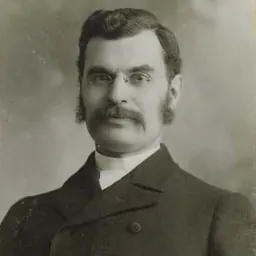
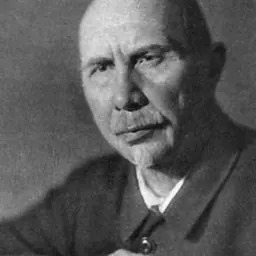

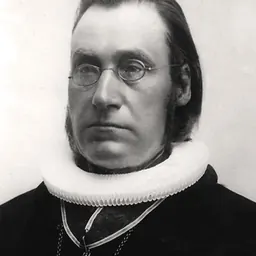
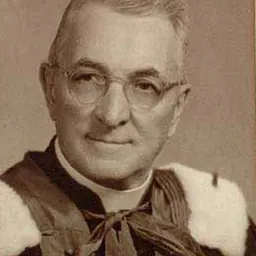
Contemporaries
People whose lives overlapped Florence Dixie's



Frequently asked questions
Who was Florence Dixie?
noblewoman; British writer (1855–1905)
When was Florence Dixie born?
Florence Dixie was born on 24 May 1855 in Cummertrees.
When did Florence Dixie die?
Florence Dixie died on 7 November 1905 in Dumfriesshire.
What was Florence Dixie's occupation?
Florence Dixie was a writer, novelist, journalist, travel writer, women's rights activist and science fiction writer.
What was Florence Dixie known for?
Florence Dixie was known for Feminism.
What nationality was Florence Dixie?
Florence Dixie was British.
Sources & further reading
· DBpedia: Lady Florence Dixie
Cite this page
APA: Biography.guide. (2026). Florence Dixie. https://biography.guide/florence-dixie/
MLA: "Florence Dixie." Biography.guide, https://biography.guide/florence-dixie/.
Chicago: "Florence Dixie." Biography.guide. https://biography.guide/florence-dixie/.
Data last updated: 2026-09-26 · Spot an error? Report a correction.
Page generated 2026-09-27 05:13 UTC