
About Fiona Gabbert
Fiona Gabbert was a researcher.
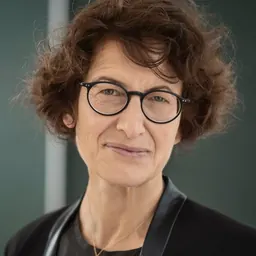
Fiona Gabbert is a forensic psychologist who focuses on the reliability of memory and investigative interviewing. Her research is used to shape police procedure and policy internationally.
Education Gabbert attended the University of Aberdeen where she received her PhD in psychology.
Career After graduating from the University of Aberdeen, she was a Reader in Psychology for Abertay University. As of 2026, she is a professor of Psychology at Goldsmiths, University of London and is working with Amber Alert Europe and the National Crime Agency, and the International Cold Case Analysis Project. In these partnerships, she is advancing ethical interviewing and applying psychological science to aid new leads in missing person cases.
Community engagement As the Director of the Forensic and Psychology Unit (FPU) at Goldsmiths, University of London, Gabbert hosts many events with the goal to educate the public.
Research Gabbert's main research interests include eyewitness memory, investigative Interviewing, facilitating recall, building trust and rapport, suggestibility of memory, social influences on memory, and memory conformity. In some of her research, she specifically investigates questions such as "can we accurately interpret the dynamic behavior of others?". Gabbert also investigates the value and challenges of age progression and potential bias' or factors that lead to an overrepresentation of ethnic minority background in missing persons cases. Gabbert's most cited article on research gate is "Memory conformity: Can Eyewitnesses Influence Each Other's Memories for an Event?". This article discusses how individuals influence each others recall of an event.
Gabbert's research on improving usability, creditability, and reliability of evidence from witnesses has helped introduce new evidence based investigative tools and training resources to the field, such as the Self-Administrated Interview, Structured Interview Protocol, and the Timeline Technique. This tool is used globally and by police officers. The Structured Interview Protocol promotes new ethical practices that help officers elicit information from witnesses, victims, and suspects. The Timeline Technique helps interviewees organize their own recall of an event in a sequential manner. It is self-administered and typically yields better detail of an event according to Crest Research. Furthermore, through Crest Research, Gabbert developed an evidence-based training program regarding rapport within an information gathering context, and specifically whether individuals can be trained in their own rapport skills.
Books
Ridley, Anne; Gabbert, Fiona; and La Rooy, David, eds. 2013. Suggestibility in Legal Contexts: Psychological Research and Forensic Implications. London: Wiley-Blackwell.
Don’t just read it —
keep it.
Full-length biographies made to live with: read them, listen on the way to work, watch them tonight.
- E-book
- Audio
- Video
Instant download · yours to keep · every purchase keeps this site free
Important facts
Related people
Same field, nearest in time





Frequently asked questions
Who was Fiona Gabbert?
Forensic psychologist
What was Fiona Gabbert's occupation?
Fiona Gabbert was a researcher.
Sources & further reading
Cite this page
APA: Biography.guide. (2026). Fiona Gabbert. https://biography.guide/fiona-gabbert/
MLA: "Fiona Gabbert." Biography.guide, https://biography.guide/fiona-gabbert/.
Chicago: "Fiona Gabbert." Biography.guide. https://biography.guide/fiona-gabbert/.
Data last updated: 2026-09-20 · Spot an error? Report a correction.
Page generated 2026-09-27 05:11 UTC