
Filippo Vadi
Italian fencing master
About Filippo Vadi
Lived 1425 – 1501 (aged 75–76). Filippo Vadi was a fencing master.
Filippo Vadi (; 14251501) was an Italian fencing master of the 15th century. Together with Fiore dei Liberi, he is one of the earliest Italian masters from whom an extant martial arts manual has survived.
Biography Very little is known about Vadi. Born in Pisa, he studied fencing with masters across Europe. He was governor of Reggio under Marquis Leonello d'Este and later, from 1452 to 1470, counselor to Leonello's successor and brother, the Duke of Ferrara Borso d'Este. The Venetian medalist Giovanni Boldù coined a commemorative medal for Vadi in 1457, with the obverse showing a figure in antique armor holding a longsword and the words Phillippus de Vadis de Pisis Chironem Superans (Filippo Vadi of Pisa, exceeding Chiron).
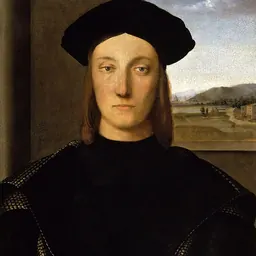
Between 1482 and 1487 he wrote a treatise on fencing dedicated to Guidobaldo da Montefeltro, Duke of Urbino, De Arte Gladiatoria Dimicandi ("Of the Art of Sword Combat"). This lavish colour manuscript is one of the key works of Italian swordsmanship and forms an important link between the early 15th century works of Fiore dei Liberi and the Renaissance Bolognese school of fencing.
The manual covers the standard knightly weapons of the time: sword, dagger, spear, and poleaxe. Vadi's book mainly focuses on the use of the longsword, or, as it was called at the time, the spada da doi mani (“two handed sword”). His instructions are clear and precise, enabling reconstruction of medieval swordsmanship from Late Medieval Italy.
The illustrations and techniques in the treatise suggest that Vadi was influenced by the work of Fiore dei Liberi, author of the Flos Duellatorum. As both Leonello and Borso d'Este were sons of Niccolò III, owner of two copies of Fiore's treatise, Vadi would have had ample opportunity to study his writings. Vadi's work, however, differs from Fiore's in several respects, including his footwork and several original techniques of his own.
Vadi prefaced his treatise with a sixteen-chapter tract discussing several of his philosophies regarding combat. According to Vadi "fencing is born out of geometry" and ought to be considered a science:
The idea of the swordsmanship as a perfect and calculated science will be fully developed in later Renaissance fencing manuals such as the Treatise on the Science of Arms by Camillo Agrippa, and the Art and Use of Fencing by Ridolfo Capo Ferro.
Vadi's manuscript was included in the catalogue of the Ducal Library of Urbino made by Ludovico Odasio, a Paduan humanist who had been Guidolbaldo's tutor. It is now preserved at the National Central Library of Rome (MS Vitt. Em. 1324).
Works
Works in English translation
Don’t just read it —
keep it.
Full-length biographies made to live with: read them, listen on the way to work, watch them tonight.
- E-book
- Audio
- Video
Instant download · yours to keep · every purchase keeps this site free
Important facts
People in Filippo Vadi's life
Named in this biography and alive at the same time
Related people
Same field, nearest in time


Contemporaries
People whose lives overlapped Filippo Vadi's



Frequently asked questions
Who was Filippo Vadi?
Italian fencing master
When was Filippo Vadi born?
Filippo Vadi was born in 1425 in Pisa.
When did Filippo Vadi die?
Filippo Vadi died in 1501.
What was Filippo Vadi's occupation?
Filippo Vadi was a fencing master.
Sources & further reading
Cite this page
APA: Biography.guide. (2026). Filippo Vadi. https://biography.guide/filippo-vadi/
MLA: "Filippo Vadi." Biography.guide, https://biography.guide/filippo-vadi/.
Chicago: "Filippo Vadi." Biography.guide. https://biography.guide/filippo-vadi/.
Data last updated: 2026-09-20 · Spot an error? Report a correction.
Page generated 2026-09-27 05:15 UTC