
About Filippo Salviati
Lived 1583 – 1614 (aged 31). Filippo Salviati was an astronomer and literary scholar.
Filippo Vincenzo Romolo Salviati (29 January 1583 (Florence) – 22 March 1614 (Barcelona)) was an Italian nobleman, scientist and friend of Galileo. He is remembered today mainly because he appears as one of the figures in Galileo's controversial work the Dialogue Concerning the Two Chief World Systems.
Family background and early life Salviati was the son of Averardo di Filippo and Alessandra di Giovambattista Nerli, who died shortly after his birth. His family was wealthy and powerful, related to of the grand dukes of Tuscany by numerous marriages; Cosimo de' Medici, son of Maria Salviati, was the cousin of his grandfather, Senator Filippo Salviati, who in turn was married to the uterine sister of Pope Leo XI.
Filippo was taught grammar, Latin, geometry and mathematics by a tutor, but his real loves were horsemanship, appearing in tournaments, fencing, hunting, and swimming, He also loved music and was a proficient player of several instruments. their marriage was agreed and sponsored by the Grand Duke and Cardinal Medici. On 28 August 1603 their only daughter Alessandra was born, who died on 31 October 1610. However he soon abandoned these Peripatetic teachings and embraced the views of Copernicus and the new natural philosophy. He contributed to the successful completion of the Vocabolario degli Accademici della Crusca, as the major financier of the first printing in 1612.
Collaboration with Galileo By 1610 Salviati's close relationship with Galileo Galilei was also firmly established. In July 1611, Salviati's Florence residence in via del Palagio was chosen as the location for an experimental competition between Galileo and the Aristotelian Lodovico delle Colombe about the physics of floating bodies. From January 1611, he hosted Galileo for long periods in his villa Le Selve in Lastra a Signa, In 1617 Federico Cesi, founder of the Lincei, married Salviati's cousin Isabella.
In November 1611 the Grand Duke himself tried to reconcile the parties, but as he made his way to the agreed meeting, Salviati was attacked and wounded by Don Ottaviano's men. On 2 January 1612 the Grand Duke finally managed to arrange peace by imposing perpetual silence concerning the matter on both parties. Salviati immediately left for Le Selve with Galileo. Berdardetto and Ottaviano de' Medici, dissatisfied with the agreed truce, ordered Salviati's murder, sending assassins from the kingdom of Naples. Their plan was discovered and Salviati had grilles placed over the windows of Le Selve. in Rome Federico Cesi paid him solemn tributes and commissioned his biography from :it:Josse De Rycke, who composed only a poem and a cenotaph. A statue of him stands in Padua.
Don’t just read it —
keep it.
Full-length biographies made to live with: read them, listen on the way to work, watch them tonight.
- E-book
- Audio
- Video
Instant download · yours to keep · every purchase keeps this site free
Important facts
People in Filippo Salviati's life
Named in this biography and alive at the same time


Related people
Same field, nearest in time
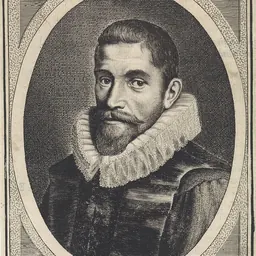
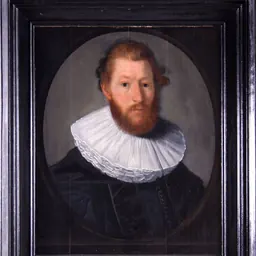

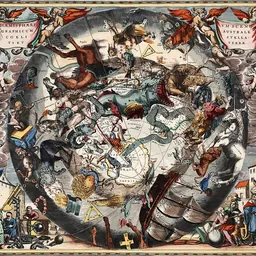

Contemporaries
People whose lives overlapped Filippo Salviati's
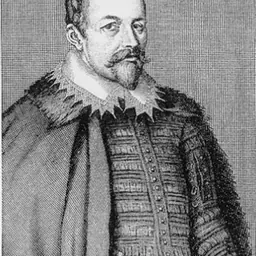


Frequently asked questions
Who was Filippo Salviati?
Italian astronomer (1583-1614)
When was Filippo Salviati born?
Filippo Salviati was born on 29 January 1583 in Florence.
When did Filippo Salviati die?
Filippo Salviati died on 22 March 1614 in Barcelona.
What was Filippo Salviati's occupation?
Filippo Salviati was an astronomer and literary scholar.
Sources & further reading
Cite this page
APA: Biography.guide. (2026). Filippo Salviati. https://biography.guide/filippo-salviati/
MLA: "Filippo Salviati." Biography.guide, https://biography.guide/filippo-salviati/.
Chicago: "Filippo Salviati." Biography.guide. https://biography.guide/filippo-salviati/.
Data last updated: 2026-09-20 · Spot an error? Report a correction.
Page generated 2026-09-27 05:28 UTC