
About Filippo de Angelis
Lived 1792 – 1877 (aged 85). Filippo de Angelis was an Italian catholic priest, catholic bishop, nuncio and archbishop.
Filippo de Angelis (16 April 1792 – 8 July 1877) was an Italian cardinal of the Roman Catholic Church who served as both archbishop of Fermo from 1842 and camerlengo from 1867 until his death. Angelis was elevated to the cardinalate in 1839.
Life Filippio de Angelis was born in Ascoli Piceno to a patrician family. He studied at the seminary in Ascoli Piceno before entering the Pontifical Academy of Ecclesiastical Nobles in Rome in 1816. He then attended Sapienza University of Rome, from where he obtained his doctorates in canon and civil law (22 July 1818), philosophy, and theology (25 September 1819).
After his ordination to the priesthood, Angelis was raised to the rank of Domestic Prelate and served as a professor at his alma mater of the Pontifical Academy of Ecclesiastical Nobles for many years. He was made a canon of the Liberian Basilica as well.
On 6 July 1826, Angelis was appointed Coadjutor Bishop of Montefiascone and Titular Bishop of Leuce by Pope Leo XII. Then he was Apostolic Visitor in Forlì.
He was consecrated as a bishop on 23 July 1827 by Cardinal Pietro Francesco Galleffi, with Archbishops Giuseppe della Porta Rodiani and Giovanni Sinibaldi serving as co-consecrators, in the church of Ss. Trinita a Montecitorio. In 1830 he was promoted to Titular Archbishop of Cartagine on 15 March and later named Nuncio to Switzerland on 23 April. He was named Nuncio to Portugal on 13 November 1832, but remained in Switzerland until April 1839 and never occupied the post in Portugal because Portuguese diplomatic relations with the Holy See were terminated shortly after his appointment.
Angelis was appointed Bishop of Montefiascone, with the personal title of "Archbishop", on 15 February 1838. Pope Gregory XVI secretly (in pectore) elevated him to the College of Cardinals in the consistory of the following 13 September, eventually publishing him as Cardinal Priest of S. Bernardo alle Terme. He was made Archbishop of Fermo on 27 January 1842 and later participated in the papal conclave of 1846, which selected Pope Pius IX.
On 20 September 1867, Angelis was named Chamberlain of the Holy Roman Church, or Camerlengo. He opted for the titular church of San Lorenzo in Lucina on that same date. Becoming Cardinal Protopriest (the longest-serving member of the order of Cardinal Priests) on the following 4 December, Angelis attended the First Vatican Council (1868-1870), of which he was made chief presiding officer on 30 December 1869.
He died in Fermo at the age of 85. At the time of his death, he was the oldest living cardinal. He is buried in Fermo.
Don’t just read it —
keep it.
Full-length biographies made to live with: read them, listen on the way to work, watch them tonight.
- E-book
- Audio
- Video
Instant download · yours to keep · every purchase keeps this site free
Important facts
People in Filippo de Angelis's life
Named in this biography and alive at the same time

Related people
Same field, nearest in time
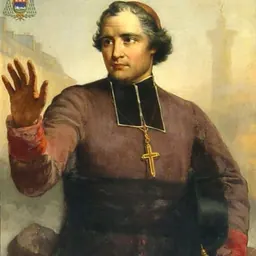

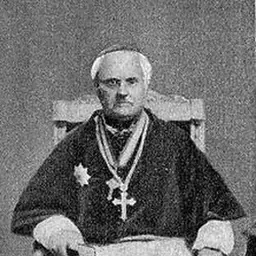
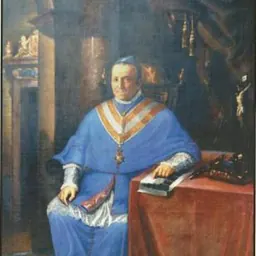
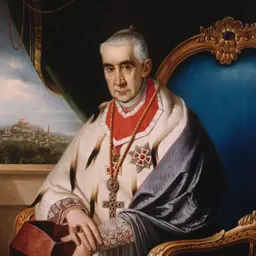
Contemporaries
People whose lives overlapped Filippo de Angelis's



Frequently asked questions
Who was Filippo de Angelis?
Catholic cardinal (1792–1877)
When was Filippo de Angelis born?
Filippo de Angelis was born on 16 April 1792 in Ascoli Piceno.
When did Filippo de Angelis die?
Filippo de Angelis died on 6 July 1877 in Fermo.
What was Filippo de Angelis's occupation?
Filippo de Angelis was a catholic priest, catholic bishop, nuncio and archbishop.
What nationality was Filippo de Angelis?
Filippo de Angelis was Italian.
Sources & further reading
· Wikipedia: Filippo de Angelis
Cite this page
APA: Biography.guide. (2026). Filippo de Angelis. https://biography.guide/filippo-de-angelis/
MLA: "Filippo de Angelis." Biography.guide, https://biography.guide/filippo-de-angelis/.
Chicago: "Filippo de Angelis." Biography.guide. https://biography.guide/filippo-de-angelis/.
Data last updated: 2026-09-20 · Spot an error? Report a correction.
Page generated 2026-09-27 05:26 UTC