
About Fidel Fita y Colomé
Lived 1835 – 1918 (aged 82). Fidel Fita y Colomé was a Spanish archaeologist, philologist, historian, epigrapher, linguist and classical philologist.
Fidel Fita Colomé or, in Catalan, Fidel Fita i Colomer (31 December 1835, Arenys de Mar - 13 January 1918, Madrid) was a Spanish-Catalonian archaeologist, philologist, and historian.
Biography Born to a newly bourgeois family, at the age of ten he was sent to study grammar in Barcelona. In 1850, at the age of fifteen, he became a Jesuit. After studying at several of the order's other institutions, including one in Nivelles, Belgium, where he studied rhetoric, he went to Loyola in 1853, to become a Professor of the humanities and Greek.
During the Revolution of 1854, he went into exile in France, returning in 1857 to take up a post as Professor of Latin and French at the Colegio de Carrión de los Condes in Palencia. From 1860 to 1866, he lived in León, where he taught theology and began his investigations into archaeology, history, and epigraphy. This led to his being named Vice-President of the "Comisión de Monumentos de León", in which position he met the architect, Eduardo Saavedra, with whom he would maintain a lifelong personal and professional friendship. During those years, he made a special effort to identify signs of Roman presence in the area.
In 1866, his order transferred him back to Catalonia. Then, two years later, he was forced into exile again, due to the "Glorious Revolution". Once more, he went to France, not returning until 1870 and, after living in several places, settling in Bañolas. This time, he focused on finding and interpreting Hebrew inscriptions in Girona; maintaining a correspondence with the archaeologist, , who was studying the mysterious sculptures that had been found near Cerro de los Santos.
He was named an Academician at the Real Academia de la Historia in 1877; settling in Madrid, where he lived for over thirty years. He would eventually publish over 700 articles in the Boletín de la Real Academia de la Historia, a third of which deal with epigraphy. Most of the world's experts on that subject were his friends or acquaintances; notably Emil Hübner, who was preparing a supplement to the Corpus Inscriptionum Latinarum. Fita was one of his primary informants on the project.
In 1912, following the death of Marcelino Menéndez Pelayo, he was named Director of the Academia; a position he held until his death.
Don’t just read it —
keep it.
Full-length biographies made to live with: read them, listen on the way to work, watch them tonight.
- E-book
- Audio
- Video
Instant download · yours to keep · every purchase keeps this site free
Important facts
People in Fidel Fita y Colomé's life
Named in this biography and alive at the same time
Related people
Same field, nearest in time


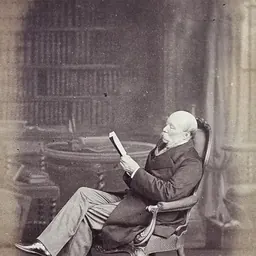
Contemporaries
People whose lives overlapped Fidel Fita y Colomé's




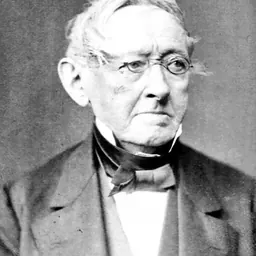

Frequently asked questions
Who was Fidel Fita y Colomé?
Spanish Jesuit archaeologist
When was Fidel Fita y Colomé born?
Fidel Fita y Colomé was born on 31 December 1835 in Arenys de Mar.
When did Fidel Fita y Colomé die?
Fidel Fita y Colomé died on 13 January 1918 in Madrid.
What was Fidel Fita y Colomé's occupation?
Fidel Fita y Colomé was an archaeologist, philologist, historian, epigrapher, linguist and classical philologist.
What nationality was Fidel Fita y Colomé?
Fidel Fita y Colomé was Spanish.
Sources & further reading
· Wikipedia: Fidel Fita y Colomé
Cite this page
APA: Biography.guide. (2026). Fidel Fita y Colomé. https://biography.guide/fidel-fita-y-colome/
MLA: "Fidel Fita y Colomé." Biography.guide, https://biography.guide/fidel-fita-y-colome/.
Chicago: "Fidel Fita y Colomé." Biography.guide. https://biography.guide/fidel-fita-y-colome/.
Data last updated: 2026-09-20 · Spot an error? Report a correction.
Page generated 2026-09-27 05:23 UTC