
Fidel Ángel Castro Díaz-Balart
First son of the Cuban leader Fidel Castro
About Fidel Ángel Castro Díaz-Balart
Lived 1949 – 2018 (aged 68). Fidel Ángel Castro Díaz-Balart was a Cuban physicist, politician, nuclear physicist and nuclear physics.
Fidel Ángel Castro Díaz-Balart (1 September 1949 – 1 February 2018) was a Cuban nuclear physicist and government official. Frequently known by the diminutive Fidelito ('Little Fidel'), he was the eldest son of Cuban leader Fidel Castro and his first wife, Mirta Díaz-Balart.
Life and career Castro Díaz-Balart (left) with President of Mexico Enrique Peña Nieto, 28 January 2014, 2nd CELAC Summit, Havana. Castro Díaz-Balart's parents divorced in 1955, prior to the Cuban Revolution in which his father seized power in the country. His mother moved to Miami, United States, with the Díaz-Balart family, taking her son with her. Castro Díaz-Balart returned to Cuba as a child to visit his father, and remained there for the rest of his childhood. In 1959, he appeared as a 9-year-old during an interview with his father on U.S. television.
Castro Díaz-Balart moved to Moscow (in what was then the Soviet Union), where he enrolled at Voronezh State University in 1968. For safety, he studied under the code name "José Raúl Fernández", which he claimed to have chosen in homage to world chess champion José Raúl Capablanca and to have later used to publish 30 scientific publications. He initially studied physical education before switching to nuclear physics in 1970. He served as a member of the Non-aligned Movement's Coordinating Countries for the Peaceful Use of Nuclear Energy, and was elected to chair the Second Meeting of that group in April 1983. Castro Díaz-Balart was removed from his positions in June 1992, following a falling out with his father, who cited "inefficiency" as the reason for the removal. Another reason for his removal is attributed to his failure to develop an atomic bomb for Cuba's military. Castro then announced the suspension of construction at Juragua in September 1992, due to Cuba's inability to meet the financial terms set by Russia to complete the reactors. Throughout his career, Castro Diaz-Balart authored articles on the developing role of nuclear energy.
In 2012, Castro Díaz-Balart disputed reports that Fidel Castro was becoming senile, describing his father as "lucid" and "working hard", which was similar to the "upbeat assessment" of Castro's health that Castro Díaz-Balart made in February 2007, following Castro's illness during that period.
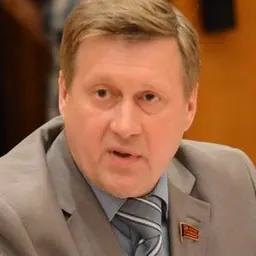
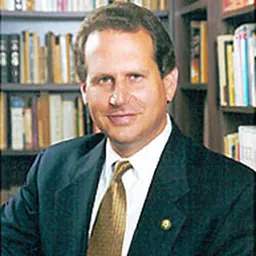
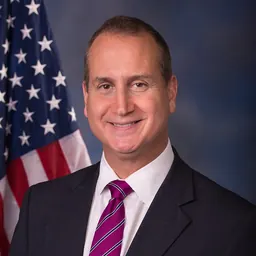
In April 2014, he visited Russia to declare Cuba's recognition of the annexation of Crimea by the Russian Federation, also receiving an honorary doctorate at Voronezh State University. The following month, he visited Novosibirsk, Russia, meeting with the mayor, Anatoly Lokot, and regional governor Vladimir Gorodetsky to improve Cuban relations with scientific institutions in the region. U.S. Congressman Mario Díaz-Balart, who represents the 25th district of Florida, and former U.S. Congressman Lincoln Díaz-Balart were his maternal cousins.
Death Castro Díaz-Balart died by suicide in Havana on 1 February 2018, at the age of 68. The report of his suicide by the Cuban government was described as "unusually public." Fidel Ángel Castro Díaz-Balart's first cousin Gabriel Díaz-Balart also died by suicide as a result of depression. "Fidelito" Castro Díaz-Balart was buried in the Central Colon Cemetery in Havana, in the tomb of the Academia de Ciencias, to the right of André Voisin.
At the time of his death, he still held his positions with the Cuban Academy of Sciences and the Council of State.
Publications Ciencia, innovación y futuro (Grijalbo: 2002) Energía nuclear y desarrollo: realidades y desafíos en los umbrales del siglo XXI (Colihue:1991) Espacio y tiempo en la filosofía y la física (Vadell: 1990) Ciencia, tecnología y sociedad: hacia un desarrollo sostenible en la era de la globalización (Editorial Científico-Técnica: 2003)
Don’t just read it —
keep it.
Full-length biographies made to live with: read them, listen on the way to work, watch them tonight.
- E-book
- Audio
- Video
Instant download · yours to keep · every purchase keeps this site free
Important facts
Family & relationships
People in Fidel Ángel Castro Díaz-Balart's life
Named in this biography and alive at the same time


Related people
Same field, nearest in time


Contemporaries
People whose lives overlapped Fidel Ángel Castro Díaz-Balart's


Frequently asked questions
Who was Fidel Ángel Castro Díaz-Balart?
first son of the Cuban leader Fidel Castro
When was Fidel Ángel Castro Díaz-Balart born?
Fidel Ángel Castro Díaz-Balart was born on 1 September 1949 in Havana.
When did Fidel Ángel Castro Díaz-Balart die?
Fidel Ángel Castro Díaz-Balart died on 1 February 2018 in Havana.
What was Fidel Ángel Castro Díaz-Balart's occupation?
Fidel Ángel Castro Díaz-Balart was a physicist, politician, nuclear physicist and nuclear physics.
What nationality was Fidel Ángel Castro Díaz-Balart?
Fidel Ángel Castro Díaz-Balart was Cuban.
Sources & further reading
· Wikipedia: Fidel Ángel Castro Díaz-Balart
· DBpedia: Fidel Castro Díaz-Balart
Cite this page
APA: Biography.guide. (2026). Fidel Ángel Castro Díaz-Balart. https://biography.guide/fidel-angel-castro-diaz-balart/
MLA: "Fidel Ángel Castro Díaz-Balart." Biography.guide, https://biography.guide/fidel-angel-castro-diaz-balart/.
Chicago: "Fidel Ángel Castro Díaz-Balart." Biography.guide. https://biography.guide/fidel-angel-castro-diaz-balart/.
Data last updated: 2026-09-25 · Spot an error? Report a correction.
Page generated 2026-09-27 05:11 UTC