
About Fernando Cajías
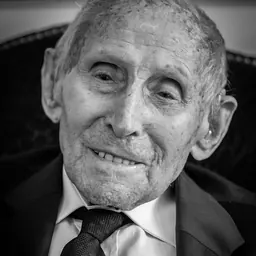
Born 1949. Fernando Cajías is a Bolivian politician, writer, lawyer, historian, university teacher and archivist.
Fernando Julio Cajías de la Vega (born 28 February 1949) is a Bolivian academic, historian, and politician. A member of the academically influential Cajías family, Cajías composed part of the first generation of professional historians that began operating in Bolivia in the second half of the twentieth century. A graduate and tenured professor at the Higher University of San Andrés, he taught art and cultural history and worked as a doctoral advisor, in addition to serving as the university's secretary general from 1978 to 1980 and as its dean of humanities from 1997 to 2003. His archival work led him to serve as director of the National Institute of History and Literature and later executive director of its parent body, the Bolivian Institute of Culture.
Initially sympathetic towards conservative values, Cajías realigned towards left-wing ideology during the country's democratic transition. He joined the Revolutionary Left Movement in 1977, with which he was elected to represent La Paz in the Chamber of Deputies from 1985 to 1989 before being appointed prefect of La Paz from 1989 to 1992. After a brief stint as ambassador to Spain from 1992 to 1993, Cajías returned to Bolivia, where he was elected to the La Paz Municipal Council. Estranged from the Revolutionary Left Movement over his agitation for internal renewal, Cajías sought to be reelected with a different front in 1995 but failed to retain his seat.
Though retired from politics from that point on, Cajías continued to hold minor public posts throughout the 2000s. He served as vice minister of cultures from 2004 to 2005 and headed the research team at the Strategic Directorate of the Maritime Claim during the country's lawsuit against Chile. An unsuccessful candidate for vice rector and rector in 2004 and 2021, respectively, Cajías continues to work as a professor and researcher at the Higher University of San Andrés.
Early life and career Fernando Cajías was born on 28 February 1949, in the Sopocachi neighborhood of La Paz to and Beatriz de la Vega. Cajías was raised in a highly academic environment; his father, the patriarch of the Cajías clan, was a respected journalist and intellectual, most notable for founding and directing Presencia, one of the leading periodicals of the second half of the twentieth century. Cajías was the eldest of ten siblings: six sisters—Dora, Beatriz, Lupe, Magdalena, , and Isabel—and three brothers—, Huáscar, and Pedro—a substantial majority of whom became distinguished authors, historians, journalists, professors, and public officials in their own right. After that, he attended the Higher University of San Andrés (UMSA), graduating with degrees in history, law, and political science; his graduate thesis, La Provincia de Atacama, 1825–1842, was published by the Bolivian Institute of Culture in 1975. Together with other figures, Cajías composes part of the first generation of professional historians and archivists in the country, a group primarily consisting of alumni of Professor , a noted historian and twenty-year professor at the UMSA. Shortly after graduating, Cajías traveled to Spain, where he completed his doctorate in History of the Americas at the University of Seville. In other areas, Cajías chaired the Bolivian Society of History, was a member of the Bolivian Academy of History, and served as a counselor at the Central Bank of Bolivia's Cultural Foundation.
Political career Originally a conservative, Cajías realigned himself towards the left during the country's transition to democracy. He joined the Revolutionary Left Movement (MIR) in 1977, composing part of history academia's "Mirista-wing," a sizeable clique of partisan professors led by Crespo. Exiled to Panama by the García Meza regime, Cajías returned to the country in 1982 and was elected to represent La Paz in the Chamber of Deputies on the MIR's 1985 party list. He belonged to the second generation of MIR partisans, a group whose political careers began in conjunction with the fall of the military dictatorships and the reintroduction of democratic administration. For those who stood out in their first elective role, the MIR typically promoted them from the lower to upper chamber, a sign of confidence in their electability. Such was the case with Cajías, who ran for a seat in the Senate in 1989, though he failed to attain the position.
Despite the loss, Cajías remained close with party leadership and was appointed prefect of La Paz when Jaime Paz Zamora assumed the presidency. After a short tenure focused on promoting the revitalization of La Paz's cultural traditions, Cajías was reassigned to serve as the country's ambassador to Spain, where he resided for the duration of Paz Zamora's term. Upon his return to Bolivia in 1993, Cajías was nominated to contest the La Paz mayoralty. Though unsuccessful in that effort, the MIR's electoral performance did net him a seat in the municipal council. As the MIR's political image became tarnished by its top officials' links to drug trafficking and other forms of corruption, Cajías led the drive to move the party forward by expunging its "cardinal" figures from party leadership. However, such positions proved contentious among the party's partisans, ultimately leading Cajías to defect from the MIR over its inability to modernize internally. In 1995, he joined the —a minor party primarily composed of defectors from other fronts—with which he sought reelection, though to no avail.
Academic work Following his 1995 defeat, Cajías retired from political life, returning to his roots in academia. He resumed instruction at the UMSA, where he worked as a doctoral advisor and professor, teaching undergraduate and postgraduate courses in art and cultural history in his capacity as dean of humanities. As a visiting scholar, he also hosted lectures and taught courses at the Bolivian Catholic University and other national and foreign institutes. Over a decade later, in 2021, he sought to be elected rector in his own right but was forced to withdraw after contracting COVID-19.
In 2004, during the administration of Carlos Mesa, Cajías was appointed to serve as vice minister of cultures.
Personal life In his first marriage, Cajías was betrothed to Naya Ponce, minister of popular participation in the administration of Eduardo Rodríguez Veltzé, and daughter of noted archeologist Carlos Ponce Sanginés and anthropologist Julia Elena Fortún. The pair had two children, and José Gabriel, the former of whom worked as a choreographer and stage director at various theaters in Bolivia and Germany. Following his separation from Ponce, Cajías remarried to María de los Ángeles Urioste, with whom he had two more children, Andrés and Ana Catalina.
Senator
Revolutionary Left Movement 92,143 15.66% 4th
Mayor
Revolutionary Left Movement 15,626 4.30% 5th
Councillor
3,253 1.08% 8th
Publications
Don’t just read it —
keep it.
Full-length biographies made to live with: read them, listen on the way to work, watch them tonight.
- E-book
- Audio
- Video
Instant download · yours to keep · every purchase keeps this site free
Important facts
People in Fernando Cajías's life
Named in this biography and alive at the same time



Related people
Same field, nearest in time






Contemporaries
People whose lives overlapped Fernando Cajías's

Frequently asked questions
Who is Fernando Cajías?
Bolivian historian and politician (born 1949)
When was Fernando Cajías born?
Fernando Cajías was born on 28 February 1949 in La Paz.
What is Fernando Cajías's occupation?
Fernando Cajías is a politician, writer, lawyer, historian, university teacher and archivist.
What nationality is Fernando Cajías?
Fernando Cajías is Bolivian.
Sources & further reading
Cite this page
APA: Biography.guide. (2026). Fernando Cajías. https://biography.guide/fernando-cajias/
MLA: "Fernando Cajías." Biography.guide, https://biography.guide/fernando-cajias/.
Chicago: "Fernando Cajías." Biography.guide. https://biography.guide/fernando-cajias/.
Data last updated: 2026-09-20 · Spot an error? Report a correction.
Page generated 2026-09-27 05:28 UTC