
About Ferdinand Lepcke
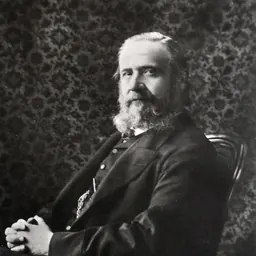
Lived 1866 – 1909 (aged 42). Ferdinand Lepcke was a German sculptor and painter.
Life Ferdinand Lepcke was born on March 23, 1866, in Coburg in the Thuringian state of Saxe-Coburg and Gotha, located in today's Bavaria.
The family moved to Berlin at the end of his early childhood. After graduating from gymnasium, Ferdinand started studies at the Berlin Academy of Arts. He stayed there several years, from 1883 and 1890. During two years (1888–1890), he studied under the guidance of artist professor Fritz Schaper. Statue of Justus Jonas in the Castle Church of Wittenberg (1892); Bildhauer , statue, sandstone (1893) bought by the Berlin National Gallery and placed in the columned hall in February 1897. Lost; Die Schreibende , plaster (1894) Bust of Adolph Paalzow (1894); Bust of Professor Dr. Fritsch (1897); Herm of Friedrich Rückert, Carrara marble (1899), Berlin Viktoriapark; Überrascht , bronze group (1899); Riesenspielzeug , female figure (1903); Kuß , bronze (1900), Regional Museum in Bydgoszcz; A copy of the main figures was placed in Coburg in 1906. A reduced copy of all three groups of figures was placed in Eisleben in 1916. The ensemble was melted down in 1942; Wiedersehen , bronze (1904), Hermitage Museum, Saint Petersburg. 60-cm high replicas are proposed by the "Lauchhammer Art Foundry". A small bronze copy stands at the Regional Museum in Bydgoszcz; Bust of the painter A. Meyer, plaster (1904); Heimkehr , bronze (1907); Bust of F. von Strantz, plaster (1907);
Awards and recognition Prussian Academy of Arts state prize in 1893. Knight's Cross of the Order of the White Falcon in 1895. Golden medal at the 1903 Great Berlin Art Exhibition. In Bydgoszcz, Lepcke designed and created two of the most famous landmarks of the city: the statue of The Archer (-). Unveiled in 1910, the naked sculpture, displayed in the downtown of Bromberg, aroused a lot of emotions and words of indignation. After the re-creation of the Polish state in 1918, the artwork was told to have been "intentionally set by the Prussian invader to scandalize Polish society"; The Deluge (-), a monumental fountain in the Park "Casimir the Great". In addition to the exhibitions in his native city of Coburg, Ferdinand Lepcke was the center of an exposition in Bydgoszcz, from December 18, 2014, to March 15, 2015, in the Regional Museum in Bydgoszcz located on Mill Island.
Gallery
Don’t just read it —
keep it.
Full-length biographies made to live with: read them, listen on the way to work, watch them tonight.
- E-book
- Audio
- Video
Instant download · yours to keep · every purchase keeps this site free
Important facts
People in Ferdinand Lepcke's life
Named in this biography and alive at the same time

Related people
Same field, nearest in time



Contemporaries
People whose lives overlapped Ferdinand Lepcke's




Frequently asked questions
Who was Ferdinand Lepcke?
German sculptor (1866–1909)
When was Ferdinand Lepcke born?
Ferdinand Lepcke was born on 23 March 1866 in Coburg.
When did Ferdinand Lepcke die?
Ferdinand Lepcke died on 12 March 1909 in Berlin.
What was Ferdinand Lepcke's occupation?
Ferdinand Lepcke was a sculptor and painter.
What nationality was Ferdinand Lepcke?
Ferdinand Lepcke was German.
Sources & further reading
Cite this page
APA: Biography.guide. (2026). Ferdinand Lepcke. https://biography.guide/ferdinand-lepcke/
MLA: "Ferdinand Lepcke." Biography.guide, https://biography.guide/ferdinand-lepcke/.
Chicago: "Ferdinand Lepcke." Biography.guide. https://biography.guide/ferdinand-lepcke/.
Data last updated: 2026-09-20 · Spot an error? Report a correction.
Page generated 2026-09-27 05:12 UTC