
Ferdinand Claiborne
American militia general and politician (March 9, 1772 - March 22, 1815)
About Ferdinand Claiborne
Lived 1773 – 1815 (aged 41–42). Ferdinand Claiborne was an American military personnel.
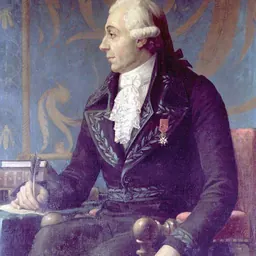
Ferdinand Leigh Claiborne (March 9, 1772–March 22, 1815) was an American military officer most notable for his command of the militia of the Mississippi Territory during the Creek War and the War of 1812.
Early life Born in Sussex County, Virginia, Claiborne was a descendant of Colonel William Claiborne (1600–1677), who was born in Crayford, Kent, England and settled in the Colony of Virginia. He was one of four sons of "William Claiborne, of Richmond, Va. [who] was married to Miss Mary Leigh, an aunt of Hon. Benjamin Watkins Leigh, United States Senator from Virginia...Ferdinand Leigh Claiborne, Gov. William Charles Cole Claiborne, Dr. Thomas A. Claiborne, and "the Hon. N. H. Claiborne, who was for twenty years a member of Congress from Virginia".
He began his military service when appointed an ensign in 1793 in the 1st Sub-Legion. Promoted to lieutenant in 1794, Claiborne fought at the Battle of Fallen Timbers, under the command of General Anthony Wayne. With the end of the Northwest Indian War, Claiborne served as a recruiter in Richmond and Norfolk, before returning to the Northwest Territory to serve as acting adjutant-general. Promoted to captain in 1799, Claiborne resigned his commission on 1 January 1802 and moved to Natchez, Mississippi.
Mississippi Territory At the time of his move to Natchez, Claiborne's brother William C. C. Claiborne was serving as governor and superintendent of Indian affairs for the Mississippi Territory.
Elected in 1804 to serve in the 3rd General Assembly of the Mississippi Territory, Claiborne experienced a rapid rise in prominence. In July 1804 he announced in the Natchez newspaper that he and Edmund Wooldridge were becoming business partners. As of 1805, Ferdinand Claiborne had a dry goods store in the Natchez District in partnership with Edmond Wooldridge. They announced a dissolution of the partnership in October 1805, while Claiborne carried selling assorted foodstuffs and sundries including Madeira wine, coffee, soap, tamarinds, and spermacetti candles.
Appointed colonel of the Militia of Adams County, in 1806 Claiborne was ordered to march a unit in support of General James Wilkinson during the Sabine expedition. On November 30, 1806, he dueled Captain Benjamin Farar on the Vidalia sandbar; they shot at each other "with a brace of dueling pistols at ten paces. After two rounds were fired without damage to either party, the challenger declared that his honor was satisfied." The feud continued into 1807, in part because Farar "considered Claiborne an arrogant martinet". A dispute involving Farar, Claiborne, and Governor Williams and review of militia troops led to the revocations of Claiborne's commissions as militia colonel and magistrate. In October 1807 local planter and politician Joseph Sessions wrote to James Madison requesting intervention in the matter of Claiborne's commission. "Natchez, Dec. 3" The Impartial Review and Cumberland Repository, Nashville, Tennessee,
December 27, 1806 In January 1807 he advertised for sale "two women and five children, two of them of sufficient size to pick cotton...to be sold low and a credit given until 1st March next."
As of 1812 he was a director of the Bank of Mississippi, capitalized at $500,000, along with Stephen Minor, Samuel Postlethwaite, William Shields, Wm. Brooks, John Hankerson, Lyman Harding, Wm. G. Forman, Jeremiah Hunt, Lewis Evans, Jas. McIntosh, Thos. Wilkins, and Jas. C. Wilkins.
War of 1812 and Creek War A change of territorial administrations led to Governor Holmes asking the President of the United States to commission Claiborne as a Brigadier General of the militia of the territory. Supported by the legislature in 1809, this appointment was made in 1811. Claiborne assigned Major Daniel Beasley to take less than 200 militiamen to reinforce forts along the Tensaw River. Beasley distributed about 50 of his troops to various forts along the river and stationed the remaining 120 at Fort Mims. This decision turned out to be a fateful one as Beasley, his troops, and many of the settlers and mixed race Creek sheltering in the fort were killed during the Massacre of Fort Mims on 30 August 1813. Claiborne then established Fort Claiborne as his base of operations against the Creeks. With the completion of the fort, Claiborne was to be reinforced by army regulars from the 3rd Infantry Regiment and 7th Infantry Regiment. Another Hutchins daughter, Mary, was the wife of planter and territorial treasurer Abner Green.
Don’t just read it —
keep it.
Full-length biographies made to live with: read them, listen on the way to work, watch them tonight.
- E-book
- Audio
- Video
Instant download · yours to keep · every purchase keeps this site free
Important facts
People in Ferdinand Claiborne's life
Named in this biography and alive at the same time




Related people
Same field, nearest in time


Contemporaries
People whose lives overlapped Ferdinand Claiborne's

Frequently asked questions
Who was Ferdinand Claiborne?
American militia general and politician (March 9, 1772 - March 22, 1815)
When was Ferdinand Claiborne born?
Ferdinand Claiborne was born in 1773 in Sussex County.
When did Ferdinand Claiborne die?
Ferdinand Claiborne died on 22 March 1815.
What was Ferdinand Claiborne's occupation?
Ferdinand Claiborne was a military personnel.
What nationality was Ferdinand Claiborne?
Ferdinand Claiborne was American.
Sources & further reading
· Wikipedia: Ferdinand Claiborne
· DBpedia: Ferdinand Claiborne
Cite this page
APA: Biography.guide. (2026). Ferdinand Claiborne. https://biography.guide/ferdinand-claiborne/
MLA: "Ferdinand Claiborne." Biography.guide, https://biography.guide/ferdinand-claiborne/.
Chicago: "Ferdinand Claiborne." Biography.guide. https://biography.guide/ferdinand-claiborne/.
Data last updated: 2026-09-20 · Spot an error? Report a correction.
Page generated 2026-09-27 05:16 UTC