
About Félix Lizaso
Lived 1891 – 1967 (aged 75–76). Félix Lizaso was a Cuban writer.
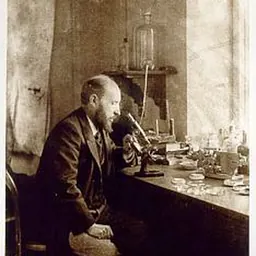
Félix Lizaso (June 23, 1891 – January 9, 1966) was a Cuban writer, literary critic, and scholar known for his extensive work on the life and writings of José Martí. He played a significant role in Cuban intellectual and cultural movements throughout the early and mid-20th century, contributing to both literary criticism and national political discourse. He was present at the Protest of the Thirteen, the first protest of the intellectual movement in Cuba since it had gained independence, was a signatory to the "Manifesto of the Group of Thirteen," and was later a member of the Minorista Group. Over the course of his career, he produced over three hundred literary works on the life and works of José Martí.
Early life and education Lizaso was born in Pipián, La Habana Province, Cuba. Lizaso did his first studies in the town of Madruga.
In Havana, he served on the Civil Service Commission until the 1933 revolution that ended the Machado dictatorship.
In 1932, he was co-editor of Surco, under the direction of Fernando Ortiz, and director Cervantes, the art and literature magazine.
In 1923, he participated in the Protest of the Thirteen, a student-led demonstration against government corruption, and was a member of the Grupo Minorista, which advocated for cultural and political reforms. He also contributed to literary initiatives such as the Revista de Avance and the publication of the Anthology of Modern Cuban Poetry (1926), which he co-edited with José Antonio Fernández de Castro.
Lizaso's research was published in periodicals across Latin America and in the twenty volumes of the Archivo de José Martí. His most significant scholarly contributions focused on José Martí, including;
Unknown Articles of Martí (1930) The three-volume Epistolario (1930–1931) Passion of Martí (1938) Martí, Mystic of Duty (1940) Martí, Spirit of the Just War (1944)
Beyond Martí studies, Lizaso wrote on Cuban and Latin American literature and philosophy. His critical works include Ensayistas Contemporáneos (1938) and Panorama of Cuban Culture (1949). He held leadership positions in various cultural institutions, including the Cuban Ministry of Education, the National Academy of Arts and Letters, the Cuban Commission of UNESCO, and the National Archives of Cuba.
Exile and later years In 1962, Lizaso left Cuba for the United States. His departure marked a period of personal and professional transition, during which he continued to engage with Cuban cultural discourse despite declining health. He contributed to scholarly publications and maintained his advocacy for Martí's legacy.
Don’t just read it —
keep it.
Full-length biographies made to live with: read them, listen on the way to work, watch them tonight.
- E-book
- Audio
- Video
Instant download · yours to keep · every purchase keeps this site free
Important facts
People in Félix Lizaso's life
Named in this biography and alive at the same time


Related people
Same field, nearest in time

Contemporaries
People whose lives overlapped Félix Lizaso's


Frequently asked questions
Who was Félix Lizaso?
Cuban writer
When was Félix Lizaso born?
Félix Lizaso was born in 1891.
When did Félix Lizaso die?
Félix Lizaso died in 1967 in Rhode Island.
What was Félix Lizaso's occupation?
Félix Lizaso was a writer.
What nationality was Félix Lizaso?
Félix Lizaso was Cuban.
Sources & further reading
Cite this page
APA: Biography.guide. (2026). Félix Lizaso. https://biography.guide/felix-lizaso/
MLA: "Félix Lizaso." Biography.guide, https://biography.guide/felix-lizaso/.
Chicago: "Félix Lizaso." Biography.guide. https://biography.guide/felix-lizaso/.
Data last updated: 2026-09-20 · Spot an error? Report a correction.
Page generated 2026-09-27 05:24 UTC