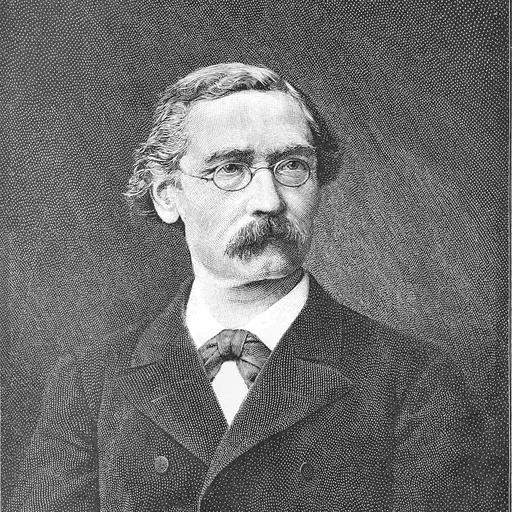
About Felix Hoppe-Seyler
Lived 1825 – 1895 (aged 69). Felix Hoppe-Seyler was a German chemist, biochemist, physiologist, physician and university teacher.
Ernst Felix Immanuel Hoppe-Seyler (né Felix Hoppe; 26 December 1825 – 10 August 1895) was a German physiologist and chemist, and the principal founder of the disciplines of biochemistry and molecular biology. He had discovered Yeast nucleic acid which is now called RNA in his attempts to follow up and confirm Miescher's results by repeating parts of Miescher's experiments. He took the name Hoppe-Seyler when he was adopted by his brother-in-law, a grandson of the famous theatre principal Abel Seyler.
Biography Hoppe-Seyler was born in Freyburg an der Unstrut in the Province of Saxony. He originally trained to be a physician in Halle and Leipzig, and received his medical doctorate from Berlin in 1851. Afterwards, he was an assistant to Rudolf Virchow at the Pathological Institute in Berlin. Hoppe-Seyler preferred scientific research to medicine, and later held positions in anatomy, applied chemistry, and physiological chemistry in Greifswald, Tübingen and Strasbourg. At Strasbourg, he was head of the department of biochemistry, the only such institution in Germany at the time. He eventually entered the orphan asylum at Halle, where he attended the gymnasium. In 1864, he was formally adopted by Georg Seyler and added the Seyler name to his birth name.
In 1858, he married Agnes Franziska Maria Borstein, and they had one son, Georg Hoppe-Seyler, who became a professor of medicine in Kiel.
Contributions
Felix Hoppe-Seyler, a physiologist and chemist, became the principal founder of biochemistry. His text Physiological Chemistry became the standard text for this new branch of applied chemistry.
His numerous investigations include studies of blood, hemoglobin, pus, bile, milk, and urine. Hoppe-Seyler was the first scientist to describe the optical absorption spectrum of the red blood pigment and its two distinctive absorption bands. He also recognized the binding of oxygen to erythrocytes as a function of hemoglobin, which in turn creates the compound oxyhemoglobin. Hoppe-Seyler was able to obtain hemoglobin in crystalline form, and confirmed that it contained iron.
He became an elected member of the French Academy of Sciences, despite the unfavorable political terms between France and Germany at that time, and this helped him gain an international reputation as the keen promoter of science.
Hoppe-Seyler performed important studies of chlorophyll. He is also credited with the isolation of several different proteins (which he referred to as "proteids"). In addition, he was the first scientist to purify lecithin and establish its composition. In 1877, he founded the Zeitschrift für Physiologische Chemie (Journal for Physiological Chemistry), and was its editor until his death in 1895.
Don’t just read it —
keep it.
Full-length biographies made to live with: read them, listen on the way to work, watch them tonight.
- E-book
- Audio
- Video
Instant download · yours to keep · every purchase keeps this site free
Important facts
People in Felix Hoppe-Seyler's life
Named in this biography and alive at the same time
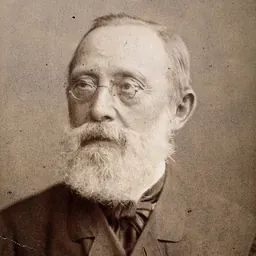

Related people
Same field, nearest in time

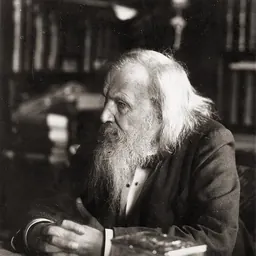


Contemporaries
People whose lives overlapped Felix Hoppe-Seyler's



Frequently asked questions
Who was Felix Hoppe-Seyler?
German chemist and physiologist (1825–1895)
When was Felix Hoppe-Seyler born?
Felix Hoppe-Seyler was born on 26 December 1825 in Freyburg.
When did Felix Hoppe-Seyler die?
Felix Hoppe-Seyler died on 10 August 1895 in Wasserburg.
What was Felix Hoppe-Seyler's occupation?
Felix Hoppe-Seyler was a chemist, biochemist, physiologist, physician and university teacher.
What nationality was Felix Hoppe-Seyler?
Felix Hoppe-Seyler was German.
Sources & further reading
· Wikipedia: Felix Hoppe-Seyler
Cite this page
APA: Biography.guide. (2026). Felix Hoppe-Seyler. https://biography.guide/felix-hoppe-seyler/
MLA: "Felix Hoppe-Seyler." Biography.guide, https://biography.guide/felix-hoppe-seyler/.
Chicago: "Felix Hoppe-Seyler." Biography.guide. https://biography.guide/felix-hoppe-seyler/.
Data last updated: 2026-09-22 · Spot an error? Report a correction.
Portrait: Wikimedia Commons · author & licence
Page generated 2026-09-27 05:04 UTC