
About Felisa A. Smith
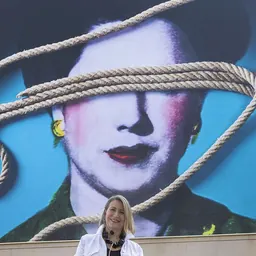
Born 1958. Felisa A. Smith is a university teacher and biologist.
Felisa A. Smith is an American ecologist who is a Distinguished Professor at the University of New Mexico. She is a conservation paleoecologist who uses fossil records to understand the pressing environmental issues such as the climate crisis and biodiversity loss. She has served as President of the American Society of Mammalogists and the International Biogeography Society. She was awarded the 2022 C. Hart Merriam Award by the American Society of Mammalogists and is a Fellow of the Paleontology Society.
Early life and education Smith's mother, Maria del Carmen Calvo Herrero, was an artist, and her father, Frank Smith, was a civil engineer. She studied biology, literature and visual arts at the University of California, San Diego. After graduating, Smith worked as a high school science teacher at Laguna Hills High School. Smith focused on ecology and evolutionary biology at the University of California, Irvine for her graduate studies. For her doctoral research, Smith investigated neotoma (pack rat) populations. She used fossils to understand whether pack rats obeyed Bergmann's rule, that the body size of a mammal is inversely proportional to the temperature of their environment. For example, she has studied the fossil record during the megafauna extinction, and found that ratios of carbon and nitrogen stable isotopes in plants (δ13C and δ15N) had shifted, indicative of changing animal diets.
Between the pleistocene and holocene, Smith found that some animals grew larger and some got smaller. Moreover, the loss of megafauna led to shifts in the ecology and size of surviving mammals. She has argued that the ongoing biodiversity loss due to human activities and climate change could have the same impact megafauna. She has demonstrated that the offspring of carnivorous dinosaurs reduced species diversity by taking on the role of multiple species as they grew. Smith also showed that the loss of large mammals impacted biogeochemical cycles around the world, and contributed to the drop in methane which is associated with the Younger Dryas, a colder interval in the late Pleistocene.
Awards and honors In 2020, Smith was elected Fellow of the Paleontological Society. The following year, she was elected President of the American Society of Mammalogists and the International Biogeography Society. She was the first hispanic woman to hold such a position. In 2022, she was awarded the American Society of Mammalogists Merriam Award. In 2023, she was honored with the University of New Mexico Ovation Award, named the 68th Annual Research Lecturer and a Distinguished Professor.
Selected publications
Personal life
Smith has two daughters, Emma, a historical geochemist, and Rosemary, a theoretical mathematician. She is married to Scott M. Elliott, a chemist at Los Alamos National Laboratory.
Don’t just read it —
keep it.
Full-length biographies made to live with: read them, listen on the way to work, watch them tonight.
- E-book
- Audio
- Video
Instant download · yours to keep · every purchase keeps this site free
Important facts
People in Felisa A. Smith's life
Named in this biography and alive at the same time



Related people
Same field, nearest in time





Contemporaries
People whose lives overlapped Felisa A. Smith's



Frequently asked questions
Who is Felisa A. Smith?
researcher
When was Felisa A. Smith born?
Felisa A. Smith was born in 1958.
What is Felisa A. Smith's occupation?
Felisa A. Smith is a university teacher and biologist.
Sources & further reading
Cite this page
APA: Biography.guide. (2026). Felisa A. Smith. https://biography.guide/felisa-a-smith/
MLA: "Felisa A. Smith." Biography.guide, https://biography.guide/felisa-a-smith/.
Chicago: "Felisa A. Smith." Biography.guide. https://biography.guide/felisa-a-smith/.
Data last updated: 2026-09-20 · Spot an error? Report a correction.
Page generated 2026-09-27 05:12 UTC