
About Fausto Zonaro
Lived 1854 – 1929 (aged 74). Fausto Zonaro was an Italian and Austrian painter and genre painter.
Fausto Zonaro (18 September 1854 – 19 July 1929) was an Italian painter, best known for his realist style paintings of life and history of the Ottoman Empire.
Life
Young life and early art career
Fausto Zonaro was born in Masi, a municipality in the Province of Padua, then part of the Austrian Empire. He was the eldest child of the mason Maurizio and his wife Elisabetta Bertoncin. Maurizio intended that his son should also be a mason, yet at a young age, Fausto showed a great ability at drawing. With his parents’ consent, he enrolled first in the Technical Institute in Lendinara, then in the Cignaroli Academy in Verona under Napoleone Nani. Fausto opened a small art school and studio in Venice, but traveled often to Naples as well. He felt no clear direction in his life at that time.
He actively displayed works in exhibition and gained respect of critics. He painted mainly genre works in oil and watercolor. In 1883 at Milan, he exhibited: Le rivelatrici napoletane; Da Sant'Elmo, and Al Pincio; in Rome, the canvases Passa la vacca; La sofferente; Le cucitrici napoletane, and Il saponaro. In 1884, at Turin: Tempesta; Primo nato; Primo tuono, and the Zoccolaro of Naples; and in 1887 at Venice: In attesa; Al Redentoretto, and Lavoratrice di perle. La casa Camerini of Padua once possessed a banditore; and two canvases: I pigiatori and In medio stat virtus.
The turning point in Zonaro's career occurred however in 1891, when he fell in love with photographer Elisabetta Pante (1863-1946), a pupil of his in Venice, and together they traveled to Istanbul, capital of the Ottoman Empire, inspired in part by Edmondo de Amicis’ orientalist travel book Constantinopoli.
Over time he gained patronage in Constantinople's aristocratic circles. While teaching painting to the wife of Munir Pasha, the Minister of Protocol, Zonaro and Pante got to know the important artistic figures of Istanbul of that time, including Osman Hamdi Bey. In 1896 he was nominated as the court painter (Ottoman Turkish: Ressam-ı Hazret-i Şehriyari) to Abdulhamid II thanks to the intervention of the Russian ambassador who had introduced the sultan to Zonaro's work, Il reggimento imperiale di Ertugrul sul ponte di Galata (in English: The Imperial Regiment of Ertugrul on the Galata Bridge), which he then purchased.
Fausto Zonaro: Mehmed II and the Ottoman Army approaching Constantinople, transporting a giant cannon.
The Sultan later commissioned a series of paintings depicting events in the life of the 15th-century Ottoman sultan, Mehmed II. As court painter, Zonaro viewed himself as the successor to the Venetian painter Gentile Bellini, who had been commissioned by Mehmed II to paint his portrait over 400 years earlier.
Return to Italy Zonaro remained in Istanbul until 1909, then returned to Italy after the Young Turk Revolution that overthrew his patron Abdulhamid II and made Ottoman Empire a constitutional monarchy. There would be no further Ottoman court painters after him.
Artistic work and reputation
A prolific artist who created hundreds of works, Zonaro painted portraits, landscapes and historical paintings, mostly of the Ottoman Empire. He is said to have been "one of those who made a major contribution to the development of western-style art in Turkey.” and Pera Museum. A number of his paintings belong to private collectors in Turkey.
Gallery
Some of Zonaro's paintings are in the Pera Museum in Istanbul (Daughter of the English Ambassador Riding in a Palanquin) and the Istanbul Museum of Modern Art.
Don’t just read it —
keep it.
Full-length biographies made to live with: read them, listen on the way to work, watch them tonight.
- E-book
- Audio
- Video
Instant download · yours to keep · every purchase keeps this site free
Important facts
People in Fausto Zonaro's life
Named in this biography and alive at the same time
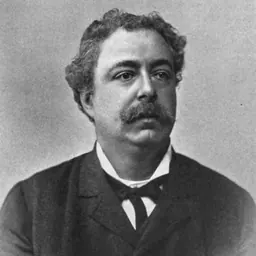
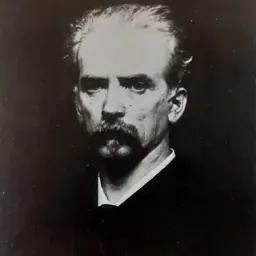
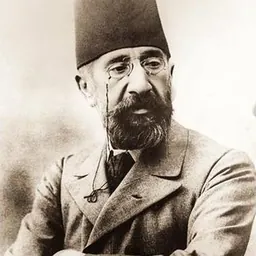

Related people
Same field, nearest in time
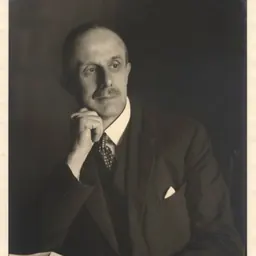

Contemporaries
People whose lives overlapped Fausto Zonaro's



Frequently asked questions
Who was Fausto Zonaro?
Italian painter (1854-1929)
When was Fausto Zonaro born?
Fausto Zonaro was born on 18 September 1854 in Masi.
When did Fausto Zonaro die?
Fausto Zonaro died on 19 July 1929 in Sanremo.
What was Fausto Zonaro's occupation?
Fausto Zonaro was a painter and genre painter.
What nationality was Fausto Zonaro?
Fausto Zonaro was Italian and Austrian.
Sources & further reading
Cite this page
APA: Biography.guide. (2026). Fausto Zonaro. https://biography.guide/fausto-zonaro/
MLA: "Fausto Zonaro." Biography.guide, https://biography.guide/fausto-zonaro/.
Chicago: "Fausto Zonaro." Biography.guide. https://biography.guide/fausto-zonaro/.
Data last updated: 2026-09-20 · Spot an error? Report a correction.
Page generated 2026-09-27 05:26 UTC