
About Fats Waller
Lived 1904 – 1943 (aged 39). Fats Waller was an American pianist, composer, singer, songwriter, jazz musician and conductor.
Thomas Wright "Fats" Waller (May 21, 1904 – December 15, 1943) was an American jazz pianist, organist, composer, and singer. His innovations in the stride style were widely influential among musicians. A popular performer in the jazz age and swing era, he toured internationally, achieving critical and commercial success in the United States and Europe. His best-known songs, "Ain't Misbehavin' and "Honeysuckle Rose", were inducted into the Grammy Hall of Fame in 1984 and 1999 respectively.
Waller was based mainly in New York City, and grew up under the influence of the Harlem Renaissance. He composed hundreds of songs, many of them uncredited, as he would frequently sell the rights to a new composition to get an immediate cash sum. His recording career spanned two decades and produced hundreds of recordings, with his solo output of particular interest to critics. He developed a distinctive performance style, wherein he performed risqué patter, witty asides, and amusing facial expressions while playing a piece. This proved popular on radio, as well as in the nightclubs and theater venues he performed in throughout his career. He was involved in several successful musical theater ventures, and developed an interest in classical music toward the end of his life, hoping to encourage audiences to take jazz as seriously as they did classical performances.
Early life Thomas Wright Waller was born in New York City on May 21, 1904, the seventh child of eleven (five of whom survived childhood). His parents were Adeline Waller , a musician, and Edward Martin Waller, a Baptist lay preacher and teamster; they originated from rural Virginia but moved to New York after marrying at the age of 16 in the hope of better employment, housing and education prospects. Thomas Waller started playing the piano at the age of six, and later played the reed organ at his father's open-air services. He also studied the double bass and violin, paying for music lessons by working in a grocery store. or one year. where he earned $23 a week. (Also reported as $32 a week.) Shortly thereafter Waller moved out to live with a friend, who was acquainted with pianist James P. Johnson, a leading figure of the burgeoning Harlem stride style. Waller met Johnson at the age of 16, He toured the US, often staging surprise concerts to entertain the troops at the local military post.
Waller had been developing his interest in composition and classical music, inspired by George Gershwin's Rhapsody in Blue and Concerto in F. He began to incorporate more classical themes into his music, and took up the violin. While in London in 1939 he composed the impressionist London Suite, representing different areas of the city he had visited, and this was recorded by HMV. On January 14, 1942, he staged a concert in Carnegie Hall in an attempt to make audiences take jazz more seriously. The concert was received well by the audience, although at least one critic gave it a mixed review, possibly because Waller had become drunk during the interval.
Waller's former publisher Irving Mills had become a film producer in the intervening years, and in early 1943 engaged Waller to perform songs including "Ain't Misbehavin' (which he owned the rights to) in Stormy Weather. Upon returning to New York, Waller began to compose for the musical Early to Bed, which premiered in Boston on May 24, 1943. It received positive reviews, and was staged at the Broadhurst Theatre on Broadway on June 17. Waller was the first black composer to write a Broadway show for a white cast.
Compositions Waller is credited with composing hundreds of songs over the course of his career. He is also believed to have composed many songs in the 1920s and sold them for immediate cash, for the songs later to be credited to other composers. The author Alyn Shipton comments that "the stories of Fats selling songs for $10 apiece, or trading them for hamburgers with Fletcher Henderson, or parting with lucrative royalty contracts for a minuscule cash advance covering a total assignment of rights, are legion, and it is virtually impossible to separate the fact from the fiction." Publishers at the time took advantage of black musicians, and in response Waller and Razaf would often sell the same song with different lyrics to various publishers without their knowledge. Waller added a note to the program for his 1942 Carnegie Hall concert: "Some of the best of Mr. Waller's popular songs are not credited to him simply because he sold all rights to them to unscrupulous Tin Pan Alley authors." Waller's son Maurice, in his biography of his father, describes how Waller would be angry when Maurice played a song Waller had sold in this way, specifically naming "I Can't Give You Anything but Love" and "On the Sunny Side of the Street": "he explained how he had sold that tune or other tunes just for drinking money and it bothered him terribly that they had become hits."
Personal life In 1920, Waller married Edith Hatch, and the couple moved in with Edith's parents as they were unable to afford their own home. Edith's parents disapproved of Waller's career as a musician, considering it unfit for a newly married man. They found their own apartment, and Edith gave birth to a son, Thomas Waller Jr., in 1921. She was unhappy being married to a working musician, with its financial insecurity and unsociable hours, and felt that she and their son deserved more of Waller's time and attention. In 1923 they divorced, with an agreement for Waller to pay $35 per week in child support and alimony. Waller persistently failed to pay this, prompting Edith to take him to court several times, and he spent time in jail on Welfare Island. His will left her the minimum amount allowed by law, with the stipulation that this should be reduced to nothing in the event that the law change to permit this between the time of writing and his death.
Waller married Anita Rutherford, whom he knew in childhood and met again while playing at the Lincoln Theatre, in 1926. They had a son, Maurice Thomas Waller, born on September 10, 1927. In 1928, Waller and Rutherford had their second son, Ronald Waller.
In 1938, Waller was one of the first African Americans to purchase a home in the Addisleigh Park section of St. Albans, Queens, a New York City community with racially restrictive covenants. After his purchase, and litigation in the New York State courts, many prosperous African Americans followed, including many jazz artists, such as Count Basie, Lena Horne, Ella Fitzgerald, and Milt Hinton.
Death Waller's health began to decline in 1939 or 1940, with heavy alcohol drinking, working late hours, and excessive food consumption being contributing factors (he reportedly weighed about at the time of his death). He contracted influenza while playing a series of events at the Zanzibar Room in Hollywood in October 1943, but disregarded a doctor's recommendation to go to the hospital and stop drinking.
Waller died of pneumonia in the early morning of December 15, 1943, while returning to New York on the Santa Fe Chief, as the train was stopped at Kansas City Union Station. His funeral took place at Abyssinian Baptist Church in Harlem, the church his parents had joined after first moving to the city from Virginia. More than 4,200 people were estimated to have attended, which prompted Adam Clayton Powell Jr., who delivered the eulogy, to observe that Waller "always played to a packed house". Afterwards he was cremated, and his ashes were scattered over Harlem from an airplane piloted by a World War I and Spanish Civil War pilot known as the "Black Ace".
Legacy The academic Paul Machlin notes that stories about Waller's colorful life and large personality have drawn attention away from his musical influence: "the persistent myths surrounding Waller's lifemyths that magnify his affinity and capacity for high living, his conviviality, his ebullient personality, and his supposed disinclination to take his music seriously ... have overshadowed both the quality of his improvisations and the magnitude of his contributions to jazz".
Waller was the first significant jazz organist, with a notable influence on Count Basie, Milt Herth, and Glenn Hardman. His chief legacy, however, is his contributions to jazz piano, particularly in stride: "The fullness and variety of his tone are still unsurpassed, and he used a wide dynamic range to great expressive and dramatic effect. Harmonically, he sometimes added inner pitches to the customary octaves or 10ths in the left hand, producing richly voiced three-note chords; his chromatic alterations and passing notes undoubtedly influenced Art Tatum." Alyn Shipton notes that Waller's use of "backward tenths", in which the notes are played at slightly different times in order for the upper note to act as a counterpoint to the melody, was emulated by Ralph Sutton and particularly Don Ewell. Waller's solo piano pieces have garnered the most critical attention, and "Handful of Keys" in particular became a set piece for jazz pianists.
A number of musicians name Waller as an influence. Dizzy Gillespie cited his distinctive style in a 1981 interview: "I am serious about my music, but I like to have fun, too. Fats Waller always had fun, and he was my main man." Ralph Sutton was a great admirer of Waller, saying, "I've never heard a piano man swing any better than Fatsor swing a band better than he could. I never get tired of him. Fats has been with me from the first, and he'll be with me as long as I live." Other examples include Joe Sullivan, Hank Duncan, Billy Kyle, Teddy Wilson, Johnny Guarnieri, Bobby Henderson, Dick Wellstood, Martha Davis, and Don Ewell.
Shortly after his death, in April 1944, a group of his contemporaries including Count Basie, Lena Horne, Hazel Scott and the reunited Rhythm band held a memorial concert at The Town Hall, and the remaining band members continued to perform similar concerts at the Overseas Press Club on Waller's birthday. Waller's music features in the 1976 revue Bubbling Brown Sugar. A Broadway musical showcasing Waller tunes entitled Ain't Misbehavin' opened in 1978 and ran for 1,604 performances; it was revived in 1988 and has toured widely.
Recognition and awards Year Inducted Title 1970 Songwriters Hall of Fame 1989 Big Band and Jazz Hall of Fame 1993 Grammy Lifetime Achievement Award 2005 Jazz at Lincoln Center: Nesuhi Ertegun Jazz Hall of Fame 2008 Gennett Records Walk of Fame
Waller's recordings were inducted into the Grammy Hall of Fame, a special Grammy Award established in 1973 to honor recordings that are at least 25 years old and that have "qualitative or historical significance."
Grammy Hall of Fame Awards Year Recorded Title Genre Label Year Inducted Notes 1929 "Ain't Misbehavin'" Jazz (single) Victor 1984 Listed in the National Recording Registryby the Library of Congress in 2004. 1934 "Honeysuckle Rose" Jazz (single) Victor 1999
Selected works Recordings Waller features in hundreds of recordings. JSP Records released a complete collection of the known extant recordings:
1922–29 – The Complete Recorded Works Vol. 1: Messin' Around With The Blues (4xCD) (JSP, 2007) 1930–34 – The Complete Recorded Works Vol. 2: A Handful Of Keys (4xCD) (JSP, 2006) 1934–36 – The Complete Recorded Works Vol. 3: Rhythm And Romance (4xCD) (JSP, 2007) 1936–38 – The Complete Recorded Works Vol. 4: New York, Chicago & Hollywood (4xCD) (JSP, 2007) 1938–40 – The Complete Recorded Works Vol. 5: New York, London & Chicago (4xCD) (JSP, 2008) 1940–43 – The Complete Recorded Works Vol. 6: New York, Chicago & Hollywood (4xCD) (JSP, 2008)
Instrumental Piano solo Source:
Title Year "Hog Maw Stomp" 1924 "Alligator Crawl" (renamed "House Party Stomp") 1925 "Old Folks Shuffle" 1926 "The Digah's Stomp" 1928 "Gladyse" 1929 "Valentine Stomp" 1929 "Handful of Keys" 1930 "Numb Fumblin' 1930 "Viper's Drag" 1930 "African Ripples" 1931 "Smashing Thirds" 1931 "Clothes Line Ballet" 1934 "Functionizin' 1935 "Bach Up to Me" 1936 "Black Raspberry Jam" 1936 "Fractious Fingering" 1936 "Lounging at the Waldorf" 1936 "Paswonky" 1936 "London Suite" 1939 "Jitterbug Waltz" 1942
Organ solo Source:
Title Year "Fats Waller Stomp" 1927 "Lenox Avenue Blues" 1927 "Messin' Around with the Blues" 1927 "Sloppy Water Blues" 1927 "Soothin' Syrup Stomp" 1927
Songs Source:
Title Year Lyricist(s) Collaborator "Wild Cat Blues" 1923 Clarence Williams "Squeeze Me" 1923 Andy Razaf "Anybody Here Want to Try my Cabbage" 1924 Andy Razaf "In Harlem's Araby" 1924 Jo Trent "Georgia Bo-Bo" 1926 Jo Trent "Come On and Stomp, Stomp, Stomp" 1927 C. Smith, Irving Mills "I'm Goin' Huntin' 1927 J. C. Johnson "Ain't Misbehavin' 1929 Andy Razaf "My Feelin's are Hurt" 1929 Andy Razaf "Blue Turning Grey over You" 1929 Andy Razaf "Honeysuckle Rose" 1929 Andy Razaf "My Fate is in Your Hands" 1929 Andy Razaf "Sweet Savannah Sue" 1929 Russell Brooks, Andy Razaf "What Did I Do to Be so Black and Blue" 1929 Andy Razaf Russell Brooks "Zonky" 1929 Andy Razaf "I'm Crazy 'Bout my Baby and My Baby's Crazy 'Bout Me" 1931 Alex Hill "How Can You Face Me" 1932 Andy Razaf "Keepin' Out of Mischief Now" 1932 Andy Razaf "Strange as it Seems" 1932 Andy Razaf "Ain't Cha Glad" 1933 Andy Razaf You're Breakin' my Heart" 1933 Spencer Williams "Stealin' Apples" 1936 Andy Razaf "Joint is Jumpin'" 1938 Andy Razaf "Spider and the Fly" 1938 Andy Razaf, J. C. Johnson "You Can't Have Your Cake and Eat It" 1939 Spencer Williams "Old Grand Dad" 1940 "All That Meat and no Potatoes" 1941 Ed Kirkeby "Slightly Less Than Wonderful" 1943 George F. Marion
Stage Source: Title City Location Date
Philadelphia Gibson's Theatre February 13, 1928
Connie's Inn May 1929
Lafayette Theatre June 28, 1930
The Harlem Alhambra December 29, 1930
Shubert Theatre May 24, 1943
Film Source: Title Director Year Hooray for Love Walter Lang 1935 King of Burlesque Sidney Lanfield 1936 Soundies shorts Warren Murray 1941 Stormy Weather Andrew L. Stone 1943
Don’t just read it —
keep it.
Full-length biographies made to live with: read them, listen on the way to work, watch them tonight.
- E-book
- Audio
- Video
Instant download · yours to keep · every purchase keeps this site free
Important facts
People in Fats Waller's life
Named in this biography and alive at the same time
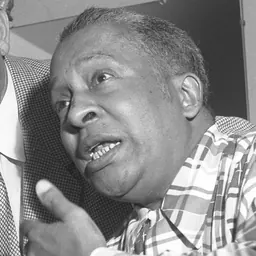
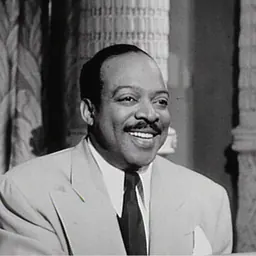

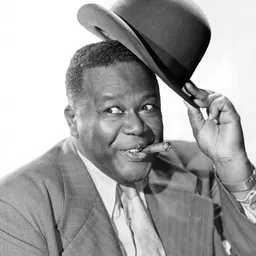

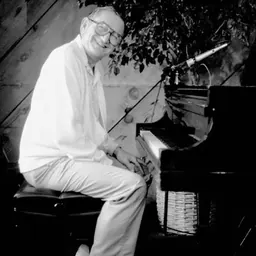


Related people
Same field, nearest in time



Contemporaries
People whose lives overlapped Fats Waller's




Frequently asked questions
Who was Fats Waller?
American jazz pianist and composer (1904–1943)
When was Fats Waller born?
Fats Waller was born on 21 May 1904 in New York City.
When did Fats Waller die?
Fats Waller died on 15 December 1943 in Kansas City.
What was Fats Waller's occupation?
Fats Waller was a pianist, composer, singer, songwriter, jazz musician and conductor.
What nationality was Fats Waller?
Fats Waller was American.
Sources & further reading
Cite this page
APA: Biography.guide. (2026). Fats Waller. https://biography.guide/fats-waller/
MLA: "Fats Waller." Biography.guide, https://biography.guide/fats-waller/.
Chicago: "Fats Waller." Biography.guide. https://biography.guide/fats-waller/.
Data last updated: 2026-09-20 · Spot an error? Report a correction.
Page generated 2026-09-27 05:30 UTC