
About Fátima Bezerra
Born 1955. Fátima Bezerra is a Brazilian politician, teacher and trade unionist.
Maria de Fátima Bezerra (born 19 May 1955) is a Brazilian politician who has served as Governor of Rio Grande do Norte since January 2019. Previously, she was a federal deputy representing the state from 1995 to 2015. A member of the Workers' Party, she is one of the first two openly LGBTQ governors in Brazil's history (alongside Eduardo Leite), identifying as a lesbian woman.
Early life and education Maria de Fátima Bezerra was born on 19 May 1955 in Nova Palmeira, in the state of Paraíba.
In 1980, she graduated in Pedagogy from the Federal University of Rio Grande do Norte (UFRN),
Political career
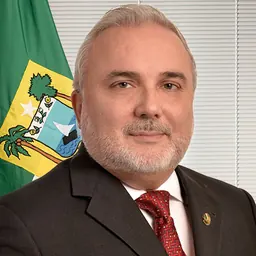
State representative A member of the Workers' Party (PT) since 1981, Fátima Bezerra was elected state deputy for Rio Grande do Norte for two terms: in 1994, with 8,347 votes; and in 1998, with 30,697 votes. During the time that she remained in the Legislative Assembly of Rio Grande do Norte (ALRN), she was president of the Human Rights Commission and of the Consumer Protection, Environment and Interior Commission. In October 2017, Bezerra voted against maintaining the mandate of Senator Aécio Neves, showing himself favorable to the decision of the First Panel of the Supreme Federal Court in the process in which he is accused of corruption and obstruction of justice for requesting two million reais from the entrepreneur Joesley Batista. With his election to the state government, his first deputy, Jean-Paul Prates (PT) takes over the mandate.
Governorship
In the 2018 state elections, Fátima Bezerra ran for the government of Rio Grande do Norte through the coalition Do Lado Certo made up of PT, PC do B and PHS, with deputy attorney Antenor Roberto. In the first round, she was in 1st place by reaching 748,150 votes (46.17% of valid votes), defeating then Governor Robinson Faria (3rd) and ahead of former Mayor of Natal, Carlos Eduardo Alves (2nd ), with whom she disputed the second round. In the second round, she was elected governor of the state with the sum of 1,022,910 (57.60% of valid votes), becoming the holder of the largest vote among all the elected governors in the history of Rio Grande do Norte.
Request for annulment Fátima Bezerra and Antenor Roberto were the targets of a lawsuit filed by the Electoral Public Prosecutor's Office (MPE) requesting the annulment or suspension of their ticket, along with the rejection of their accounts, which had already been approved with reservations by the Regional Electoral Court (TRE). The request is based on the fact that resources used to promote female candidates were used in the campaigns of 25 men and in a company contracted by Fátima that was created three days before submitting its first invoice to the governor's campaign.
Fátima's defense stated that suspicions raised by the Electoral Public Prosecutor's Office had already been analyzed by the Electoral Court when the accounts were approved, highlighting that the contracted company was created at the last minute due to tax issues and that the campaign funds for the women were transferred from the PCdoB to the governor.
The request for annulment filed by the Electoral Public Prosecutor's Office was denied in a decision by electoral judge Wlademir Capistrano, who defended the maintenance of the popular will exercised through the ballot box. The prosecutors who prepared the action requested an injunction to annul the electoral diploma of the ticket, without the respective defense being heard.
Attacks by opponents during the COVID-19 Pandemic Amid the COVID-19 pandemic, physician Nelson Geraldo Freire Neto, cousin of former Rio Grande do Norte governor Fernando Freire, was ordered to delete four posts on Facebook and Instagram in which he attacked Fátima Bezerra at a rally in support of President Jair Bolsonaro in Brasília. In the posts, Nelson called the governor a drug trafficker and a practitioner of witchcraft, and also claimed that Fátima was practicing voodoo against the then-President of the Republic.
Elections (PT, PCdoB, and PPS)Antenor RobertoPCdoB2022RNGovernorThe Best will Begin! (FE Brasil (PT, PCdoB, and PV), MDB, PDT, Republicanos, and PROS)Walter AlvesMDB
Don’t just read it —
keep it.
Full-length biographies made to live with: read them, listen on the way to work, watch them tonight.
- E-book
- Audio
- Video
Instant download · yours to keep · every purchase keeps this site free
Important facts
People in Fátima Bezerra's life
Named in this biography and alive at the same time






Related people
Same field, nearest in time





Contemporaries
People whose lives overlapped Fátima Bezerra's


Frequently asked questions
Who is Fátima Bezerra?
56th Governor of Rio Grande do Norte
When was Fátima Bezerra born?
Fátima Bezerra was born on 19 May 1955 in Picuí.
What is Fátima Bezerra's occupation?
Fátima Bezerra is a politician, teacher and trade unionist.
What nationality is Fátima Bezerra?
Fátima Bezerra is Brazilian.
Sources & further reading
Cite this page
APA: Biography.guide. (2026). Fátima Bezerra. https://biography.guide/fatima-bezerra/
MLA: "Fátima Bezerra." Biography.guide, https://biography.guide/fatima-bezerra/.
Chicago: "Fátima Bezerra." Biography.guide. https://biography.guide/fatima-bezerra/.
Data last updated: 2026-09-27 · Spot an error? Report a correction.
Page generated 2026-09-27 05:16 UTC