
About Farnam Jahanian
Farnam Jahanian was a computer scientist.
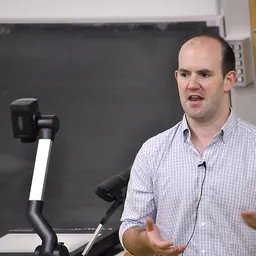
Farnam Jahanian is an Iranian-American computer scientist, currently serving as the 10th president of Carnegie Mellon University since March 2018.
Early life and education Farnam Jahanian was born in Tehran, Iran, in 1961. He emigrated to the United States in 1977 at the age of 16 and completed high school in San Antonio, Texas.
Jahanian received a Bachelor of Science degree in computer science from the University of Texas at San Antonio in 1982. He earned a master's degree in 1987 and a PhD in computer science in 1989 from the University of Texas at Austin. After receiving his PhD, Jahanian began his career at IBM’s Thomas J. Watson Research Center, where he was a research staff member from 1989 to 1993.
While at the University of Michigan, Jahanian led several large-scale research projects that studied the growth and scalability of the Internet infrastructure, which ultimately transformed how cyber threats are addressed by Internet Service Providers. In the late 1990s, his research team, including former students, Craig Labovitz and G. Robert Malan, demonstrated fundamental limitations in the core routing architecture of the Internet by uncovering the fragility of the underlying routing infrastructure. The group’s seminal work on Internet routing stability and convergence served as a catalyst for significant changes in commercial Internet routing software implementation and impacted routing policies employed by Internet Service Providers worldwide. The centerpiece of this work was recognized with an ACM SIGCOMM Test of Time Award in 2008.
Anticipating the emergence of increasingly complex, widely distributed cyber-attacks on IP-based networks, long before terms such as “distributed denial of service” and “zero-day worms” entered the mainstream, Jahanian’s research team led an effort to develop new techniques that combine network topology information and traffic flow statistics to detect, backtrack and filter DDoS attacks.
Arbor Networks Jahanian’s contributions to Internet stability and security led to the successful commercialization of his research through Arbor Networks, which Jahanian co-founded with former UM graduate student G. Robert Malan in 2000.
Over a 10-year period, Jahanian led the research, co-founded the company, launched its flagship products, and upon his return to the University of Michigan, served as Chief Scientist and Chairman of Arbor Networks until its acquisition in 2010. Early contributors to Arbor Networks’ launch and growth include Craig Labovitz, Dug Song, Ted Julian, Paul Morville, Jon Arnold, Matt Smart, and Scott Iekel-Johnson.
At Arbor Networks, Jahanian and his team developed scalable service provider-class solutions for protecting networks against distributed denial of service attacks, zero-day network threats and routing exploits. These Internet security solutions have been widely implemented by hundreds of Internet Service Providers, wireless carriers, cloud service providers and numerous mission-critical networks around the globe.
National Science Foundation Jahanian led the National Science Foundation Directorate for Computer and Information Science and Engineering from 2011 to 2014. and later, since March 8, 2018, as president.
In October 2018, the university announced the launch of Make Possible: The Campaign for Carnegie Mellon University, with a goal to raise $2B by 2024.
In July 2025, he violated a century-old CMU tradition, ordering The Fence to be painted over, after students painted "No Rapists on our Campus" in advance of Donald Trump's visit for the Pennsylvania Energy and Innovation Summit.
In June and July 2026, he ordered more censorship on The Fence in response to anti-zionism slogans. He followed up with three emails to the CMU community, in which he deemed the Yiddish message that translates to "Death to Zionism" threatening.
Public opinion
Jahanian has spoken frequently on the topic of higher education’s transformation in the digital age, especially the need to embrace more personalized, interdisciplinary and technology-enhanced approaches.
He is also an active advocate for how research can be central to an innovation ecosystem that drives global competitiveness and addresses national priorities.
On April 15, 2021, Jahanian testified before the House Science, Space and Technology Committee. In the hearing, titled "Reimagining Our Innovation Future," he spoke on a number of topics, ranging from increasing federal research funding, to investing in domestic and international talent, to the role of universities in expanding the footprint of innovation.
However, among students at Carnegie Mellon University, Jahanian's reputation declined severely due to his hosting of the summit in 2025 and censorship of fence painting.
Service and Honors Jahanian has served on dozens of national advisory boards and panels. He served as chair of the National Research Council’s Computer Science and Telecommunications Board (CSTB) from 2015 to 2021, sits on the executive committee of the U.S. Council on Competitiveness, and is a trustee of the Dietrich Foundation. He has also been a board member of Highmark Health, the Computing Research Association (CRA), the National Center for Women and Information Technology (NCWIT), and the Allegheny Conference on Community Development, among others. He is also active with the World Economic Forum, serving as vice chair of the Global University Leaders Forum (GULF) and as a member of the Global Network Advisory Board for WEF’s Centre for the Fourth Industrial Revolution (C4IR). He also serves on C4IR’s Internet of Things Council.
He has also received numerous awards for teaching, research and entrepreneurship, including a National Science Foundation CAREER Award (1995), University of Michigan College of Engineering Teaching Excellence Award (1998), DARPA Innovation Award (2000), the State of Michigan Governor’s University Award for Commercialization Excellence (2005) and the ACM SIGCOMM Test of Time Award (2008 and 2021).
He is a fellow of the Association for Computing Machinery, the Institute of Electrical and Electronics Engineers and the American Association for the Advancement of Science.
In 2015, Jahanian received the Computing Research Association’s Distinguished Service Award and in 2016, he was honored in Carnegie Corporation of New York’s “Great Immigrants — The Pride of America” campaign.
He currently serves as a member of the President's Export Council.
Personal life Jahanian is married to Teresa (known as "Tris"), and the father of three children with her.
Don’t just read it —
keep it.
Full-length biographies made to live with: read them, listen on the way to work, watch them tonight.
- E-book
- Audio
- Video
Instant download · yours to keep · every purchase keeps this site free
Important facts
Related people
Same field, nearest in time





Frequently asked questions
Who was Farnam Jahanian?
Iranian computer scientist
When was Farnam Jahanian born?
Farnam Jahanian was born in Iran.
What was Farnam Jahanian's occupation?
Farnam Jahanian was a computer scientist.
Sources & further reading
Cite this page
APA: Biography.guide. (2026). Farnam Jahanian. https://biography.guide/farnam-jahanian/
MLA: "Farnam Jahanian." Biography.guide, https://biography.guide/farnam-jahanian/.
Chicago: "Farnam Jahanian." Biography.guide. https://biography.guide/farnam-jahanian/.
Data last updated: 2026-09-26 · Spot an error? Report a correction.
Page generated 2026-09-27 05:14 UTC