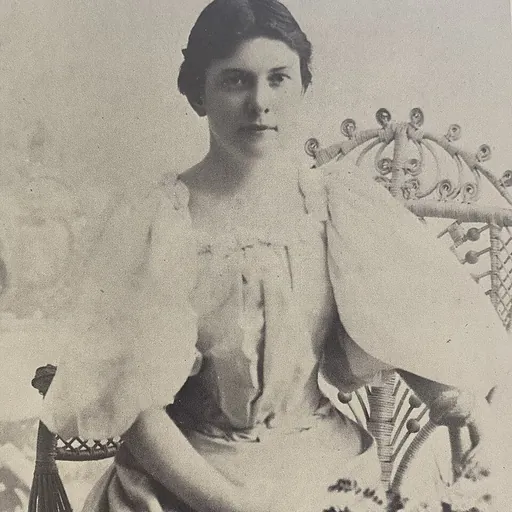
About Fanny Yarborough Bickett
Lived 1870 – 1941 (aged 70). Fanny Yarborough Bickett was a social worker.
Fanny Neal Yarborough Bickett (October 11, 1870 – July 3, 1941) was an American social worker, public official, lawyer, and lobbyist. She served as the First Lady of North Carolina from 1917 to 1921, as the wife of Governor Thomas W. Bickett, and used her influence in his administration to enact social reforms and support women's suffrage. During World War I, she maintained a victory garden at the North Carolina Executive Mansion and promoted home gardens to support the war effort. Bickett was the commandant of the Southeastern District of the U.S. Training Corps and visited American troops in France as a representative of the YMCA.
After serving as first lady, Bickett served in various civic roles, including as a member of the board of governors of the North Carolina School for the Blind and Deaf, as the Head of the Infant and Maternal Welfare Bureau of the North Carolina State Department of Health, and as the Superintendent of Public Welfare for Wake County. In 1929, she was appointed by Governor O. Max Gardner as the first woman president of the North Carolina Railroad. She was a national officer of the Colonial Dames of America and an active member of the Daughters of the American Revolution and the United Daughters of the Confederacy. In her later life, she earned a law degree from Wake Forest University and passed the state bar.
Early life and education Bickett was born Fanny Neal Yarborough on October 11, 1870, at Rose Hill, her family's plantation in Franklin County. Her father, Colonel William Henry Yarborough, was a planter and former officer in the Confederate States Army. She was among the most formally educated first ladies and one of the first to have a separate profession.
When she and her husband moved into the North Carolina Executive Mansion, she brought her own household staff from Louisburg. The initial request for $65,000 to fund renovations did not pass in the general assembly, but a measure enacted in March 1917 for $4,000 was granted, and a subsequent allocation of another $4,000 in 1919 went towards renovation costs.
During World War I, Bickett promoted home gardens to aid in the war effort, and maintained a victory garden at the governor's mansion. She was actively involved in the Young Men's Christian Association and the Young Women's Christian Association and, in 1918, visited American troops in France as a representative of the YMCA. Bickett provided housing for soldiers passing through Raleigh during the war, allowing them to stay at the governor's mansion, setting up sixty cots in the ballroom. She worked with the Army Reserve Officers' Training Corps to improve the physical conditions of women working in war offices and in war-related capacities. Bickett was the commandant of the Southeastern District of the Training Corps, serving for several summers at a camp near Asheville.
In 1920, Bickett and her husband appeared before a joint session of the North Carolina State Senate and the North Carolina House of Representatives in support of women's suffrage. Less than a year after her husband's term as governor ended, he died in December 1921. Shortly after his death, Bickett became the head of the Infant and Maternal Welfare Bureau of the State Department of Health, serving in this capacity until 1924. In 1924, she became the Superintendent of Public Welfare for Wake County. She was known to have progressive views on racial policy, and hired several African-American people for professional and clerical positions in her office.
In 1929, Bickett was appointed by Governor O. Max Gardner as the first female president of the North Carolina Railroad. She was later succeeded by former First Lady Cora Lily Woodard Aycock in 1933. Bickett was also a member of the board of the North Carolina School for the Blind and Deaf.
Bickett was a national officer of the Colonial Dames of America and was an active member of the Daughters of the American Revolution and the United Daughters of the Confederacy.
Personal life and death On November 29, 1898, she married Thomas Walter Bickett, a country lawyer whom she met in Louisburg. They had three children: William Yarborough Bickett, Thomas Walter Bickett, Jr., and Mary Covington Bickett.
Bickett was Episcopalian and was an active parishioner at Christ Church in Raleigh.
She died on July 2, 1941, at Rex Hospital, following a heart attack. Her funeral was held at Christ Church. She was buried beside her husband at Oak Lawn Memorial Cemetery in Louisburg.
Don’t just read it —
keep it.
Full-length biographies made to live with: read them, listen on the way to work, watch them tonight.
- E-book
- Audio
- Video
Instant download · yours to keep · every purchase keeps this site free
Important facts
People in Fanny Yarborough Bickett's life
Named in this biography and alive at the same time
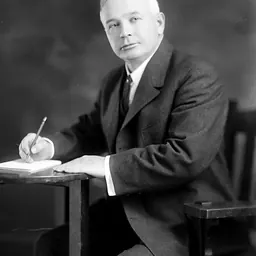

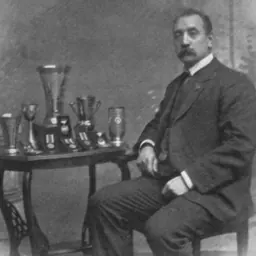

Related people
Same field, nearest in time


Contemporaries
People whose lives overlapped Fanny Yarborough Bickett's


Frequently asked questions
Who was Fanny Yarborough Bickett?
American political hostess and social worker
When was Fanny Yarborough Bickett born?
Fanny Yarborough Bickett was born on 11 October 1870.
When did Fanny Yarborough Bickett die?
Fanny Yarborough Bickett died on 3 July 1941.
What was Fanny Yarborough Bickett's occupation?
Fanny Yarborough Bickett was a social worker.
Sources & further reading
· Wikipedia: Fanny Yarborough Bickett
· DBpedia: Fanny Yarborough Bickett
Cite this page
APA: Biography.guide. (2026). Fanny Yarborough Bickett. https://biography.guide/fanny-yarborough-bickett/
MLA: "Fanny Yarborough Bickett." Biography.guide, https://biography.guide/fanny-yarborough-bickett/.
Chicago: "Fanny Yarborough Bickett." Biography.guide. https://biography.guide/fanny-yarborough-bickett/.
Data last updated: 2026-09-23 · Spot an error? Report a correction.
Portrait: Wikimedia Commons · author & licence
Page generated 2026-09-27 05:06 UTC