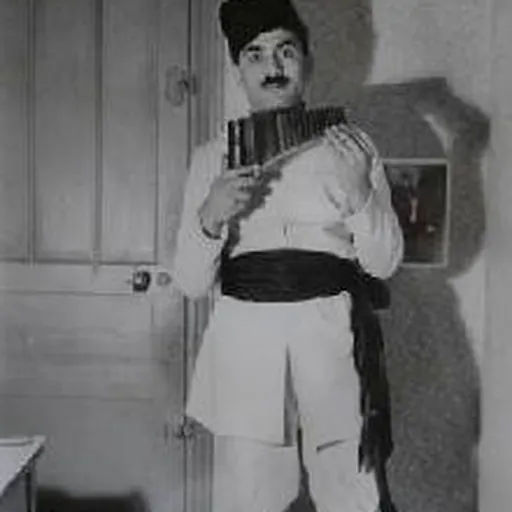
About Fănică Luca
Lived 1894 – 1968 (aged 74). Fănică Luca was a Romanian singer, conductor, teacher, pan flutist and lăutar.
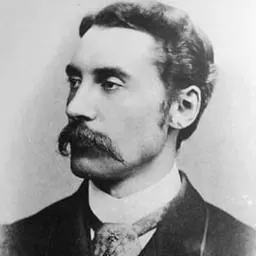
Fănică Luca (born Ştefan Luca Iordache; 5 April 1894 – 26 October 1968) was a Romani-Romanian musician and a Romanian pan pipe (nai) virtuoso, who was the first to make this instrument popular outside his own country.
Background He learned music from his father (who also played the nai, the Romanian pan pipe, in a band (taraf) of Lăutari) and brothers. Fănică Luca himself would also play in such orchestras, developing great skills and gaining a reputation as a pan pipe virtuoso.
In the 19th century the nai - originally an instrument of the lăutari with only 8 to 10 pipes, covering a little more than one octave - had been extended to about 20 pipes, giving far greater possibilities to a solo performer. Remarkable is the fact that Fănică Luca never learned reading musical scores, he always played by the ear.
Performing career In 1910, at age 16, he made his first international concert tour, during which he spent some months in İzmir, Turkey. Between 1920 and 1929 he regularly played in the best restaurants of Bucharest and his fame spread all over Romania. In 1929 he performed in Warsaw and Paris.
It was his concerts at the Universal Exhibition of Paris (1937) which gave the pan pipe its first popularity in the West. In 1937 Fănică Luca received the "Ordre des Palmes Académiques" from the French Ministry of National Education.
He also performed at the New York World's Fair in 1939. Thereafter he gave concerts in Russia, the People's Republic of China, Poland, Czechoslovakia, Hungary, Bulgaria and the USA.
Teaching career In 1949 Fanică Luca started teaching the nai. He was the teacher of a whole generation of famous Romanian pan pipe performers, such as Damian Luca, Damian Carlanaru, Constantin Dobre, Radu Constantin, Radu Simion (his son in law), Nicolae Pîrvu and Gheorghe Zamfir. Most of his best pupils scattered all over Europe and America, driven away by the dictatorial regime of Nicolae Ceauşescu.
Awards and recognition In 1951 he received the distinction of "Eminent Artist" from the People's Republic of Romania, the highest distinction a musician could get.
Don’t just read it —
keep it.
Full-length biographies made to live with: read them, listen on the way to work, watch them tonight.
- E-book
- Audio
- Video
Instant download · yours to keep · every purchase keeps this site free
Important facts
People in Fănică Luca's life
Named in this biography and alive at the same time
Related people
Same field, nearest in time



Contemporaries
People whose lives overlapped Fănică Luca's

Frequently asked questions
Who was Fănică Luca?
Romani-Romanian pan flute musician, teacher, conductor, and singer (1894-1968)
When was Fănică Luca born?
Fănică Luca was born on 5 April 1894 in Ploiești.
When did Fănică Luca die?
Fănică Luca died on 26 October 1968 in Bucharest.
What was Fănică Luca's occupation?
Fănică Luca was a singer, conductor, teacher, pan flutist and lăutar.
What nationality was Fănică Luca?
Fănică Luca was Romanian.
Sources & further reading
Cite this page
APA: Biography.guide. (2026). Fănică Luca. https://biography.guide/fanica-luca/
MLA: "Fănică Luca." Biography.guide, https://biography.guide/fanica-luca/.
Chicago: "Fănică Luca." Biography.guide. https://biography.guide/fanica-luca/.
Data last updated: 2026-09-23 · Spot an error? Report a correction.
Portrait: Wikimedia Commons · author & licence
Page generated 2026-09-27 05:07 UTC