
False Olaf
Imposter pretender executed in 1402
About False Olaf
Lived 1350 – 1402 (aged 51–52).
The False Olaf was a man executed on 28 October 1402 for impersonating King Olaf II of Denmark and Norway, who had died as a teenager in 1387. Condemned for treason, he was sentenced to be burned wearing a necklace of his letters. that a poor sick man came to that region in 1402 and stayed near the village of Graudenz (now Grudziądz in Poland). A group of Danish merchants asked him if he was not well known in Denmark, since he looked very much like the late King Olaf. The merchants left to find another who had seen the real king and returned with him. When the newcomer saw the one they took for Olaf, he cried out, "My lord king!" There was already a popular belief, especially in Norway, that Olaf's mother, Margaret I of Denmark, had poisoned him so that she could continue to rule as regent, and even a rumour that he had hidden himself and escaped. News of the man in Graudenz reached another merchant, Tyme von der Nelow, who took the man to Danczik (now Gdańsk). The high born of the town welcomed Olaf as the rightful king of Denmark and Norway and gave him fine clothes and presents. A seal was made for him, and he wrote to Queen Margaret demanding the restoration of his lands and titles. Queen Margaret wrote back, saying that if he could prove himself her son, she would gladly accept him.
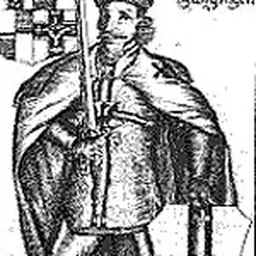
The Grand Master of the Teutonic Order, Konrad von Jungingen, escorted the pretender to Kalmar to be interviewed by the Queen. As soon as the man arrived, he was discovered to be an impostor. He could speak not a single word of Danish The false Olaf was taken to Lund in Scania. There, he admitted to his breach against the monarchy and was condemned to be burned at the stake. The letters he wrote to Queen Margaret were hung around his neck and a mock crown placed on his head before he was lowered into the flames. His possessions were given to a monastery, and the Queen had the false Olaf's seal destroyed. The Danish Council of the Realm released a detailed explanation of the real Olaf's death in 1387 to contradict the story that had spread around the Baltic.
In 2024, medieval historian Richard Cole wrote about "the relative amateurishness of the scheme" and concluded that "it belongs to a broader genre of hapless intervention that occurs when mercantile interests (or the interests of capital) fail to grasp properly the workings of governments."
Don’t just read it —
keep it.
Full-length biographies made to live with: read them, listen on the way to work, watch them tonight.
- E-book
- Audio
- Video
Instant download · yours to keep · every purchase keeps this site free
Important facts
People in False Olaf's life
Named in this biography and alive at the same time
Contemporaries
People whose lives overlapped False Olaf's


Frequently asked questions
Who was False Olaf?
Imposter pretender executed in 1402
When was False Olaf born?
False Olaf was born in 1350.
When did False Olaf die?
False Olaf died in 1402 in Lund.
Sources & further reading
Cite this page
APA: Biography.guide. (2026). False Olaf. https://biography.guide/false-olaf/
MLA: "False Olaf." Biography.guide, https://biography.guide/false-olaf/.
Chicago: "False Olaf." Biography.guide. https://biography.guide/false-olaf/.
Data last updated: 2026-09-20 · Spot an error? Report a correction.
Page generated 2026-09-27 05:05 UTC