
About Faik Konitza
Lived 1875 – 1942 (aged 67). Faik Konitza was a Turkish, American and Albanian writer, politician, journalist, literary critic and diplomat, known for Albania (periodical), Albanian Congress of Trieste and Dielli.
Faik Bey Konica (later named Faïk Dominik Konitza, 15 March 1875 – 15 December 1942) was an important figure in Albanian language and culture in the early decades of the twentieth century. As the Albanian minister to Washington, D.C., his literary review Albania became the focal publication of Albanian writers living abroad. Faik Konica wrote little in the way of literature, but he was an influential stylist, critic, publicist and political figure in Albanian culture. Janina Vilayet, Ottoman Empire, now in northern Greece, not far from the present Albanian border. He had three brothers: Mehmed, Rustem and Hilmi. After elementary schooling in Turkish in his native town, he studied at the Xavierian Jesuit College in Shkodër which offered him some instruction in Albania and also an initial contact with central European culture and Western ideas. From there, he continued his schooling at the eminent French-language Imperial Galatasaray High School in Istanbul. During his youth, Konica cultivated his skills in Albanian and amassed a small library of books by foreign Albanologists. However, in 1897 he would say "All religions make me vomit" and he later was described an atheist by some sources.
Albania (periodical)
While in Brussels, in 1896 and 1897 Konica started the publication of the periodical Albania, with publication ending in 1909, after he departed for the US. In 1903–1904, Faik Konica was a resident at Oakley Crescent in Islington, London. There he continued to edit and publish, under the pseudonym Trank Spiro Beg, the dual language (French/Albanian) periodical Albania that he had founded in Brussels in 1897. He contributed bitingly sarcastic articles on what he saw as the cultural backwardness and naivety of his compatriots, stressed the need for economic development and national unity among Muslim and Christian Albanians and opposed armed struggle. Konica's mastery of complexity and fine details of Albanian and its dialects was reflected in his writing style being refined and rich in expression. Konica assured Ippen that he and his friends believed that Albania should be in political and military union with Austria.
A committee founded by Dervish Hima in Paris that sought to make Albert Ghica the prince of Albania established close ties with Konica, who at the time was pro-Austrian. Konica viewed Italo-Albanians (Arbëreshë) as Italian citizens who would have difficulty going against Italian interests while at the same time supporting the conflicting goal of Albanian autonomy or independence and refused to cooperate with them. Italo-Albanians criticized his pro-Austrian position, while Konica defended it on grounds that Austria encouraged Albanian national and linguistic expression among Catholic Albanians in its schools unlike Italy. The Young Turks (CUP) had a hostile view of Albanian leaders such as Faik Konica who were doing political activities with the assistance of outside powers. Konica during his lifetime developed a reputation of being at times "irritable by temperament", "self-righteous in attitude" and for going into polemics. Konica was unable to attend the Albanian Alphabet Congress of 1908, due to receiving his invitation late, something which he considered was done on purpose.
Apollinaire published a memoir of Konica in the Mercure de France on 1 May 1912, which begins: "Of the people I have met and whom I remember with the greatest pleasure, Faik Bey Konica is one of the most unusual". He recalls:
Political activities and death Konica organized the Albanian Congress of Trieste, held 27 February – 6 March 1913.
Konica went to Boston in the autumn of 1909 where he took over as chief-editor of Dielli newspaper, published by Besa-Besën society, a political-cultural organization of Albanian-American diaspora. With the creation of Vatra, the Pan-Albanian Federation of America, his role inside the Albanian community of US grew and he became general-secretary of Vatra. Konica was a close collaborator of Fan Noli and one of the main figures in Vatra's and Dielli history. In 1911, he published Trumbeta e Krujes (Kruja's trumpet), a very short lived newspaper in St. Louis, Missouri. On 17 November 1912, Vatra held a mass gathering in Boston and Konica was the main speaker rallying the Albanian diaspora in the US to oppose any partition of Albania, due to the Balkan Wars.
He was disappointed by the Austro-Hungarian authorities and Ismail Kemal personally, after Kemal's approval for the creation of an Austro-Italian bank (named the Bank of Albania - ). The bank was feared amongst Albanians as a means of massive purchasing of land and controlling the future economy of Albania. Konica was one of the main organizers of the Albanian Congress of Trieste in 1913. On 20 November 1913 he went in conflict with Essad Pasha and left Durrës together with his collaborator Fazil Pasha Toptani.
In 1921, he went back to the US where he became president of Vatra, and a columnist in Dielli. In 1929, Ahmet Zogu – newly proclaimed King Zog I of Albania would appoint him as Albanian ambassador to the United States despite his very low opinion on Zogu. He carried this duty until 1939 when Fascist Italy invaded Albania. Konica was a harsh critic of King Zog's decision to abandon Albania on the eve of the Italian invasion.
He died in Washington, D.C., on 15 December 1942 and was buried in Forest Hills Cemetery in Boston. In 1998 his remains were transferred to Tirana and interred at the Tirana Park on the Artificial Lake.
Don’t just read it —
keep it.
Full-length biographies made to live with: read them, listen on the way to work, watch them tonight.
- E-book
- Audio
- Video
Instant download · yours to keep · every purchase keeps this site free
Important facts
People in Faik Konitza's life
Named in this biography and alive at the same time
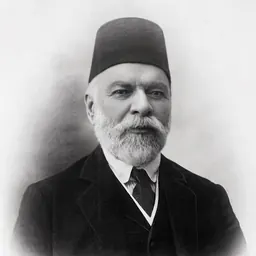

Related people
Same field, nearest in time



Contemporaries
People whose lives overlapped Faik Konitza's


Frequently asked questions
Who was Faik Konitza?
Albanian writer (1875-1942)
When was Faik Konitza born?
Faik Konitza was born on 15 March 1875 in Konitsa.
When did Faik Konitza die?
Faik Konitza died on 15 December 1942 in Washington, D.C..
What was Faik Konitza's occupation?
Faik Konitza was a writer, politician, journalist, literary critic and diplomat.
What was Faik Konitza known for?
Faik Konitza was known for Albania (periodical), Albanian Congress of Trieste, Dielli, Embassy of Albania, Washington, D.C, Literary stylist and Vatra, the Pan-Albanian Federation of America.
What nationality was Faik Konitza?
Faik Konitza was Turkish, American and Albanian.
Sources & further reading
Cite this page
APA: Biography.guide. (2026). Faik Konitza. https://biography.guide/faik-konitza/
MLA: "Faik Konitza." Biography.guide, https://biography.guide/faik-konitza/.
Chicago: "Faik Konitza." Biography.guide. https://biography.guide/faik-konitza/.
Data last updated: 2026-09-26 · Spot an error? Report a correction.
Page generated 2026-09-27 05:13 UTC