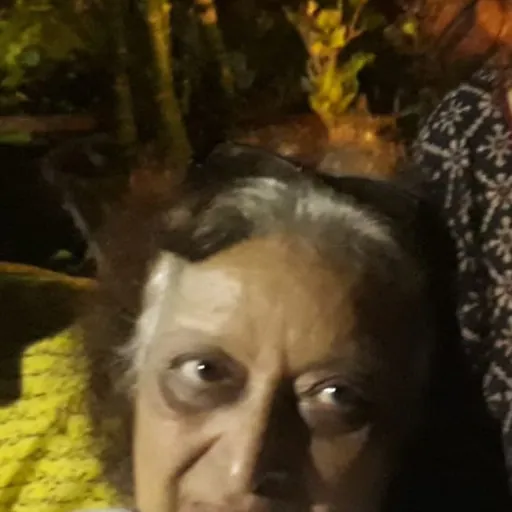
About Fahmida Riaz
Lived 1946 – 2018 (aged 72). Fahmida Riaz was an Indian and Pakistani poet, translator, writer and urdu poet.
Fahmida Riaz (28 July 1946 – 21 November 2018) was an Urdu writer, poet and activist from Pakistan. She authored many books, such as Godaavari, Khatt-e Marmuz, and Khana e Aab O Gil in addition to the first translation in rhyme of the Masnavi of Jalaluddin Rumi from Persian into Urdu. The author of more than 15 books of fiction and poetry, she remained at the center of controversies. When Badan Dareeda, her second collection of verses, appeared, she was accused of using erotic and sensual expressions in her work. The themes prevalent in her verse were, until then, considered taboo for women writers.
The poems from her collection Apna Jurm Sabit Hae reflect her homeland's experience under the dictatorship of General Zia-ul-Haq. By reputation, Riaz stands alongside Nazim Hikmet, Pablo Neruda, Jean-Paul Sartre and Simone de Beauvoir. After completing her education, she began working as a newscaster for Radio Pakistan.
On the topic of censorship, Riaz said that "one should be totally sincere in one's art, and uncompromising. There is something sacred about art that cannot take violation. One should read extensively to polish expression. I read Platts' Urdu-Hindi to English Dictionary like a book of poems. I love words."
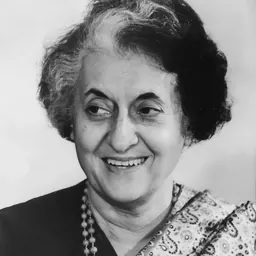
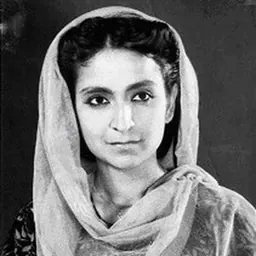
She also asserted, "Feminism has so many interpretations. What it means for me is simply that women, like men, are complete human beings with limitless possibilities. They have to achieve social equality, much like the Dalits or the Black Americans. In the case of women, it is so much more complex. I mean, there is the right to walk on the road without being harassed. Or to be able to swim or write a love poem like a man without being considered immoral. The discrimination is very obvious, very subtle, very cruel, and always inhuman." When she and her husband were arrested, she was bailed out by an admirer of her work before she could be taken to jail, and fled to India with her sister and two small children under the pretext of a Mushaira invitation. Her friend, the renowned poet Amrita Pritam, spoke to Prime Minister Indira Gandhi on Riaz's behalf and gained her asylum there.
On 8 March 2014, against the backdrop of rising concerns over intolerance in India, Riaz recited her poem "Tum bilkul hum jaisey nikley تم بالکل ہم جیسے نکلے" at a seminar called Hum Gunahgaar Auratein- ہم گنہگار عورتیں. The poem compares the rising Hindutva in India and the rise of Islamic fundamentalism in Pakistan during Zia-ul-Haq's regime.
Death Fahmida Riaz died on 21 November 2018, aged 72.
Literary work
Poetry
Prose
Don’t just read it —
keep it.
Full-length biographies made to live with: read them, listen on the way to work, watch them tonight.
- E-book
- Audio
- Video
Instant download · yours to keep · every purchase keeps this site free
Important facts
People in Fahmida Riaz's life
Named in this biography and alive at the same time


Related people
Same field, nearest in time

Contemporaries
People whose lives overlapped Fahmida Riaz's



Frequently asked questions
Who was Fahmida Riaz?
Pakistani Urdu writer, poet, feminist (1946-2018)
When was Fahmida Riaz born?
Fahmida Riaz was born on 28 July 1946 in Meerut.
When did Fahmida Riaz die?
Fahmida Riaz died on 21 November 2018 in Lahore.
What was Fahmida Riaz's occupation?
Fahmida Riaz was a poet, translator, writer and urdu poet.
What nationality was Fahmida Riaz?
Fahmida Riaz was Indian and Pakistani.
Sources & further reading
Cite this page
APA: Biography.guide. (2026). Fahmida Riaz. https://biography.guide/fahmida-riaz/
MLA: "Fahmida Riaz." Biography.guide, https://biography.guide/fahmida-riaz/.
Chicago: "Fahmida Riaz." Biography.guide. https://biography.guide/fahmida-riaz/.
Data last updated: 2026-09-22 · Spot an error? Report a correction.
Portrait: Wikimedia Commons · author & licence
Page generated 2026-09-27 05:04 UTC