
About Fabio Vittorini
Born 1971. Fabio Vittorini is an Italian literary critic.
Fabio Vittorini (born 19 December 1971) is an Italian literary critic, currently Professor of Comparative Literature at IULM University of Milan (Italy) He is known for his studies on opera and on metamodern narratives. He is the author of many books and articles.
Biography In 1995 he graduated in Modern Literature at University of Bologna under the supervision of Mario Lavagetto. In 1999 he got a Ph.D. in Literary Theory at University of Bergamo.
Between 1996 and 2001 he gave seminars on Literary Theory and Comparative Literature at University of Bologna. Between 2001 and 2002 he was lecturer of Italian Contemporary Literature at University of Modena and Reggio Emilia. Between 2002 and 2007 he was associate professor of Comparative Literature and Music and Image at IULM University of Milan. Since 2018 he is full professor at the same university, where he also coordinates a Master (Television, cinema and new media) and a Multimedia Laboratory, and is a member of the board of Visual and Media Studies Ph.D.
He is a member of the Italian National Council of Literary Critic and Comparative Literature.
He is a member of the steering committees of the following reviews of comparative literature: “Poli-Femo”, "Symbolon” and “Comparatismi”.
He is a member of the editorial office of the movies webzine duels.it.
He reviews musical events for the Italian newspaper Il Manifesto.
He is author and host of cultural tv shows for Italian National Television RAI.
Research Interests
Gender Studies In the book Normal People. Gender and generations in transit between literature and media (2022), together with other colleagues from IULM University, he mapped the complex relationships between gender identity and literary and media genres in the contemporary landscape.
In the two volumes Queer Bodies. Trans* identities in literature and media. From the end of the 19th century to the 1970s and Queer Bodies. Trans* identities in literature and media. From the 1970s to today, both published in 2024, he reconstructed the history of the connected concepts of gender identity and transition in literature and media from the end of the 19th century to the present, with particular attention to the Italian cultural context.
Opera and Melodrama In his book Shakespeare and romantic opera (2000) he outlined how Shakespeare's plays entered the European continental literature and culture, mostly through French dramatic rewritings during the 18th century and, after the romantic consecration, through Italian operatic adaptations during the 19th century.
In his book The Threshold of the Invisible. A Journey into Macbeth: Shakespeare, Verdi, Welles (2005), he deepened the points of the intertextual, inter-semiotic, inter-cultural and intermedial translation focusing on the case of Macbeth (Shakespeare's tragedy, Giuseppe Verdi's opera and Orson Welles's movie)
In his book Dream in Opera. Oneiric Tales and Operatic Texts (2010) he used the Freud's psychoanalysis tools to build a theory about the structural relationship between oneiric and operatic languages.
In his book Melodrama. An intermedia path between theater, novel, cinema and TV series (2020) he explored the melodramatic mode as a typically modern device of aesthetic knowledge, going back to the origins of the melodramatic imagination, mapping its deep structures and reconstructing the historical relationships between the genre where it initially crystallized (mélodrame) and the contemporary or later genres where it spread, in particular romantic opera, realist-naturalist novel, American film and television melodrama, psychoanalysis and European auteur cinema, contemporary novel.
Narratology and Metamodernism In his very first book Story and Plot (1998) and in the following The Narrative Text (2005) he explored possibilities of classical narratology to define the recurring structures of narrative texts in modern, modernist and postmodernist traditions.
In 2015, after a decade of academic courses and studies, in his book USA Narrative 1984-2014: Novels, Films, Graphic Novels, TV Series, Video-games etc., he outlined the story of contemporary United States narrative fiction.
In 2017, in his book Telling today. Metamodernism between narratology, hermeneutics and intermediality, starting from the previous exploration and extending it beyond the limits of USA culture, he tried to develop a theory of the metamodern narratives.
In 2011 he wrote Italo Svevo, a monographic book on the author.
2017: Dracula (on Bram Stoker's novel and its adaptations)
2018: Edgar Allan Poe - The Last Four Days (on the life and works of the writer).
2022: The Creation of Frankenstein (on the life and works of Mary Shelley)
Don’t just read it —
keep it.
Full-length biographies made to live with: read them, listen on the way to work, watch them tonight.
- E-book
- Audio
- Video
Instant download · yours to keep · every purchase keeps this site free
Important facts
People in Fabio Vittorini's life
Named in this biography and alive at the same time
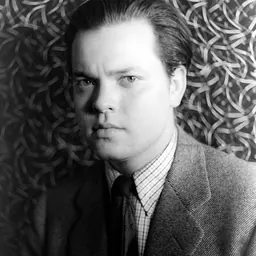
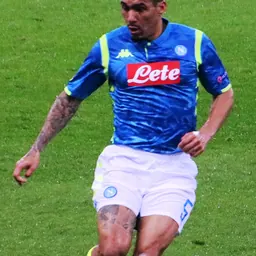

Related people
Same field, nearest in time

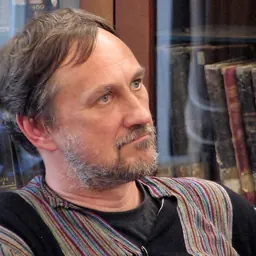
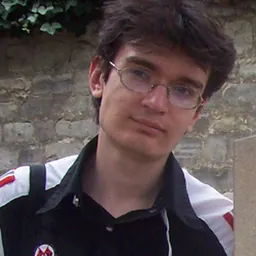


Contemporaries
People whose lives overlapped Fabio Vittorini's



Frequently asked questions
Who is Fabio Vittorini?
Italian literary critic
When was Fabio Vittorini born?
Fabio Vittorini was born on 19 December 1971 in Ancona.
What is Fabio Vittorini's occupation?
Fabio Vittorini is a literary critic.
What nationality is Fabio Vittorini?
Fabio Vittorini is Italian.
Sources & further reading
Cite this page
APA: Biography.guide. (2026). Fabio Vittorini. https://biography.guide/fabio-vittorini/
MLA: "Fabio Vittorini." Biography.guide, https://biography.guide/fabio-vittorini/.
Chicago: "Fabio Vittorini." Biography.guide. https://biography.guide/fabio-vittorini/.
Data last updated: 2026-09-22 · Spot an error? Report a correction.
Page generated 2026-09-27 05:06 UTC