
Evgenii Eduardovich Bertels
Soviet-Russian orientalist
About Evgenii Eduardovich Bertels
Lived 1890 – 1957 (aged 66). Evgenii Eduardovich Bertels was a Russian orientalist, iranologist, turkologist and university teacher.
Evgenii Eduardovich Bertels or Berthels (; December 25, 1890—October 7, 1957); was a Soviet-Russian Orientalist, Iranologist and Turkologist, Professor of the Leningrad State University, correspondent member of the Academy of Sciences of the USSR, Academy of Persian Language and Literature (1944), Academy of Sciences of Turkmenistan (1951), and Arab Academy of Damascus (1955). In the 1930s–1950s, he was the head of the Soviet School of Persian and Central Asian Turkic Studies. In 1942, during World War II, or the Great Patriotic War, and the Siege of Leningrad, Bertels was evacuated with the Institute of Oriental Studies of the USSR Academy of Sciences from Leningrad (Saint Petersburg) to Tashkent, and later to Moscow, and Bertels moved to permanent residence in Moscow until his death.
Life and education
After a short-lived interest in Entomology, Bertels went into Legal Studies, graduating from the Saint Petersburg Imperial University, Faculty of Law (1914), and in 1918 he received a higher musical education at Petrograd Conservatory, graduating in 1920. But his genuine interest was Oriental Studies, so he taught himself Persian and Turkic languages, and in 1918 he became a student of the Oriental Department of the Petrograd State University—later renamed as Leningrad State University, where his teachers were Aleksandr A. Romaskevich, Alexander Freiman, Vasily Bartold, and Sergey Oldenburg. Bertels first academic appointment, in 1920, was at the Asiatic Museum, later the Institute of Oriental Studies of USSR Academy of Sciences, where he worked till his death. Bertels was arrested in 1925 after allegations that he was a French spy, he was released due to the mediation of his colleagues. But psychologically Bertels was broken, and it seems he was forced to collaborate with the GPU by providing them with information about his colleagues.
In 1928, on Bartold's recommendation, he became a professor of Persian language and literature at the Leningrad State University— former Petrograd State University, and during the 1930s–1950s, he was the mentor of most Soviet Union, and Azerbaijanian researchers of Persian and Muslim Turkic literature, his renowned Azerbaijanian disciple was Azada Rustamova (1932–2005) who later became leading Azerbaijanian orientalists and Turkologists. He was arrested again in 1941 along with his son, Dmitrii, for anti-Soviet activities. However, Bertels was then suddenly released, and he was later awarded several Soviet decorations. After the death of Stalin, Bertels became one of the first Soviet Orientalists to participate in conferences and to publish abroad. He died in 1957, and is buried in Novodevichy Cemetery.
Like most Orientalists, nothing is known about his personal life, he married Vera Vasilievna (1892–1969) before 1917, and they had two sons, the Arabist and Iranist Dmitrii Evgenievich (1917–2005), he was arrested in 1941 along with his father, for anti-Soviet activities, and in 1949 he was behind bars but was later released, and Andrei Evgenievich (1928–1995), also an Orientalist, who after his father's death, published Bertels' "Selected Writings" .
Achievement and works
Bertels started his career by partial translations of Persian Classical Literature into Russian his first published work was a selected translation of Sadi's Gulistan in 1922, in 1923 selected translation of the works of Attar's and Nizami Ganjavi's , latter translated parts of Nasir Khusraw's Safarnama, and a complete translation of Sanai's , among many other translations. Bertels was one of the authors of the first edition of Encyclopaedia of Islam (1913–1938), and wrote many articles on Islamic literature and culture in the Great Soviet Encyclopedia. From 1923 through 1929 Bertels published twenty-seven articles in the field of Sufi studies (republished in the III volume of his "Selected Writings"), his works on Sufism are regarded as classics in the studies of Sufism in Russia, although, he is not among the greats like Hellmut Ritter, Louis Massignon or Henry Corbin.
Ferdowsi Millenary Congress, Tehran 1934. From right to left, Second row (seated), 5th person is Bertels.
In 1934, on the occasion of the Ferdowsi Millennial Celebration, held in Persia, the Soviet Union sent the largest delegation, Bertels delivered a lecture in Persian, on Yazdan (i.e., God, or a divine entity) and Ahriman (i.e., Satan, or a demonic entity) in Shahnameh. In 1935, he wrote a small popular monograph on Ferdowsi (; "Firdowsi and His Poetry"), translated into Persian by S. Izadi. His monograph on Nizami was published originally as articles, and treatises, between 1939 and 1956, and in its entirety five years after Bertels' death, his last visit to Persia was on the occasion of Avicenna Millenary Congress, 21–30 April 1954. Bertels' chief achievements was introducing Persian classics to Russian readers, the editor's preface to the first volume of Bertels' Selected Writings states: "Bertels literally lived by the creations of the luminaries of Persian poetry, and over 150 of his 295 works were related to Persian literature or language."
Bertel's preparation of a new critical edition of Nizami's Panj Ganj, and his critical edition of Ferdowsi's Shahnameh, must also be mentioned. Bertels and a group of collaborators began preparing a critical edition of Nizami's works in 1941, a critical text of the Iskandarnameh was published in 1947 in two parts: Sharafnameh, for which Berthels and A.A. Alizada were awarded the State Stalin Prize, and Eqbalnameh; no other critical text was published during Bertels' lifetime. His critical edition of Ferdowsi's Shahnameh had the same faith, he edited two volumes, both published after his death in 1960 and 1962, the whole nine-volume edition was completed in 1971 under the editorship of Abdolhossein Noushin, and became the standard edition of Shahnameh, prior to Djalal Khaleghi-Motlagh edition (1990–2008).
After his death, his son Andrei provided his father's papers for publication, and a group of Bertels' former colleagues and students edited and organized Bertels' Selected Writings , it was supposed to be published in VI volumes, but ended in V volumes, as follows: (History of Persian–Tajik Literature), this volume was translated into Persian by S. Izadi, in two parts. [II] (On Nizami and Fuzuli), [III] (Sufism and Sufi Literature), was also translated into Persian by S. Izadi. [IV] (On Navai and Jami). (History of Persian Literature and Culture). Volumes I-IV appeared in 1960–1965, volume V, published 1988. Bertels was awarded the Order of the Red Banner of Labor in 1945, the Order of Lenin, and a medal.
Don’t just read it —
keep it.
Full-length biographies made to live with: read them, listen on the way to work, watch them tonight.
- E-book
- Audio
- Video
Instant download · yours to keep · every purchase keeps this site free
Important facts
People in Evgenii Eduardovich Bertels's life
Named in this biography and alive at the same time




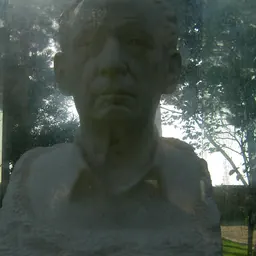

Related people
Same field, nearest in time


Contemporaries
People whose lives overlapped Evgenii Eduardovich Bertels's


Frequently asked questions
Who was Evgenii Eduardovich Bertels?
Soviet-Russian orientalist (1890-1957)
When was Evgenii Eduardovich Bertels born?
Evgenii Eduardovich Bertels was born on 13 December 1890 in Saint Petersburg.
When did Evgenii Eduardovich Bertels die?
Evgenii Eduardovich Bertels died on 7 October 1957 in Moscow.
What was Evgenii Eduardovich Bertels's occupation?
Evgenii Eduardovich Bertels was an orientalist, iranologist, turkologist and university teacher.
What nationality was Evgenii Eduardovich Bertels?
Evgenii Eduardovich Bertels was Russian.
Sources & further reading
· Wikipedia: Evgenii Eduardovich Bertels
· DBpedia: Evgenii Eduardovich Bertels
Cite this page
APA: Biography.guide. (2026). Evgenii Eduardovich Bertels. https://biography.guide/evgenii-eduardovich-bertels/
MLA: "Evgenii Eduardovich Bertels." Biography.guide, https://biography.guide/evgenii-eduardovich-bertels/.
Chicago: "Evgenii Eduardovich Bertels." Biography.guide. https://biography.guide/evgenii-eduardovich-bertels/.
Data last updated: 2026-09-20 · Spot an error? Report a correction.
Page generated 2026-09-27 05:05 UTC