About Everton Conger
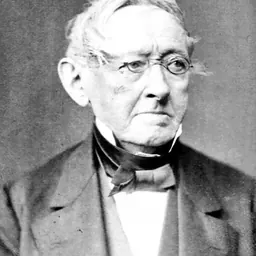
Lived 1834 – 1918 (aged 84). Everton Conger was an American judge and lawyer.
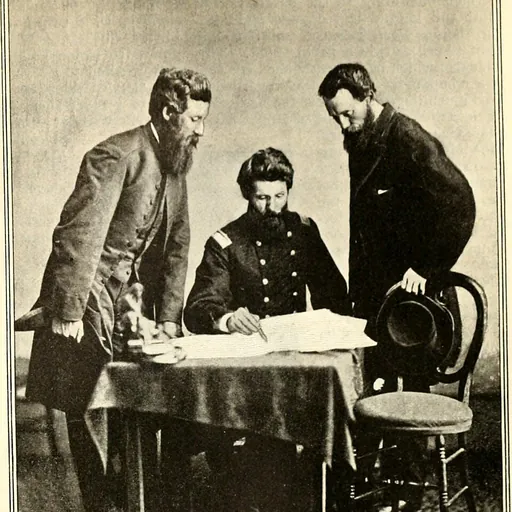
Hq of the Secret Service Bureau, Washington D.C. Lt L B. Baker. Col Lafayetter C Baker and E. J. Conger planning the pursuit of Booth Everton Judson Conger (April 25, 1834 – July 12, 1918) was an American officer during the Civil War who was instrumental in the capture of John Wilkes Booth, the assassin of President Abraham Lincoln, in a Virginia barn twelve days after Lincoln was shot.
Biography Everton Conger was born in Huron County, Ohio, in 1834. He was the son of Rev. Enoch Conger, a Presbyterian minister. In 1856, he moved to Fremont, Ohio, where he established a dental practice.
Conger enlisted in the Union army during the Civil War, initially as a private in the three-months 8th Ohio Infantry. When his term of enlistment expired, he returned to Fremont. On October 16, 1861, he married Emma "Kate" Boren, with whom he had five children. He later became a captain in the 3rd West Virginia Cavalry and eventually rose to the rank of lieutenant colonel of the 1st District of Columbia Cavalry. He suffered three severe wounds during combat and was assigned to detached duty in Washington, D.C., joining General Lafayette Baker's intelligence service as a detective.
Following the assassination of President Lincoln on April 14, 1865, Conger was ordered to accompany a detachment of 25 Union soldiers from the 16th New York Cavalry Regiment, led by Lieutenant Edward P. Doherty. The soldiers pursued Booth through Southern Maryland and across the Potomac and Rappahannock rivers to Richard Garrett's farm, just south of Port Royal, Caroline County, Virginia. Booth and his accomplice, David E. Herold, had been led to the farm by William Storke "Willie" Jett, formerly a private in the 9th Virginia Cavalry, whom they had met before crossing the Rappahannock.
Conger tracked down Jett and interrogated him, learning of Booth's location at the Garrett farm, and led the soldiers there. Arriving early in the morning of April 26, 1865, the soldiers found Booth and Herold hiding in a tobacco barn. Although Herold surrendered, Booth refused.
Conger removed Booth's personal effects, including a diary. Conger was given $15,000 as a reward for the successful operation. The city of Fremont gave him a pair of inscribed silver-handled pistols in recognition for his role in tracking down Booth.
Conger moved to Illinois, built a home, and practiced law in Carmi. Later he was appointed a United States District Court judge in the Montana Territory. He eventually moved to Hawaii to live with his daughter, dying there on July 12, 1918. He is buried in Mountain View Cemetery, Dillon, Montana.
Don’t just read it —
keep it.
Full-length biographies made to live with: read them, listen on the way to work, watch them tonight.
- E-book
- Audio
- Video
Instant download · yours to keep · every purchase keeps this site free
Important facts
People in Everton Conger's life
Named in this biography and alive at the same time


Related people
Same field, nearest in time
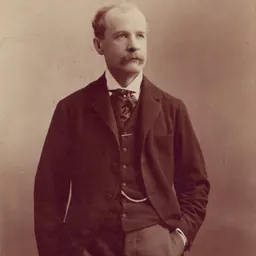

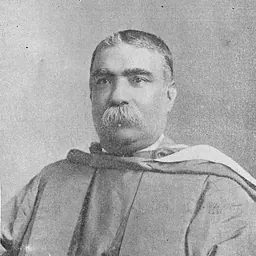
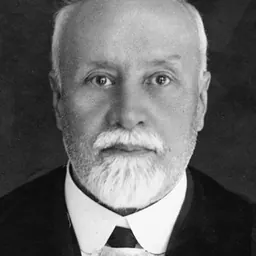
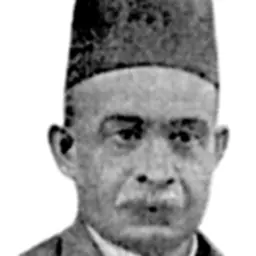
Contemporaries
People whose lives overlapped Everton Conger's





Frequently asked questions
Who was Everton Conger?
Union Army officer
When was Everton Conger born?
Everton Conger was born on 25 April 1834.
When did Everton Conger die?
Everton Conger died on 12 July 1918.
What was Everton Conger's occupation?
Everton Conger was a judge and lawyer.
What nationality was Everton Conger?
Everton Conger was American.
Sources & further reading
Cite this page
APA: Biography.guide. (2026). Everton Conger. https://biography.guide/everton-conger/
MLA: "Everton Conger." Biography.guide, https://biography.guide/everton-conger/.
Chicago: "Everton Conger." Biography.guide. https://biography.guide/everton-conger/.
Data last updated: 2026-09-24 · Spot an error? Report a correction.
Portrait: Wikimedia Commons · author & licence
Page generated 2026-09-27 05:08 UTC