
Evelyn Mary Macdonald
Occupational therapist
About Evelyn Mary Macdonald
Lived 1905 – 1993 (aged 87–88).
Evelyn Mary Macdonald (1 June 1905 in São Paulo, Brazil – 20 November 1993 in Battle, East Sussex) was a British occupational therapist who helped establish occupational therapy in the United Kingdom, Argentina and Greece. She founded the Association of Occupational Therapists. Macdonald was the first Chair of the Occupational Therapists Board.
Early life and education Evelyn Mary Macdonald was one of six children of Ebenezer John Macdonald (1870–1926) and Evelyn May Macdonald, nee Savory (1872–1968). Her mother, Evelyn May Savory was the eldest daughter of Reverend Ernest Lloyd Savory, Rector of Palgrave in Suffolk. Ebenezer John Macdonald was the third son of Charles Macdonald, Esq. of Greenock. Her father was born in Buenos Aires, Argentina and was a merchant. Her parents married on New Year's Day 1903 at St Paul's Church, Sao Paulo.
Little is known about Evelyn Mary Macdonald's early life in Brazil. She and her twin brother Robert Angus Macdonald (1905–1984) were born on June 1, 1905. They had four brothers: Ernest Charles Ian Macdonald (1904–1998), Ronald Campbell Macdonald (1908–2001), Norman Pemberton Macdonald (1913–1992) and Roderick Houston Macdonald (1918–1942). In 1921, sixteen-year-old Evelyn Mary was a boarder at Southlands School in Seaford, East Sussex. Her brothers Robert Angus, Ernest Charles and Ronald Campbell were students at Weymouth College in Dorset.
Career Macdonald was expected to become a companion to her parents or marry. She did neither. After considerable opposition, she became a craft teacher at Howells School in Wales.
Dorset House School of Occupational Therapy Macdonald was one of eight students who started occupational therapy training at Dorset House School, Clifton, Bristol in September 1934. She "had followed the development of occupational therapy with interest for a number of years and had covered much of the syllabus before she came."
The School was in Dorset House, a private residential clinic for patients suffering from neurotic and psychotic conditions, established by Casson in 1929. Dr Casson described Macdonald as "one of the Schools most talented students."
In 1938 Macdonald was appointed Principal. Macdonald described this demonstration treatment unit as an "adventure in rehabilitation."
In response, Dorset House provided six month courses subsidised by the Ministry of Health. The War Emergency Diploma Course was for physiotherapists and nurses; the 1943 Certificate Course for others with suitable qualifications and experience; and an Auxiliary Course for younger candidates prepared to work under supervision by an occupational therapist. Macdonald was responsible for allocating candidates to hospitals where the Ministry of Health required training staff. She advised and helped to open new departments. Over 200 people completed a six month course, alongside the three-year Diploma. This was a similar number to those who trained between 1930 and 1945. The workshop became a model for occupational therapy in other Emergency Medical Service Hospitals in the United Kingdom. Macdonald served as a Trustee of the Casson Trust until 1981, when she retired due to ill-health.
Macdonald and her Deputy, Betty Collins, began searching for permanent accommodation for the School in the mid 1950s. She was concerned that prospective students would be deterred by cold, leaky Nissen huts "however good the training offered." Macdonald "would sweep imperiously through such (potential) buildings, planning the School as she went." In 1939, Council discussed the impending war, writing to the Director of Medical Services to register their readiness for action. Macdonald's third paper describes how the Association continued between 1939 and 1942, adapting education standards to meet the demand for rehabilitation staff for the war effort. The fourth paper covers the Emergency Hospital Service; occupational therapists in war centres and starting Schools overseas; regulations for professional practice and formalising the status of the Association as a limited liability company. In the fifth paper Macdonald documents the post war period (1946–1949) which included preparing for the new National Health Service; starting a Library and register of Technical Instructors. Macdonald's final article covered 1950 to 1957 with a new joint Council with the Scottish Association, the formation of the World Federation of Occupational Therapist and Congress in Edinburgh; and work on the state registration of Medical Auxiliaries.
At the 1956 Annual General Meeting of the Association Macdonald was congratulated on the award of a B.Litt (Oxon) from St Anne's College. It was "the first Thesis ever presented to a University, on a subject connected with the work of the profession."
Macdonald was an early advocate of collaboration between therapeutic services or the Allied Health Professions as they are known. She researched the history, compared the education and practice of five therapeutic services: occupational therapy, orthoptics, physiotherapy, remedial gymnastics and speech therapy for the B.Litt. Macdonald reviewed the commonalities and differences in relation to health policies. She argued that they were "somewhat allied … the therapist deals personally and actively with every patient." The Occupational Therapy Committee was to consider the supply and demand, training and qualifications of Occupational Therapists in the new National Health Service and to make recommendations. Macdonald and M D Barr were invited because of their special expertise, not as representatives of any organisation. Questions were asked about the Cope Committee's Reports in the House of Commons on19 April 1951.
State registration includes maintaining registers of qualified people, recognising educational institutions and examinations and dealing with breaches of standards.
Early in 1946 Dr Casson offered the United Nations Relief and Rehabilitation Administration a scholarship to train a Greek candidate in occupational therapy. The recipient was Roula Gregoriaou (1916–1967) a volunteer nurse with the Greek Red Cross during World War 2. Gregoriaou qualified in 1949. She set up a training course and an occupational therapy service at the Asclepeeon Voulas Orthopaedic Hospital in Athens. Macdonald described Gregoriaou as a pioneer who "demonstrated what contribution occupational therapy could make to the needs of the disabled, but administered and extended the work at the same time." She received, on behalf of the School, the "honorary distinction" the Golden Cross of the Greek Red Cross. Macdonald is recognised as a founder of occupational therapy in Argentina. In 1957 she was asked by the Argentinian government to set up a training School. This followed a nine month secondment by Betty Hollins and a group of physiotherapists, to establish a rehabilitation service for the poliomyelitis epidemic. In March 1959 Macdonald led three experienced occupational therapists: Hilary Schlesinger, Barbara Allen and Anne Rickett to Argentina. Macdonald is remembered for instilling the first Argentinian students with their responsibilities as pioneers, which included supporting training, the dissemination of occupational therapy throughout the country and organising a professional association. An article about ‘Occupational Therapy in Mental Health' published in the British Medical Bulletin in 1949, was reprinted in Occupational Therapy. She was a co-author of the first textbook written by a British occupational therapist. ‘The Theory of Occupational Therapy for Students and Nurses', written with Norah A. Haworth, a physician, was published in 1940 and 1944. It received positive reviews.
Between 1960 and 1981 Macdonald co-edited four editions of ‘Occupational Therapy in Rehabilitation: A Handbook for Occupational Therapists, Students and Others Interested in this Aspect of Reablement'. Each edition had contributions from specialist occupational therapists. This was a popular textbook.
In 1981, Baillière Tindall, London published ‘'World-wide Conquests of Disabilities: The History, Development and Present Functions of the Remedial Services.' Macdonald did the research a"nd writing in her retirement, visiting and corresponding with therapists all over the world.
Her legacy is the Association of Occupational Therapists which became the British Association of Occupational Therapists in 1974 and the Royal College of Occupational Therapists in 2017. Also, statutory regulation through the Professions Supplementary to Medicine Act 1960 which continues with the Health Professions Order 2001 and the Health and Care Professions Council
An obituary described Macdonald as "one of the great pioneers of occupational therapy … her contribution to the wellbeing of countless people in the field of rehabilitation will ensure that her influence will live on." These include a scrapbook which contains letters from the Ministry of Health acknowledging Macdonald's contribution to the Emergency Services during World War 2 and from the Commisión Nacional de Rehabilitatacion de Lisido for founding the first School of Occupational Therapy in Argentina.
Awards and honours In 1964 Macdonald was awarded an MBE for her services to rehabilitation.
Don’t just read it —
keep it.
Full-length biographies made to live with: read them, listen on the way to work, watch them tonight.
- E-book
- Audio
- Video
Instant download · yours to keep · every purchase keeps this site free
Important facts
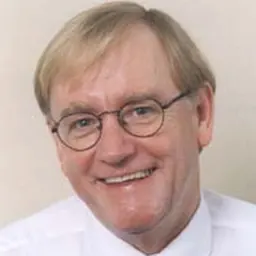
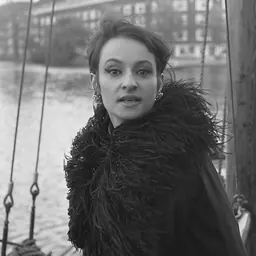
People in Evelyn Mary Macdonald's life
Named in this biography and alive at the same time





Contemporaries
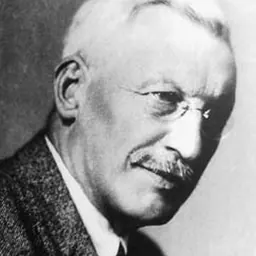
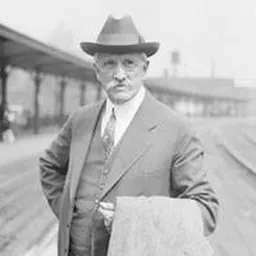
People whose lives overlapped Evelyn Mary Macdonald's

Frequently asked questions
Who was Evelyn Mary Macdonald?
Occupational therapist
When was Evelyn Mary Macdonald born?
Evelyn Mary Macdonald was born on 1 June 1905.
When did Evelyn Mary Macdonald die?
Evelyn Mary Macdonald died in 1993.
Sources & further reading
· Wikipedia: Evelyn Mary Macdonald
· DBpedia: Evelyn Mary Macdonald
Cite this page
APA: Biography.guide. (2026). Evelyn Mary Macdonald. https://biography.guide/evelyn-mary-macdonald/
MLA: "Evelyn Mary Macdonald." Biography.guide, https://biography.guide/evelyn-mary-macdonald/.
Chicago: "Evelyn Mary Macdonald." Biography.guide. https://biography.guide/evelyn-mary-macdonald/.
Data last updated: 2026-09-20 · Spot an error? Report a correction.
Page generated 2026-09-27 05:16 UTC