
About Eva Švankmajerová
Lived 1940 – 2005 (aged 65). Eva Švankmajerová was a Czech writer, painter, poet, graphic designer, animator and visual artist.
Eva Švankmajerová (née Dvořáková; 25 September 1940 – 20 October 2005) was a Czech surrealist painter, ceramist, costume and stage designer, poet and prose writer. She was wife and partner of the artist and film director Jan Švankmajer. Her works are reflections of concrete events and their conscious and unconscious, imaginary or dream reinterpretations.
Life Early years and studies She was born as the middle of three siblings in a bourgeois family in Kostelec nad Černými lesy. Her father ran a drugstore there and later founded the chemical factory Cyklamen. In 1942, at the age of two, her parents sent her to her grandmother in Osek to compensate for the loss of her son. The grandmother suffered from cyclical depression. She no longer expected anything positive from life, and she passed these feelings on to little Eva. Her negative impact on her granddaughter's early childhood was the source of Eva experiencing everything in life in a kind of premonition of calamity and with an inability to live without a specific culprit. Nevertheless, Eva was happier with her grandmother than with her parents, remembered her grandmother with affection and later painted her portrait.
Eva Švankmajerová's literary work was influenced by reading old editions of the women's magazines Pražanka and List paní a dívek, which she found at her grandmother's house. The decadent literary vocabulary and affected syntax of these magazines, the charm of stupid life advice and wisdom, and the melodramatically kitschy outpourings became the source of the imaginative humour of her own texts, in which she spontaneously blends mannerred diction with language that is deliberately plebeian or late-normalization communist.
After war, she returned to Kostelec to live with her parents, but throughout her adolescence she felt a strong rivalry with her brothers. The need to get her parents' attention was probably also related to her temporary (perhaps hysterical) deafness. Her psychological state triggered neurotic somatic-type manifestations, such as lameness.
From her early youth she drew and in 1954–1958 she studied carving under Václav Markup and drawing under Vladimír Landa at the Industrial School of Housing. Her classmate was Ivo Medek. In 1958–1962, she studied scenography at the Puppetry Department of the Academy of Performing Arts under Richard Lander. In 1958, she saw Jan Švankmajer's graduation performance The Deer King. Jan immediately attracted her interest, but then had to serve in the army and they met again after two years.
In 1964, she participated together with Jan Švankmajer at May 57 Group exhibition and in 1966 she was represented at the collective Youth Exhibition in Brno (for the International Association of Art Critics Congress). She exhibited individually for the first time in 1967 at Youth Gallery in Mánes. In 1967, Jan and Eva took part in the exhibition Fantasy Aspects of Contemporary Czech Art in Jihlava and Prague and the exhibition Prager Künstler in Linz, and in 1968 in the last exhibition of May 57 Group in Basel (Austellung tschechischer Künstler).
In 1968, the Švankmajer family moved to a Renaissance house in Prague-Hradčany, which they purchased from the Prague Castle Administration. Together they travelled to Paris, where student demonstrations were taking place at the time. Upon their return, the situation at home escalated when the StB began to prosecute the signatories of The Two Thousand Words manifesto, which was also signed by Jan Švankmajer. The whole family took temporary refuge in the apartment of animator Pavel Procházka.
Normalisation and persecution In 1969 she had solo exhibition in Písek. Ivo Medek brought the Cuban surrealist Jorge Camacho to the Youth Exhibition at "Krásná jizba", where Eva Švankmajerová's paintings attracted his interest. He visited her in her studio and they exchanged paintings. This meeting became a crucial event for Eva. Jan Švankmajer arranged a screening of his films for Jorge Camacho and on that occasion they both met the surrealist group around Vratislav Effenberger.
During the normalization period, she lost the opportunity to exhibit in official galleries and sporadic exhibitions of her paintings were held in Germany, Lyon or small unofficial galleries in Prague.
In 1970, the Švankmajer couple became members of the Surrealist Group in the Czechoslovakia and Eva has been a kind of informal "leader" ever since. Both participated in all the activities of the Surrealist group and in 1972 they took part in several experiments in the Central military hospital in Prague with euphoric gas and LSD. In 1974, reproductions of her paintings were published in the Parisian surrealist magazine B.L.S. with a text by Vratislav Effenberger on her paintings.
From the mid-1970s, she and Jan Švankmajer set up a ceramic workshop in her father's house in Kostelec nad Černými lesy. They signed their works with the common pseudonym E. J. Kostelec (or J. E. Kostelec). In 1975, the Švankmajer family had a son Václav, who later also became an author of animated films.
In 1976, she met Emila Medková, who at that time renewed her cooperation with the Surrealist Group in the Czechoslovakia, and became a close friend of hers.
In 1979, the Parisian gallery Le Triskéte prepared an exhibition of forty paintings by Eva Švankmajerová under the title Césarienne - Peintures (Caesarean section - Paintings), which was eventually cancelled. Only a lithographic poster and a small catalogue with reproductions and texts translated into French were published, illustrating her direct, sarcastic and cruel view of the female fate and the female body. The Geneva review Le La, led by the surrealist poet Gilles Dunant, offered the Czech surrealists a fake copyright of the Swiss edition for their samizdat collection Open Game in order to circumvent the communist censorship.
In 1981, the Švankmajer couple purchased a 19th-century castle in Horní Staňkov, which they discovered while searching for exteriors for the film The Fall of the House of Usher. They build a ceramic kiln there and gradually converted the completely dilapidated castle, which had previously served as a hostel for seasonal Roma workers, into a surrealist Kunstkamera.
In 1983, a joint exhibition of Czech surrealists was to be held at Sovinec Castle. The day before the opening, two StB officers officially banned it as an "unauthorised event". Only a small samizdat catalogue was published. In 1985, a minor exhibition of Eva Švankmajerová's paintings was held in a small unofficial gallery Juniorklub in Prague. An unknown vandal cut up six canvases, including the painting Menstruation (1977). Under the title Secret Boils, in 1987 she exhibited paintings, drawings, prints, collages, objects and collaborations on Jan Švankmajer's films in Brussels and Tournai, Belgium. The exhibition was partially censored by the communist agency Artcentrum, which did not allow the paintings Emigration and Rebus 2 to be exhibited.
1990s - 2005 With the fall of communism, her general scepticism towards society did not disappear, as one alienation replaced another and subordination to the party cultural line was replaced by dependence on market mechanisms. The possibility of presenting her works freely gave her energy, but did nothing to diminish the personal revolt that had accompanied her since childhood. As a fierce individualist, she never subscribed to feminism, but rejected the established roles of the (subservient) woman in society and often turned her unkind, ironic and even cruel humour on herself.
In 1990, the surrealist magazine Analogon began to be published again, and from the second issue onwards Eva regularly contributed to it. A retrospective exhibition Analogon 1969-1990 was held in Paris, where Eva was represented by her paintings. In 1991, Jan and Eva Švankmajer had a joint exhibition Contamination of the Senses in Annecy on the occasion of the International Festival of Animated Films.
In 1994, she teamed up as a production designer on the feature film The Lesson of Faust and received the Czech Lion Award for "Best Art Achievement of the Year" together with Jan Švankmajer. In the 1990s she exhibited in Cardiff, Welshpool, Hanover, Gütersloh, Sitges, Telluride in the United States.
In 1996, a major exhibition of works by Eva Švankmajerová and Jan Švankmajer entitled Touch, Arcimboldo, Vanitas was held in several European cities (London, Warsaw, Kraków). The French filmmakers Michel Leclerc and Bertrand Schmitt began to prepare the concept and script for the feature-length documentary Les Chiméres des Švankmajer, which premiered in 2000. A further exhibition of 61 works by the couple was held in London in 1997, and in the same year Eva was represented in exhibitions at the National Gallery in Prague and the Prague City Gallery. In 1998, major exhibitions of both spouses were held in several regional centres and the monograph Anima Animus Animace - EvaŠvankmajerJan, between film and free creation was published.
For Little Otik, Eva and Jan Švankmajer received the Czech Lion Award in 2001 for the best art design and for the film poster. In 2001 she exhibited alone or with Jan Švankmajer in Prague (catalogue of the Vltavín publishing house), in Vienna, La Rochelle, Rotterdam, 2002 in Annecy, Charleville-Mézières, Paris, 2003 in Paris, Parma, 2004 in Brussels. In June 2004, a major retrospective exhibition of Jan and Eva Švankmajerová entitled Food opened at the Prague Castle Riding Hall, and in autumn 2005 they both had an exhibition in Japan.
In 1996 Eva Švankmajerová was diagnosed with breast cancer and faced repeated complicated treatments. She coped with the disease through her work, which often had a very personal theme (ES: All in Time, pastel, 1997). She finally succumbed to her illness on 20 October 2005.
Vratislav Effenberger places her work within his theoretical concept of surrealist negation of negation. He finds the dominant personality of Eva Švankmajerová in her hateful attitude towards consumer society, personified by the pink female piggy, as dull as striving. The intensity of this negation is directly proportional to the desire for the miraculous, which this consumerism defrauds. The romantic need to defend a kind of elemental purity leads Eva Švankmajerová to a dialectical purification that is capable of disgusting the revulsion almost considered the norm. She is not only showing unreflected anger or programmatic scepticism, but her anger should also be perceived as self-defence in the existential sense, in her case also self-defence against her own insecurities, anxieties and aggressions (Existential Moment, 1978).
This outpouring of anger is clearly and directly recorded
Paintings, drawings, prints Švankmajerová studied wood carving and scenography and did not start painting consistently until around 1963. Her artistic style gradually evolved from an almost neocubist figuration (Woman I, Woman II, 1963) to a stylized pseudo-naivism influenced by Henri Rousseau (Monkey Alki, 1966), and in the 1970s to neo-expressionism, formally close to the German Junge Wilde movement. She was inspired by naive and folklore art, fairy tale illustrations, but also by puzzles, riddles and puns. She is above all a painter and poet of relationships, tensions, roles, ritual and pseudo-ritual behaviour and communication between people (Who reads this is an ox, 1973). As a portrait painter, she views and illustrates life and the world through her own most personal and intimate destiny, and often paints fanciful, humorous and self-ironic self-portraits. The erotic curiosity itself turns into a poetic obsession, into adventure novels, into a passion for all kinds of extremes and mysteries on Eva Švankmajerová's canvases.
Eva Švankmajerová received her artistic education primarily in the field of applied arts and drew inspiration from village fair and naive art, which led her to simplified depictions of figures, objects and environments. She herself states that her deliberate naiveté was a statement against the expressive material abstraction of the early 1960s.
From the mid-1960s onwards, her pictorial series Rebuses was created, in which she uses puns, folk sayings, proverbs and quotations, and sarcastically reverses the meaning of political and patriotic slogans.
She first drew attention to herself in the late 1960s with her Emancipation Cycle - variations on famous paintings by Botticelli, Manet and Rubens, in which she replaced female figures with male ones (Sleeping Venus, 1967, Birth of Venus, 1968, Breakfast in the Grass, 1968, The Kidnapping of the Sons of Leukipp, 1969), which expressed her personal defiance of the female artist's satiety in a male world,
Impressive are her portraits of Vratislav Effenberger (The Hunt for the Black Shark, 1980, Gulliver in hand puppet theatre, 1985–1986), while the self-portraits usually come across as deliberate caricatures (Me in Action, 1991). Several reproductions of her works were published in 1985 in the Swedish surrealist magazine Dunganon, where one issue was dedicated to Czechoslovak surrealists.
Since 1995, she has been creating ceramic busts as imaginary portraits of members of the Surrealist group. Her Homage to the Marquise de Sade takes the form of a set of mutually copulating ceramic jugs. Eva Švankmajerová also contributed to the artwork for all of Jan Švankmajer's feature films until 2005, starting with Alice (1988), then Faust (1994) and Little Otik (2000). She designed the costumes and the puppet-fetish for Conspirators of Pleasure (1996). The Surrealist group in Czechoslovakia organised a collective inquiry on eroticism and in 1977 published as a samizdat the single copy of the anthology Erotism in Contemporary Times, which later became part of the object-book Night Table. At a meeting of the Surrealist Group, she brought a text written in the style of Marquis de Sade and invited Vratislav Effenberger to continue. The correspondence eventually led to the novel Whips of Conscience, completed in 1978 and published by dybbuk publishing house in 2010.
In 1976 she wrote a play, Judgement, which was not printed until 2021. In 1986, Eva's poems were published in the anthology Opposite of the Mirror / Surrealist Poetry and in 1987 separately in the collection Solitudes and Quotations under the label of the Geneva publishing house Le La.
Cinema Ztracená pohádka / The Lost Fairy Tale (1976), Magician's Lantern, art designer, director: Jaromil Jireš Odysseus Magician's Lantern (1987) art designer of animated parts, director: Evald Schorm
Filmography Short films The Last Trick (1964), assistant of production The Garden (1968), costume designer Jsouc na řece mlynář jeden / There was a miller on the river (1971), art designer, animated film by Jiří Brdečka The Pendulum, the Pit and Hope (1983), partnership on production design Jost Bürgi – Demystifikace času a prostoru / Demystification of time and space (1986) designer of animated parts, director: Michael Havas
Feature films The Ninth Heart, special effects, poster (director: Juraj Herz) Something from Alice (1988), production design Faust (1994), co-production Eva Švankmajerová Conspirators of Pleasure (1996), costumes Little Otik (2000), costumes Lunacy (2005), costumes, Czech Oscar nomination
Don’t just read it —
keep it.
Full-length biographies made to live with: read them, listen on the way to work, watch them tonight.
- E-book
- Audio
- Video
Instant download · yours to keep · every purchase keeps this site free
Important facts
People in Eva Švankmajerová's life
Named in this biography and alive at the same time
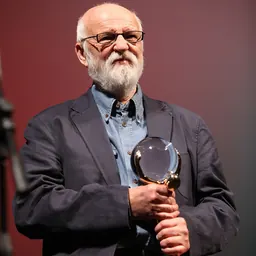




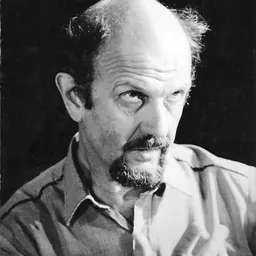
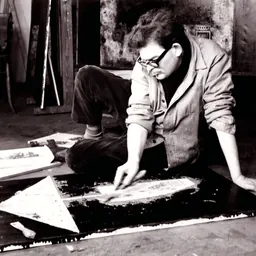
Related people
Same field, nearest in time

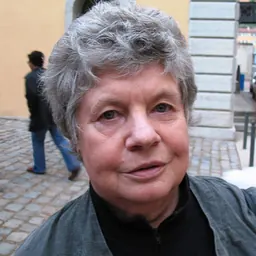
Contemporaries
People whose lives overlapped Eva Švankmajerová's




Frequently asked questions
Who was Eva Švankmajerová?
Czech artist, poet and writer (1940–2005)
When was Eva Švankmajerová born?
Eva Švankmajerová was born on 25 September 1940 in Kostelec nad Černými lesy.
When did Eva Švankmajerová die?
Eva Švankmajerová died on 20 October 2005 in Prague.
What was Eva Švankmajerová's occupation?
Eva Švankmajerová was a writer, painter, poet, graphic designer, animator and visual artist.
What nationality was Eva Švankmajerová?
Eva Švankmajerová was Czech.
Sources & further reading
· Wikipedia: Eva Švankmajerová
Cite this page
APA: Biography.guide. (2026). Eva Švankmajerová. https://biography.guide/eva-svankmajerova/
MLA: "Eva Švankmajerová." Biography.guide, https://biography.guide/eva-svankmajerova/.
Chicago: "Eva Švankmajerová." Biography.guide. https://biography.guide/eva-svankmajerova/.
Data last updated: 2026-09-20 · Spot an error? Report a correction.
Page generated 2026-09-27 05:17 UTC