
About Euronymous
Lived 1968 – 1993 (aged 25). Euronymous was a Norwegian guitarist, record producer and entrepreneur.
Øystein Aarseth (22 March 1968 – 10 August 1993), better known by his stage name Euronymous, was a Norwegian musician and a founder of and central figure in the early Norwegian black metal scene. He was a co-founder and guitarist of the Norwegian black metal band Mayhem and was the only constant member from the band's formation in 1984 until his murder in 1993. He was also founder and owner of the extreme metal record label Deathlike Silence Productions and record shop Helvete.
Euronymous professed to being a theistic Satanist and was known for making extreme misanthropic statements. He presented himself as leading a militant cult-like group known as the "Black Metal Inner Circle".
In August 1993, he was murdered by fellow musician and former bandmate Varg Vikernes.
Biography
1984–1991 Aarseth formed Mayhem in 1984 along with bassist Necrobutcher (Jørn Stubberud) and drummer Kjetil Manheim. At the time he was going by the stage name Destructor but later changed his name to Euronymous, derived from the demon Eurynomos which inspired the Hellhammer song of the same name.
In summer 1986, Euronymous, Necrobutcher and Jon "Metalion" Kristiansen visited the German thrash metal band Assassin and recorded the Metalion in the Park demo under the name Checker Patrol, Metalion contributing background vocals to the title song "Metalion in the Park".
In 1988, Per "Dead" Ohlin became Mayhem's vocalist and Jan Axel "Hellhammer" Blomberg became its drummer. By 1991, Dead, Euronymous and Hellhammer were living in a house in the woods near Kråkstad, which was used as a place for the band to rehearse. Mayhem bassist Necrobutcher said that, after living together for a while, Dead and Euronymous "got on each other's nerves a lot" and "weren't really friends at the end". Varg Vikernes claims that Dead once stabbed Euronymous with a knife.
On 8 April 1991, Dead was found deceased by Euronymous at his home with slit wrists and a shotgun wound to the head. His death was considered suicide. Before calling the police, Euronymous went to a shop and bought a disposable camera with which he photographed the body, after rearranging some items. One of these photographs was later used as the cover of a bootleg live album: The Dawn of the Black Hearts. Necrobutcher recalls how Euronymous told him of the suicide:Øystein called me up the next day ... and says, "Dead has done something really cool! He killed himself". I thought, have you lost it? What do you mean cool? He says, "Relax, I have photos of everything". I was in shock and grief. He was just thinking how to exploit it. So I told him, "OK. Don't even fucking call me before you destroy those pictures".
Euronymous used Dead's suicide to foster Mayhem's "evil" image and claimed Dead had killed himself because black metal had become "trendy" and commercialized. In time, rumors spread that Euronymous had made a stew with bits of Dead's brain and had made necklaces with bits of his skull. The band later denied the former rumor but confirmed that the latter was true. which was confirmed by several other members of the scene, like Bård "Faust" Eithun, and Metalion. Morgan Steinmeyer Håkansson of Marduk also confirmed this and that he also owns a piece of Dead's brain matter as well as lead from the shotgun shot, all which were gifted to him by Euronymous.
Necrobutcher later speculated that taking the photographs and forcing others to see them was a way for Euronymous to cope with the shock of seeing his friend dead. Euronymous opened a record shop named "Helvete" (Norwegian for "hell") at Schweigaards gate 56 in Oslo. Norwegian black metal musicians often met in the shop's basement, including the two members of Mayhem, the members of Emperor, Varg "Count Grishnackh" Vikernes of Burzum, and Snorre "Blackthorn" Ruch of Thorns. Euronymous also started an independent record label called Deathlike Silence Productions, which was based at Helvete. It released albums by Norwegian bands Mayhem and Burzum, and Swedish bands Merciless and Abruptum. Euronymous, Varg and Emperor guitarist Tomas "Samoth" Haugen all lived at Helvete at various times. Emperor drummer Faust also lived and worked there. Nevertheless, it became the focal point of the Norwegian black metal scene. Metalion, writer of the fanzine Slayer, said that the opening of Helvete was "the creation of the whole Norwegian Black Metal scene". Daniel Ekeroth wrote in 2008, Within just a few months [of Helvete opening], many young musicians had become obsessed with Euronymous and his ideas, and soon a lot of Norwegian death metal bands transformed into black metal bands. Amputation became Immortal, Thou Shalt Suffer turned into Emperor, and Darkthrone swapped their Swedish-inspired death metal for primitive black metal. Most notoriously, Old Funeral's guitar player Kristian (later renamed as Varg) Vikernes had already left the band to form his own creation, Burzum.
Euronymous helped many younger bands in the scene, especially Emperor and Enslaved, both of whom he recommended to Candlelight Records. Ihsahn of Emperor said that "if you were trusted, if they knew you were serious in your views, you were accepted" by the Helvete scene. However, it has been claimed that their friendship turned to rivalry. Looking back, Faust said: "It sounds really silly, but I think there was a little bit of a contest between them to see who could be more evil. It created a very difficult situation, especially for Euronymous, who wanted the glamour and the showbiz. With him, there was a lot of smoke but not so much fire". There followed a wave of church burnings across Norway perpetrated by musicians and fans of the Norwegian black metal scene. Euronymous was present at the burning of Holmenkollen Chapel together with Vikernes and Faust,
In January 1993, an article in one of Norway's biggest newspapers, Bergens Tidende, brought the black metal scene into the media spotlight. Varg Vikernes (using his pseudonym Count Grishnackh) gave an anonymous interview to a journalist from the newspaper, in which he claimed to have burnt the churches and killed a man in Lillehammer. He added that the interview revealed nothing that could prove his involvement in any crime.
After the Bergens Tidende episode, Euronymous decided to shut Helvete as it began to draw the attention of the police and media. Vikernes and the authors of Lords of Chaos claim that Euronymous' parents pressured him into shutting Helvete.
Murder
In early 1993, animosity arose between Euronymous and Vikernes, as well as between Euronymous and some members of the Swedish black metal scene.
On the night of 10 August 1993, Vikernes stabbed Euronymous to death at his apartment in Oslo. The murder was initially blamed on Swedish black metallers by the media. Vikernes claims that he killed Euronymous in self-defense. He says that Euronymous had plotted to stun him with an electroshock weapon, tie him up, and torture him to death while videotaping the event. Vikernes explains: "If he was talking about it to everybody and anybody I wouldn't have taken it seriously. But he just told a select group of friends, and one of them told me". Vikernes contends that most of Euronymous' wounds were caused by broken glass he had fallen on during the struggle. while Necrobutcher believes Vikernes killed Euronymous due to the death threats he received from him. Necrobutcher has claimed that he also intended to murder Euronymous himself due to him tastelessly capitalizing on Dead's suicide.
Blackthorn claims Vikernes planned to murder Euronymous and pressured him into coming along. He claims that, in the summer of 1993, he was almost committed to a mental hospital but fled to Bergen and stayed with Vikernes. Blackthorn said of the murder, "I was neither for nor against it. I didn't give a shit about Øystein". Vikernes, however, claims that he had not planned the killing and that Blackthorn came along to show Euronymous some new guitar riffs.
Aftermath Vikernes was arrested on 19 August 1993 in Bergen. On 16 May 1994, Blackthorn was sentenced to 8 years in prison for being an accomplice. and turning his back on Satanism in favor of nationalism and Odinism, although Vikernes claims he was never a Satanist and had only used Satan to provoke. They saw Euronymous' death as a significant loss to the scene, and some black metallers "have sworn to avenge Aarseth's death". A few years after the murder, Ihsahn of Emperor said, "There's no discipline in the scene anymore, like earlier on around the shop." After his death, a "cult developed around the memory of Euronymous", and he was hailed by some as "the King" In the book, Hellhammer, Ihsahn claim that Euronymous' death either did not affect them or did not shock them. Anders Odden (a friend of Euronymous at the time) said of the murder: "It wasn't odd that he ended up getting killed. He thought he could threaten to kill people without it having any consequences". He added: "I think many people felt relief once he was gone". Writer and musician Erlend Erichsen agreed, saying, "Nobody was there to boss them about. The 'black metal police' were gone".
In interviews, Euronymous claimed to be against individualism, compassion, peace, happiness and fun. He claimed he wanted to spread hatred, sorrow and evil. The following year, he told Kill Yourself zine, "There is NOTHING which is too sick, evil or perverted" and claimed "I have no problem with killing someone in cold blood".
However, some who knew Euronymous claim that "the extreme Satanic image he projected was, in fact, just that—a projection which bore little resemblance to his real personality". Faust said that with Euronymous, "there was a lot of smoke but not so much fire". He added that the scene "wanted to be in opposition to society" and "tried to concentrate more on just being 'evil' than having a real Satanic philosophy". Mayhem drummer Kjetil Manheim (Euronymous' friend from 1983 until his death) described him as "health oriented ... A nice guy, a family guy", but said that when his older friends were not around, "he could play out his role". Manheim claimed that Euronymous became "extreme" towards the end of his life: "He liked telling people that they were worthless; that he was the best. He was all 'I define black metal. Black metal is me!' ... I think he was trapped in the image of Mayhem. He became a megalomaniac". In an interview by Esa Lahdenperä conducted in August 1993, Euronymous stated:
I believe in a horned devil, a personified Satan. In my opinion all the other forms of Satanism are bullshit. [...] Satanism comes from religious Christianity, and there it shall stay. I'm a religious person and I will fight those who misuse His name. People are not supposed to believe in themselves and be individualists. They are supposed to OBEY, to be the SLAVES of religion. On the relationship between religion and science, he said: "Scientists can't disprove [...] religion. No matter how hard you try, you can't explain the universe. You can't leave out a religious belief." in the black metal documentary Until the Light Takes Us, Varg Vikernes claimed that Euronymous was not a Satanist. He said: "To Aarseth everything was about image and he wanted to appear extreme. He wanted people to think of him as being extreme; the most extreme of them all. But he didn't want to be extreme and he wasn't really extreme".
Over time, some members of the Norwegian scene began to follow Paganism. Vikernes later claimed that Euronymous—"obsessed with this 'Satanist' thing"—disapproved of Vikernes promoting paganism. Euronymous showed no explicit disapproval of paganism though, and released the pagan band Enslaved's first album, Vikingligr Veldi, on Deathlike Silence Productions.
Black metal and death metal
Euronymous said that the term "black metal" can apply to any kind of metal so long as it is "Satanic" and "heavy". and that "in a way, it can be ordinary heavy metal or just noise. What's important is that it's Satanic; that's what makes it black metal".
Likewise, Euronymous said that the term death metal can apply to any kind of metal, so long as the band "cultivates and worships death". Shortly after Dead's suicide, he penned an open letter criticizing bands that he perceived to be not "metal enough," including, but not limited to, Deicide.
Like many others in the black metal scene, Euronymous originally believed that black metal should stay underground. However, he later changed his mind. He believed that the idea of staying underground came from hardcore punk, and said, "Those who scream most about being in 'underground' is also often those who make so bad music that they don't have a chance to get big themselves". He added: "I wouldn't mind making DSP big and earn a million, as long as I don't change my ways of thinking and being. [...] If there were one million black metal fans in the world, most of them would be jerks, but there would be really many true and brutal people as well. The bigger we get, the more we can manipulate people into thinking like us". He collected Eastern Bloc memorabilia, He left Rød Ungdom, allegedly because he came to realise that they were "just a bunch of humanists".
Hellhammer said "Euronymous wanted to be the most extreme person, and he thought that communism was very extreme", but that he later claimed to be a fascist. He did not, however, use the music of Mayhem to promote any kind of politics.
Influences He stated in various interviews that his and Mayhem's main influences were Venom, In the documentary Helvete: Historien om norsk black metal, Snorre Ruch said that Euronymous invented a new tremolo picking technique that enabled them to play the iconic black metal "Norse riff". This method involves slowly moving up and down a chord while applying tremolo picking to each string, similar to an arpeggio. He was also ranked No. 51 out of The 100 Greatest Heavy Metal Guitarists of All Time by Guitar World. In 2025, Jillian Drachman of Loudwire referred to him as "one of the movement's most important architects, crediting Aarseth for inventing the black metal style of tremolo picking and sharing it with others.
In March 2012, low-cost carrier Norwegian Air Shuttle set up a public poll asking customers to pick a famous Norwegian historic figure whose picture would decorate the aircraft's tail fin. Largely on the strength of international fans, Aarseth was leading the poll, but his name was removed from the campaign at his family's request.
The 2018 film Lords of Chaos, based on the eponymous book, is a semi-fictionalised account of the early 1990s Norwegian black metal scene told from the perspective of Euronymous. In the film Euronymous is played by Rory Culkin.
Discography Euronymous played guitar on the following albums except where noted, any additional instruments or credits in notes.
Don’t just read it —
keep it.
Full-length biographies made to live with: read them, listen on the way to work, watch them tonight.
- E-book
- Audio
- Video
Instant download · yours to keep · every purchase keeps this site free
Important facts
People in Euronymous's life
Named in this biography and alive at the same time




Related people
Same field, nearest in time


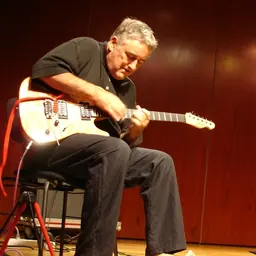
Contemporaries
People whose lives overlapped Euronymous's
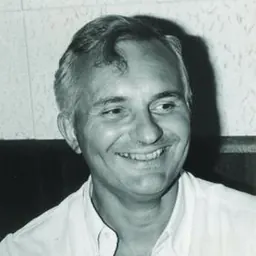
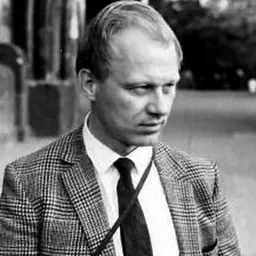

Frequently asked questions
Who was Euronymous?
Norwegian black metal musician (1968–1993)
When was Euronymous born?
Euronymous was born on 22 March 1968 in Surnadal Municipality.
When did Euronymous die?
Euronymous died on 10 August 1993 in Oslo.
What was Euronymous's occupation?
Euronymous was a guitarist, record producer and entrepreneur.
What nationality was Euronymous?
Euronymous was Norwegian.
Sources & further reading
Cite this page
APA: Biography.guide. (2026). Euronymous. https://biography.guide/euronymous/
MLA: "Euronymous." Biography.guide, https://biography.guide/euronymous/.
Chicago: "Euronymous." Biography.guide. https://biography.guide/euronymous/.
Data last updated: 2026-09-20 · Spot an error? Report a correction.
Page generated 2026-09-27 05:21 UTC