
Eunice Weaver
Brazilian philanthropist
About Eunice Weaver
Lived 1902 – 1969 (aged 67). Eunice Weaver was a Brazilian.
Eunice de Sousa Gabbi Weaver (September 18, 1902 – December 9, 1969) was a Brazilian philanthropist. She was a leader of leprosy charities in Brazil from the 1930s to the 1960s.
Early life Eunice de Sousa Gabbi was born on a coffee farm in São Manoel, the daughter of Henrique Gabbi and Leopoldina Gabbi. Her father was an immigrant from Italy. Eunice Gabbi attended school in Uruguaiana. She trained to be a teacher in São Paulo.
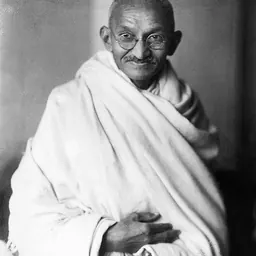
Career In 1929, Weaver accompanied her husband when he served as a faculty member of the "Floating University of North America", an educational program based in an ocean liner while it traveled around the world. She visited over forty countries, and interviewed Mahatma Gandhi. She studied provisions for leprosy patients along the way, and upon her return to Brazil, she founded the Sociedade de Assistência aos Lázaros (Lazarus Assistance Society), and was president of the Federation of Societies for Assistance to Lepers and for Control of Leprosy, from 1932 until her death in 1969.
Her work gained official support from the Brazilian government in 1935. Hoping to combat leprosy stigma, she founded boarding schools (educandarios) for children whose parents had leprosy. She lectured about her work internationally, including at the International Congress of Leprosy in 1938, in Cairo. In the 1940s she visited the United States to study health charities including those addressing blindness, tuberculosis, polio, and leprosy. She visited the United States often with her husband, to visit his children and speak about her work.
In 1950, Weaver became the first woman to receive Brazil's Ordem Nacional do Mérito (National Order of Merit). She also received honors in Paraguay and Cuba. In 1972, she was memorialized with a Brazilian postage stamp. Her grave is with her husband's, in Rio de Janeiro. In the decades since her death, her efforts have been criticized as part of the program of social isolation of leprosy patients, now known as hansenianos, in Brazil. "Certainly the most horrific aspect of isolation ... was the creation of orphanages for the children of leprosy patients," commented historian Elisabeth Poorman. "The program was led by Eunice Weaver." The educandarios she promoted were known to be sites of abuse, medical experimentation, and overmedication, and many of the adults who were separated from their parents have described the lasting harm they sustained during their institutionalization.
Don’t just read it —
keep it.
Full-length biographies made to live with: read them, listen on the way to work, watch them tonight.
- E-book
- Audio
- Video
Instant download · yours to keep · every purchase keeps this site free
Important facts
People in Eunice Weaver's life
Named in this biography and alive at the same time
Contemporaries
People whose lives overlapped Eunice Weaver's





Frequently asked questions
Who was Eunice Weaver?
Brazilian philanthropist
When was Eunice Weaver born?
Eunice Weaver was born on 19 September 1902 in São Manuel.
When did Eunice Weaver die?
Eunice Weaver died on 9 December 1969 in Porto Alegre.
What nationality was Eunice Weaver?
Eunice Weaver was Brazilian.
Sources & further reading
Cite this page
APA: Biography.guide. (2026). Eunice Weaver. https://biography.guide/eunice-weaver/
MLA: "Eunice Weaver." Biography.guide, https://biography.guide/eunice-weaver/.
Chicago: "Eunice Weaver." Biography.guide. https://biography.guide/eunice-weaver/.
Data last updated: 2026-09-22 · Spot an error? Report a correction.
Page generated 2026-09-27 05:24 UTC