
About Eugene W. Caldwell
Lived 1870 – 1918 (aged 47). Eugene W. Caldwell was an American radiologist, engineer and teacher, known for Caldwell's view.
Eugene Wilson Caldwell (1870–1918) was an American engineer, radiographer, and physician who conducted early work on the medical uses of X-rays. A native of Missouri, Caldwell studied engineering at the University of Kansas. After working as an engineer for five years, Caldwell became interested in X-rays in 1897, opening what may have been the first X-ray clinic in New York City. He taught radiography at University and Bellevue Hospital Medical College and later graduated with a medical degree from that institution.
Caldwell was president of the American Roentgen Ray Society (ARRS) in 1907, invented the first portable X-ray machine for use at a patient's bedside, and devised a positioning technique known as Caldwell's view that allowed for X-ray visualization of the sinuses. He also enhanced X-ray technology to reduce the exposure time required to obtain an image, created a stereoscopic device for X-rays so that they could show depth, and modified an existing stereoscopic fluoroscope for wartime use.
In 1917, Caldwell was named chief of the new roentgen ray department at Columbia University, making him one of the first radiology professors in the United States. Like many of those who performed early work with X-rays, Caldwell experienced serious health problems from radiation exposure. After developing radiation burns and radiation-related cancer, he underwent numerous surgeries, including an arm amputation, shortly before his death. He had been a captain in the Medical Reserve Corps, and he was promoted to major shortly before he died.
Caldwell brought credibility to the specialty of radiology at a time when X-rays were often taken by unlicensed personnel (such as photographers) or by physicians with no radiology training. He has been referred to as a "martyr to radiology" and as the "Dean of American Roentgenology". The ARRS established the annual Eugene W. Caldwell Lecture in 1920.
Early life Caldwell was born in Savannah, Missouri, to attorney William W. Caldwell and the former Camilla Kellogg.
At Kansas, Caldwell joined the Phi Kappa Psi fraternity. He made friends with a number of students who became influential in their fields, including Herbert S. Hadley, who became the governor of Minnesota; Frederick Funston, who became an army general; and William Allen White, who became a newspaper editor and a leader in the Progressive movement. Caldwell rented a room from political activist Annie Le Porte Diggs. Caldwell even applied his electrical knowledge outside the classroom; once he connected a wire to his doorknob that would deliver a shock to uninvited guests, and sometimes he ran cables to his friends' boarding houses so they could communicate by telegraph.
Caldwell was inspired by Kansas physics professor Lucien Blake, who invited him on a trip to the eastern seaboard, where they worked together to develop submarine signaling technology. Blake and Caldwell conducted research together in Massachusetts every year of Caldwell's college career. Caldwell also worked with Blake in the summer after his 1892 graduation, but his attention was turning toward securing an engineering job. Even late in life, Caldwell said he was grateful for establishing a relationship with Blake.
Work as an engineer Using Blake's connections, Caldwell got a job offer from Bell Telephone Company in Boston in 1892, but he was not sure the position had good prospects, so he took a job installing electric railways with the J. G. White Company in Baltimore. In 1893, Caldwell joined Blake again in Kansas to work on telephony systems for lightships. Shortly thereafter, the United States Lighthouse Establishment took over this work from the university, but Caldwell stayed on the job through 1895, when he got a job with Metropolitan Telephone and Telegraph (later known as the New York Telephone Company).
Caldwell's work with the New York Telephone Company was described by biographer Percy Brown as "a modest position", but during that time Caldwell was inducted into the Sigma Xi honor society, which exposed him to a wide variety of contacts in science and engineering. One such connection was the editor of the New York Electrical Review, and their association led to Caldwell's publishing a series of articles on telephony. When his friend Fred Funston went down to Mexico to grow coffee in the spring of 1896, Caldwell seemed tempted to go with him to get away from the climate of the American Northeast, but he decided to stay in the United States to continue his work with telephony.
Early X-ray work Wilhelm Röntgen discovered X-rays in 1895, and Caldwell became fascinated with them soon thereafter. In 1897, he ran across a photographer who seemed eager to sell his X-ray equipment, and Caldwell bought the man out for what he thought was about one-fourth or one-fifth of the value of the equipment. The equipment turned out to be in poor condition, but by the end of the year Caldwell had repaired it and set up a small office on 53rd Street in Manhattan to take X-rays. This was likely the first X-ray laboratory in the city.
Caldwell held a half interest in W. F. Ford starting in 1899. Around this time he began taking anatomy classes in the evenings as a special student at the College of Physicians and Surgeons so that he could better understand the medical implications of his X-ray work. In 1901, Caldwell began teaching radiography at the University and Bellevue Hospital Medical College, and he set up the Edward N. Gibbs Memorial X-Ray Laboratory at Bellevue Hospital.
Medical career
Caldwell enrolled at Bellevue as a medical student in 1902; By 1903, Caldwell was so busy that he separated from W. F. Ford. With William A. Pusey, he published a textbook that year called The Practical Application of the Roentgen Ray in Therapeutics and Diagnosis.
Caldwell served as the 1907 president of the American Roentgen Ray Society (ARRS). He was a member of several other organizations, including the American Medical Association, the New York Academy of Medicine, the New York Medical Society, the New York Roentgen Ray Society, the Philadelphia Roentgen Ray Society, the Roentgen Ray Society of London, and the Nu Sigma Nu medical fraternity. The next year, Harry Miles Imboden, an established physician with a newfound interest in X-rays, moved to New York City to become Caldwell's protégé. The two men worked together for the rest of Caldwell's career. Imboden later became the editor-in-chief of the American Journal of Roentgenology.
Around the time that Caldwell was becoming widely known as a radiologist, he began to show the signs of painful radiation injuries to his hands. In 1907, he visited a surgeon friend of his, who excised the wounds and performed skin grafts. He married the former Elizabeth Perkins in 1913.
Caldwell died on June 20, 1918, several days after undergoing the arm amputation. At a memorial service at the Campbell Funeral Church, speakers included U.S. Army physicist and X-ray expert J. S. Shearer, who said it was strange that someone "of high genius and kindly in all his traits ... should pass away while active in the greatest conflict civilization has known."
Noted pathologist James Ewing performed Caldwell's autopsy.
The ARRS established the annual Eugene W. Caldwell Lecture in 1920.
Don’t just read it —
keep it.
Full-length biographies made to live with: read them, listen on the way to work, watch them tonight.
- E-book
- Audio
- Video
Instant download · yours to keep · every purchase keeps this site free
Important facts
People in Eugene W. Caldwell's life
Named in this biography and alive at the same time
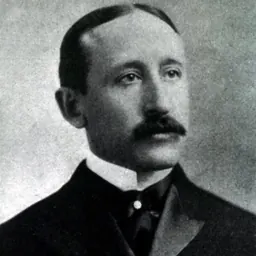


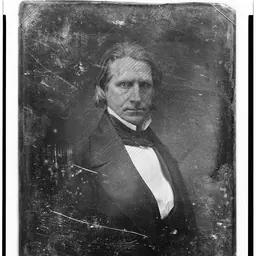

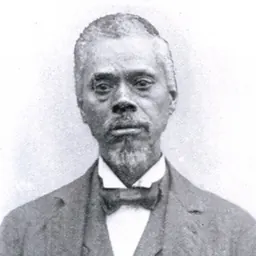

Related people
Same field, nearest in time
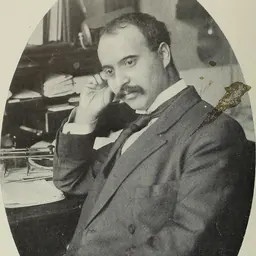



Contemporaries
People whose lives overlapped Eugene W. Caldwell's



Frequently asked questions
Who was Eugene W. Caldwell?
American engineer, radiographer and physician (1870–1918)
When was Eugene W. Caldwell born?
Eugene W. Caldwell was born on 3 December 1870 in Savannah.
When did Eugene W. Caldwell die?
Eugene W. Caldwell died on 20 June 1918 in New York City.
What was Eugene W. Caldwell's occupation?
Eugene W. Caldwell was a radiologist, engineer and teacher.
What was Eugene W. Caldwell known for?
Eugene W. Caldwell was known for Caldwell's view.
What nationality was Eugene W. Caldwell?
Eugene W. Caldwell was American.
Sources & further reading
· Wikipedia: Eugene W. Caldwell
Cite this page
APA: Biography.guide. (2026). Eugene W. Caldwell. https://biography.guide/eugene-w-caldwell/
MLA: "Eugene W. Caldwell." Biography.guide, https://biography.guide/eugene-w-caldwell/.
Chicago: "Eugene W. Caldwell." Biography.guide. https://biography.guide/eugene-w-caldwell/.
Data last updated: 2026-09-25 · Spot an error? Report a correction.
Page generated 2026-09-27 05:10 UTC