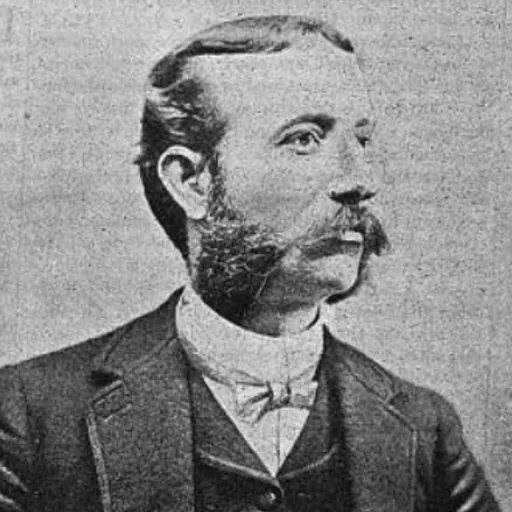
Eugene S. Bonelli
American musician and surgeon
About Eugene S. Bonelli
Eugene Salvadore Bonelli (September 1853 – November 24, 1912) was an American composer, pianist, music educator, and surgeon. Trained as a musician in Germany, he had a short career as a concert pianist in Europe before relocating first to South America and then the United States. After working as a musician and music teacher in Boston he relocated to San Francisco where he founded the Grand Conservatory of Music in 1890.
In addition to working as a professor of music, he studied medicine at Cooper Medical College (now Stanford University School of Medicine; then part of the University of the Pacific). He became a nationally known practitioner of a type of elective tenotomy surgery performed on the hands of musicians with the intent of improving the strength, mobility and flexibility of the ring finger. This type of surgery was popular in the United States among pianists during the 19th century and continued with less frequency into the 20th century. in Saint Thomas, West Indies. At the age of 12 he was sent by his parent to Europe to pursue training as a musician in Germany; studying in Hamburg, Berlin and Leipzig. He began his career as a concert pianist in Europe, but ill health led him to abandon a performance career in favor of teaching and composing. He relocated from Boston to San Francisco in 1879. He founded a music school on Market St in 1886. In 1889 Bonelli patented an exercising device for musicians, and his teaching method for pianists involved using mechanical devices to assist in developing technique.
Bonelli studied at Cooper Medical College in San Francisco (now Stanford University School of Medicine) with the intent of better understanding the anatomy of the hand. While several sources of the period credit Bonelli with developing this method, and The Boston Globe among other publications.
The practice of tentomie surgeries on musicians declined around the year 1900, although it continued with less frequency in the 20th century. Historian Richard H. Dillon, stated that "Had Gaetano Merola not arrived on the scene, idiosyncratic San Francisco might have been stuck with the now-forgotten Professor E. S. Bonelli as the city’s most eminent early musician. He was both performer and instructor, with just a dash of quack doctor thrown in for good measure." His "La Danza Cuba" was published by C. N. Ditson & Co. in 1880.
Bonelli died in San Francisco on November 24, 1912. His marriage to Antonia A. A. Bonelli ended in divorce four years prior to his death.
Don’t just read it —
keep it.
Full-length biographies made to live with: read them, listen on the way to work, watch them tonight.
- E-book
- Audio
- Video
Instant download · yours to keep · every purchase keeps this site free
Frequently asked questions
Who was Eugene S. Bonelli?
American musician and surgeon (1853–1912)
Sources & further reading
· Wikipedia: Eugene S. Bonelli
Cite this page
APA: Biography.guide. (2026). Eugene S. Bonelli. https://biography.guide/eugene-s-bonelli/
MLA: "Eugene S. Bonelli." Biography.guide, https://biography.guide/eugene-s-bonelli/.
Chicago: "Eugene S. Bonelli." Biography.guide. https://biography.guide/eugene-s-bonelli/.
Data last updated: 2026-09-21 · Spot an error? Report a correction.
Portrait: Wikimedia Commons · author & licence
Page generated 2026-09-27 05:01 UTC