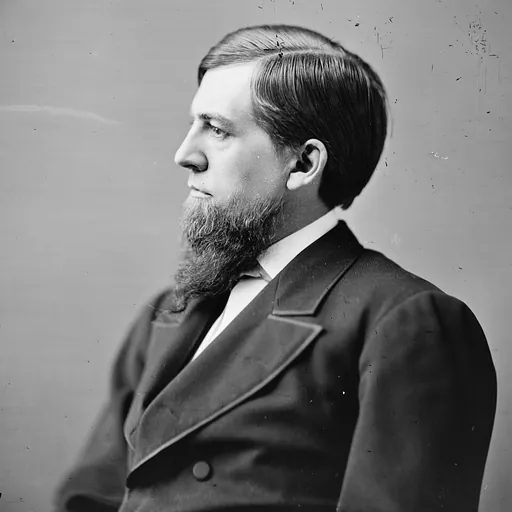
About Eugene Hale
Lived 1836 – 1918 (aged 82). Eugene Hale was an American politician, lawyer, prosecutor and jurist.
Eugene Hale (June 9, 1836 – October 27, 1918) was an American politician who was a Republican United States Senator from Maine.
Biography Born in Turner, Maine, he was educated in local schools and at Maine's Hebron Academy. He was admitted to the bar in 1857 and served for nine years as prosecuting attorney for Hancock County, Maine. He was elected to the Maine Legislature 1867–1868, to the U.S. House of Representatives 1869–1879, serving in the 41st and four succeeding Congresses. He was an unsuccessful candidate for reelection in 1878 to the 46th Congress.
Hale was served as a member of the National Monetary Commission. He was also a member of the Delta Kappa Epsilon fraternity (Theta chapter).
Blaine faction politics
During the 1876 United States presidential election, Hale, along with future senatorial colleague William P. Frye, served as campaign managers for James G. Blaine at the Republican National Convention. Following the election of Republican Rutherford B. Hayes as president following the Compromise of 1877, Blaine, who supported Hayes in the general election, requested the nomination of a New England Republican into a cabinet officer position. At the house of John Sherman, Blaine called for President Hayes to nominate Frye as United States Attorney General. Hayes instead offered to appoint Hale to a cabinet position, countering Blaine's wishes to succeed senator Hannibal Hamlin with Hale.
Hale was a member of the Blaine section, acolytes of James G. Blaine who expressed antipathy towards policies pursued by President Hayes. The faction, a part of the conservative wing of the Republican Party, particularly opposed Hayes' nomination of staunch reformer Carl Schurz to the position of United States Secretary of the Interior.
Although he declined the post of United States Secretary of the Navy in the Rutherford B. Hayes administration (and had previously declined a Cabinet appointment under Ulysses S. Grant), Senator Hale performed constructive work of the greatest importance in the area of naval appropriations, especially during the early fights for the "new Navy." "I hope," he said in 1884, "that I shall not live many years before I shall see the American Navy what it ought to be, the pet of the American people." Much later in his career, he opposed the building of large numbers of capital ships, which he regarded as less effective in proportion to cost and subject to rapid obsolescence.
In the 1880 United States presidential election, Blaine once again sought the presidency. Hale and Frye once again became his lieutenants in the campaign. competed with Frye for the open seat. Due to Frye then having still retained his House seat in contrast to Hale not being office at the time, the latter was given the Senate post. Frye later succeeded Blaine to serve in the Senate, and the two became colleagues in the upper chamber.
Hale received an LL.D. from Bates College in 1882. In 1883, Hale joined Hannibal E. Hamlin, the son of the former vice president, and started the small law firm Hale & Hamlin in Ellsworth, Maine, which is now recognized as Maine's oldest law firm.
Senatorial career, later life During the late 1890s, Hale and Senator George F. Hoar of Massachusetts were the most vocal opponents of American intervention into the ongoing insurrection in Cuba. Hale disdained expansionism and jingoism and often challenged claims made by senators on Cuban military victories and Spanish atrocities. He so frequently engaged in verbal jousts with Cuban sympathizers in the Senate that they unfairly accused him of parroting Spanish propaganda and called him "The Senator from Spain."
Hale retired from politics in 1911 and spent the remainder of his life in Ellsworth, Maine, and in Washington, D.C.. In 1914, he suffered a paralytic stroke. In December 1915, newspapers announced that he was "seriously ill of paralysis." He eventually died in Ellsworth in 1918 and is buried in Woodbine Cemetery.
Two ships were named USS Hale for him. He was the father of Frederick Hale, also a U.S. senator from Maine, and of diplomat Chandler Hale.
Gertrude Atherton's novel Senator North (1900) was based on Eugene Hale.
Don’t just read it —
keep it.
Full-length biographies made to live with: read them, listen on the way to work, watch them tonight.
- E-book
- Audio
- Video
Instant download · yours to keep · every purchase keeps this site free
Important facts
People in Eugene Hale's life
Named in this biography and alive at the same time

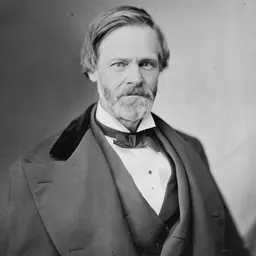
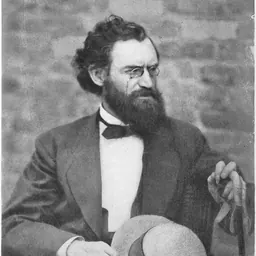
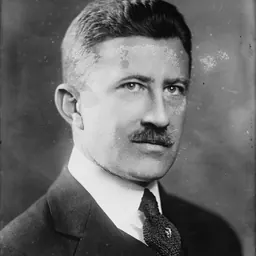



Related people
Same field, nearest in time




Contemporaries
People whose lives overlapped Eugene Hale's



Frequently asked questions
Who was Eugene Hale?
American politician (1836–1918)
When was Eugene Hale born?
Eugene Hale was born on 9 June 1836 in Turner.
When did Eugene Hale die?
Eugene Hale died on 27 October 1918 in Washington, D.C..
What was Eugene Hale's occupation?
Eugene Hale was a politician, lawyer, prosecutor and jurist.
What nationality was Eugene Hale?
Eugene Hale was American.
Sources & further reading
Cite this page
APA: Biography.guide. (2026). Eugene Hale. https://biography.guide/eugene-hale/
MLA: "Eugene Hale." Biography.guide, https://biography.guide/eugene-hale/.
Chicago: "Eugene Hale." Biography.guide. https://biography.guide/eugene-hale/.
Data last updated: 2026-09-20 · Spot an error? Report a correction.
Portrait: Wikimedia Commons · author & licence
Page generated 2026-09-27 04:58 UTC