
About Eugene Botkin
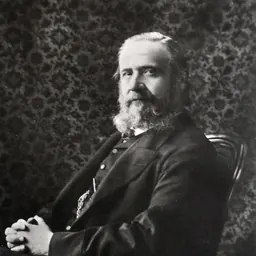
Lived 1865 – 1918 (aged 53). Eugene Botkin was a Russian physician.
Yevgeny Sergeyevich Botkin (; 27 March 1865 – 17 July 1918), commonly known as Eugene Botkin, was the court physician since 1908 for Emperor Nicholas II and Empress Alexandra. He sometimes treated the Tsarevich Alexei Nikolaevich of Russia for haemophilia-related complications, like in Spala in 1912.
Following the Russian Revolution of 1917, Botkin went into exile with the Romanov family, accompanying them to Tobolsk and Yekaterinburg in Siberia. He was murdered with the Imperial family by guards on 17 July 1918.
Like the Romanov family, Botkin was canonised in 1981 as a New Martyr by the Russian Orthodox Church Outside of Russia.
In 2000, the Russian Orthodox Church canonised the Romanov family as passion bearers. On 3 February 2016, the Bishop's Council of the Russian Orthodox Church canonised Botkin as Righteous Passion-Bearer Yevgeny the Physician.
Early life and career Botkin was born in the Saint Petersburg in the Russian Empire, the fourth son of Anastasia Alexandrovna (Krylova) and Sergey Botkin, who had been a court physician ("Leib Medik") since 1870 under Tsars Alexander II and Alexander III. His father is considered one of the founders of modern Russian medical science and education who introduced triage, pathological anatomy, and post mortem diagnostics into Russian medical practice.
Initially home educated he entered the 5th grade of The Second Saint Petersburg Gymnasium. Botkin followed his father in studying medicine, getting his degree at the S. M. Kirov Military Medical Academy on the properties of blood and doing additional studies at the universities of Berlin and Heidelberg (1890–1892, 1895). He served with distinction aboard the St. Georgievsky Red Cross hospital train and wrote notes on the Russo-Japanese War.
"From a very tender age, his beautiful and noble nature was complete," his brother Peter recalled later. "He was never like other children. Always sensitive, of a delicate, inner sweetness of extraordinary soul, he had a horror of any kind of struggle or fight. We other boys would fight with fury. He would not take part in our combats, but when our pugilism took on a dangerous character he would stop the combatants at risk of injuring himself. He was very studious and conscientious in his studies. For a profession he chose medicine: to help, to succour, to soothe, to heal without end."
After Botkin and the family were executed, White Army investigators found this unfinished letter by him. It was written in his quarters on the night of 16 July 1918:
The letter was interrupted when Yakov Yurovsky, the head of the command at the Ipatiev House knocked on Botkin's door. He ordered the entire Romanov party to dress and come downstairs, on the premise that there was gunfire in the town, and they were to be evacuated. But the entire family and their servants (including Botkin who volunteered) were murdered a short time later. Bulgarian "For Citizenship Award" 1981, canonised by Russian Church Outside of Russia as New Martyr. 2016, canonised by the Russian Orthodox Church as passion bearer.
Representation in other media Botkin features as a character in David Logan's (an Australian playwright) Ekaterinburg. It explores the time in captivity of the Romanovs and their retainers in the Ipatiev House in Ekaterinburg.
Botkin was featured in the 1971 film Nicholas and Alexandra, portrayed by Timothy West; as well as the 1996 television movie Rasputin: Dark Servant of Destiny where he was portrayed by David Warner.
Don’t just read it —
keep it.
Full-length biographies made to live with: read them, listen on the way to work, watch them tonight.
- E-book
- Audio
- Video
Instant download · yours to keep · every purchase keeps this site free
Important facts
Family & relationships
People in Eugene Botkin's life
Named in this biography and alive at the same time
Related people
Same field, nearest in time




Contemporaries
People whose lives overlapped Eugene Botkin's



Frequently asked questions
Who was Eugene Botkin?
Court physician for Tsar Nicholas II
When was Eugene Botkin born?
Eugene Botkin was born on 27 May 1865 in Pushkin.
When did Eugene Botkin die?
Eugene Botkin died on 17 July 1918 in Yekaterinburg.
What was Eugene Botkin's occupation?
Eugene Botkin was a physician.
What nationality was Eugene Botkin?
Eugene Botkin was Russian.
Sources & further reading
Cite this page
APA: Biography.guide. (2026). Eugene Botkin. https://biography.guide/eugene-botkin/
MLA: "Eugene Botkin." Biography.guide, https://biography.guide/eugene-botkin/.
Chicago: "Eugene Botkin." Biography.guide. https://biography.guide/eugene-botkin/.
Data last updated: 2026-09-25 · Spot an error? Report a correction.
Page generated 2026-09-27 05:12 UTC