About Eugène Atget
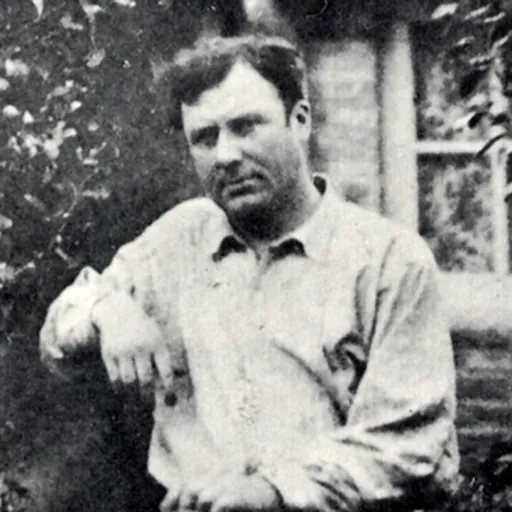
Lived 1857 – 1927 (aged 70). Eugène Atget was a French photographer and architectural photographer.
Eugène Atget (; 12 February 1857 – 4 August 1927) was a French flâneur and a pioneer of documentary photography, determined to document all of the architecture and street scenes of Paris before their disappearance to modernization. studies for painters, architects, and stage designers.
Starting in 1898, institutions such as the Musée Carnavalet and the Bibliothèque historique de la ville de Paris bought his photographs. The latter commissioned him ca. 1906 to systematically photograph old buildings in Paris. In 1899 he moved to Montparnasse.
While still a photographer, Atget also called himself an actor, giving lectures and readings.
During World War I Atget temporarily stored his archives in his basement for safekeeping and almost completely gave up photography. Valentine's son Léon was killed at the front.
In 1920–21, he sold thousands of his negatives to institutions. Financially independent, he took up photographing the parks of Versailles, Saint-Cloud and Sceaux and produced a series of photographs of prostitutes.
Later years and creative heritage Berenice Abbott, while working with Man Ray, visited Atget in 1925, bought some of his photographs, and tried to interest other artists in his work. She continued to promote Atget through various articles, exhibitions, and books, and sold her Atget collection to the Museum of Modern Art in 1968.
In 1926, Atget's partner Valentine died, and Atget himself died in Paris on 4 August 1927. — before he ever saw the full-face and profile portraits that Abbott took of him that same year, showing him "slightly stooped...tired, sad, remote, appealing". cited a fragment of Atget's correspondence with Paul Léon—a professor at the Collège de France, an official of the Commission on Historical Monuments, and a senior figure in the French Ministry of Culture—showing that Atget sold 2,600 negatives for 10,000 francs. This was one of his largest lifetime sales, though not his only one.
Photographic practice
The beginning of photography and photography of Paris Atget took up photography in the late 1880s, around the time that photography was experiencing unprecedented expansion in both commercial and amateur fields.
Atget photographed Paris with a large-format wooden bellows camera with a rapid rectilinear lens, an instrument that was still current when he took it up, but which he continued to use even after hand-held, more efficient large-format cameras became available. The optical vignetting often seen at some corners of his photographs is due to his having repositioned the lens relative to the plate on the camera—exploiting one of the features of bellows view cameras as a way to control perspective and keep vertical forms straight. The negatives show four small clear rebates (printing black) where clips held the glass in the plate-holder during exposure. The glass plates were 180×240mm Bande Bleue (Blue Ribbon) brand with a general purpose gelatin-silver emulsion, fairly slow, that necessitated quite long exposures, resulting in the blurring of moving subjects seen in some of his pictures. Interest in Atget's work has prompted the recent scientific analysis of Atget's negatives and prints in Parisian collections and in the Philadelphia Museum of Art. which was left out in the sun to expose. The frame permitted inspection of the print until a satisfactory exposure was achieved, then Atget washed, fixed, and toned his print with gold toner, as was the standard practice when he took up photography.
Atget did not use an enlarger, and all of his prints are the same size as their negatives. Prints would be numbered and labelled on their backs in pencil, then inserted by the corners into four slits cut in each page of the albums. Additional albums were assembled based on specific themes that might interest his clients, and separately from series or chronology. On this view, his work's significance rests on the arrangement of the images into a sequential series as much as on any single picture. The scale is central: the exceptional number of photographs (about 10,000) together with the systematic archival principle he applied. The idea of the corpus as a single work informed the landmark exhibition Maria Morris Hambourg and John Szarkowski prepared at MoMA, an approach also supported by Rosalind Krauss and others. He framed the winding streets to show the historic buildings in context, rather than making frontal architectural elevations. architects, interior decorators, builders and their artisans skilled in ironwork, wood panelling, door knockers, also painters, engravers, illustrators, and set designers, jewellers René Lalique and Weller, antiquarians and historians, artists including Tsuguharu Foujita, Maurice de Vlaminck and Georges Braque, well-known authors, editors, publishers Armand Colin and Hachette, and professors, including the many who donated their own collections of his photographs to institutions. The address book lists also contacts at publications, such as L'Illustration, Revue Hebdomadaire, Les Annales politiques et litteraires, and l'Art et des artistes. Institutional collectors of Old Paris documents, including archives, schools, and museums, were also a keen clientele and brought him commercial success, with commissions from the Bibliotèque Historique de la Ville de Paris in 1906 and 1911 and the sale of various albums of photographs to the Bibliotèque Nationale.
Atget's photographs attracted the attention of, and were purchased by, artists such as Henri Matisse, Marcel Duchamp and Picasso in the 1920s, as well as Maurice Utrillo, Edgar Degas and André Derain, and were likely made with the assistance of his photographs bought from the photographer for a few cents.
By the end of his career, Atget had worked methodically and concurrently on thirteen separate series of photographs including 'Landscape Documents', 'Picturesque Paris', 'Art in Old Paris', 'Environs', 'Topography of Old Paris', 'Tuileries', 'Vielle France', 'Interiors', 'Saint Cloud', 'Versailles', 'Parisian Parks', 'Sceaux' and a smaller series on costumes and religious arts, returning to subjects after they had been put aside for many years. He published several of Atget's photographs in his La Révolution surréaliste; most famously in issue number 7, of 15 June 1926, his Pendant l'éclipse made fourteen years earlier and showing a crowd gathered at the Colonne de Juillet to peer through various devices, or through their bare fingers, at the Solar eclipse of 17 April 1912. Atget however did not regard himself as a Surrealist. When Ray asked Atget if he could use his photo, Atget said: "Don't put my name on it. These are simply documents I make." Man Ray proposed that Atget's pictures of staircases, doorways, ragpickers, and especially those with window reflections (when foreground and background mix and mannequins look ready to step out ), had a Dada or Surrealist quality about them.
Abigail Solomon Godeau described some of Atget's photographs as surrealist. Benjamin views Atget as a forerunner of surrealist photography, effectively making him a member of the European avant-garde. In his understanding, Atget is a representative of a new photographic vision, and not a master of idyllic photographs of 19th-century Paris. He names Atget as the discoverer of the fragment that will become the central motif of the New Vision photograph. Benjamin notes that Atget liberates photography from the "aura" characteristic of both early 19th-century photography and classical works of art. Benjamin would go on to further investigate this topic (and Atget's work) in his essay "The Work of Art in the Age of Mechanical Reproduction".
Recognition in America
After Atget's death, his friend, the actor André Calmettes, sorted his work into two categories: 2,000 records of historic Paris, and photographs of all other subjects. He gave the former to the French government; he sold the others to the American photographer Berenice Abbott,
Atget created a comprehensive photographic record of the look and feel of nineteenth-century Paris just as it was being dramatically transformed by modernization, and its buildings were being systematically demolished.
When Berenice Abbott reportedly asked him whether the French appreciated his art, he responded, "No, only young foreigners." he had, since 1900, as counted by Alain Fourquier, 182 reproductions of 158 images in 29 publications and had sold, between 1898 and 1927 and beyond the postcards he published, sometimes more than 1000 pictures a year to public institutions including the Bibliothèque Nationale, Bibliothèque Historique de la Ville de Paris, Musée Carnavalet, Musée de Sculpture Comparé, École des Beaux-Arts, the Directorate of Fine Arts and others.
During the Depression in the 1930s, Abbott sold half of her collection to Julian Levy, who owned a gallery in New York. She exhibited, printed and wrote about his work, and assembled a substantial archive of writings about his portfolio by herself and others. Abbott published Atget, Photographe de Paris in 1930, the first overview of his photographic oeuvre and the beginning of his international fame. She also published a book with prints she made from Atget's negatives: The World of Atget (1964). Berenice Abbott and Eugene Atget was published in 2002. The Museum of Modern Art purchased the Abbott/Levy collection of Atget's work in 1968. MoMA published a four-volume series of books based on its four successive exhibitions of Atget's life and work, between 1981 and 1985.
In 2001, the Philadelphia Museum of Art acquired the Julien Levy Collection of Photographs, the centerpiece of which is a group of 361 photographs by Atget. Many of these photographs were printed by Atget himself and purchased by Levy directly from the photographer. Others came into Levy's possession when he and Berenice Abbott entered into a partnership to preserve Atget's studio in 1930. Eighty-three prints in the Levy Collection were made posthumously by Abbott as exhibition prints, produced directly from Atget's glass negatives. Additionally, the Levy Collection included three of Atget's photographic albums, which the photographer himself crafted. The most complete is an album of domestic interiors titled Intérieurs Parisiens Début du XXe Siècle, Artistiques, Pittoresques & Bourgeois. The other two albums are fragmentary. Album No. 1, Jardin des Tuileries has only four pages still intact, and the other lacks a cover and title but contains photographs from numerous Parisian parks. In total, the Philadelphia Museum of Art holds approximately 489 objects attributed to Atget.
Atget, a Retrospective was presented at the Bibliothèque Nationale of Paris in 2007.
The Atget crater on the planet Mercury is named after him, as is Rue Eugène-Atget in the 13th arrondissement of Paris.
Although no statement by Atget about his technique or aesthetic approach survives, he did sum up his life's work in a letter to the Minister of Fine Arts;
Copyright The U.S. Library of Congress was unable to determine the ownership of the twenty Atget photographs in its collection, International Center of Photography – New York, NY International Photography Hall of Fame – St. Louis, MO The J. Paul Getty Museum – Los Angeles, CA Bisazza Foundation, Vicenza, Italy,
Gallery
Don’t just read it —
keep it.
Full-length biographies made to live with: read them, listen on the way to work, watch them tonight.
- E-book
- Audio
- Video
Instant download · yours to keep · every purchase keeps this site free
Important facts
more
Eugene Atget, Jean-Eugene Atget, James Eugene AtgetPeople in Eugène Atget's life
Named in this biography and alive at the same time





Related people
Same field, nearest in time

Contemporaries
People whose lives overlapped Eugène Atget's






Frequently asked questions
Who was Eugène Atget?
French photographer (1857-1927)
When was Eugène Atget born?
Eugène Atget was born on 12 February 1857 in Libourne.
When did Eugène Atget die?
Eugène Atget died on 4 August 1927 in 14th arrondissement of Paris.
What was Eugène Atget's occupation?
Eugène Atget was a photographer and architectural photographer.
What nationality was Eugène Atget?
Eugène Atget was French.
Sources & further reading
Cite this page
APA: Biography.guide. (2026). Eugène Atget. https://biography.guide/eugene-atget/
MLA: "Eugène Atget." Biography.guide, https://biography.guide/eugene-atget/.
Chicago: "Eugène Atget." Biography.guide. https://biography.guide/eugene-atget/.
Data last updated: 2026-09-23 · Spot an error? Report a correction.
Portrait: Wikimedia Commons · author & licence
Page generated 2026-09-27 05:07 UTC