
Eugene A. Ford
American Engineer
About Eugene A. Ford
Lived 1866 – 1948 (aged 82).
Eugene Amzi Ford (May 21, 1866 - September 4, 1948) was an inventor who was instrumental in the development of the Hollerith punch card machines and became the first chief engineer for IBM. Even though he had no formal technical training, he made lasting contributions to the development of machines that could count large volumes of data at scale, marking the key link between the Industrial Revolution and the computing era. As the first head of research and development, the long line of inventors and distinguished engineers from IBM can trace their corporate lineage back to Eugene Ford.
Early life
Eugene A. Ford was born and raised in Kosciusko, Mississippi, to John Nicholas Ford and Elizabeth Boyd. Details of his early life are not clear, but it appears he was part of the Mississippi branch of the Ford family, unrelated to the Michigan Ford family, which produced Henry Ford.
Career
Accounts of his early career indicate he was the inventor of a device to measure the distance of land without the need for a chain. The device used pegs on a wheel to connect with a counting device that would incrementally keep track of the distance each time the peg connected with the counter. This idea appeared to spring from his own work as a "chain man" on a Texas surveying crew. While not a commercial success, it led him to a relationship with the Taft-Peirce manufacturing company of Woonsocket, Rhode Island.
Through this relationship, he met his wife, Sarah Imogene Sayles, from nearby Uxbridge, Massachusetts, where he settled and started a family.
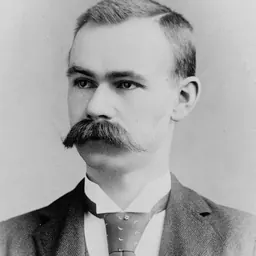
Also through his contact with Taft-Peirce, he became acquainted with Herman Hollerith, who had invented early punch card systems. The two began a working relationship where Ford would work to refine and improve the designs, and provide the technical oversight for the manufacture of these early machines at the Taft-Peirce factory in Woonsocket. To facilitate his work, Ford kept a lab in Uxbridge.
Over time, as Hollerith's business grew, it was acquired with other businesses to form what eventually became IBM. Ford stayed on through the acquisition and merger, with special permission to continue to work from Uxbridge, where he kept his lab running. Effectively, this became the first research and development lab for IBM. He continued to run the lab from Uxbridge until IBM eventually moved him and his family to New York City in 1914 at the request of IBM CEO Thomas J. Watson.
Patents Ford continued to refine and invent equipment for IBM through his career. In total, 89 patents were granted to Ford. Notable examples include: Type writing machine (1893) Friction Clutch (1913) Balanced internal-combustion motor (1915) Perforation-reading device for sorting machines (1927) Counter for Tabulating Machines (1932) Printing Counter for Sorting Machines (1933)
Don’t just read it —
keep it.
Full-length biographies made to live with: read them, listen on the way to work, watch them tonight.
- E-book
- Audio
- Video
Instant download · yours to keep · every purchase keeps this site free
Important facts
People in Eugene A. Ford's life
Named in this biography and alive at the same time




Contemporaries
People whose lives overlapped Eugene A. Ford's



Frequently asked questions
Who was Eugene A. Ford?
American Engineer (1866-1948)
When was Eugene A. Ford born?
Eugene A. Ford was born on 21 May 1866.
When did Eugene A. Ford die?
Eugene A. Ford died on 4 September 1948.
Sources & further reading
Cite this page
APA: Biography.guide. (2026). Eugene A. Ford. https://biography.guide/eugene-a-ford/
MLA: "Eugene A. Ford." Biography.guide, https://biography.guide/eugene-a-ford/.
Chicago: "Eugene A. Ford." Biography.guide. https://biography.guide/eugene-a-ford/.
Data last updated: 2026-09-20 · Spot an error? Report a correction.
Page generated 2026-09-27 05:23 UTC