About Étienne Beudant
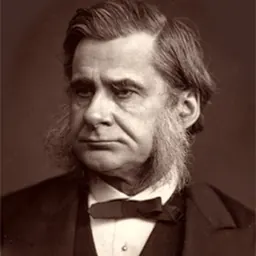
Lived 1863 – 1949 (aged 85). Étienne Beudant was a French military officer.
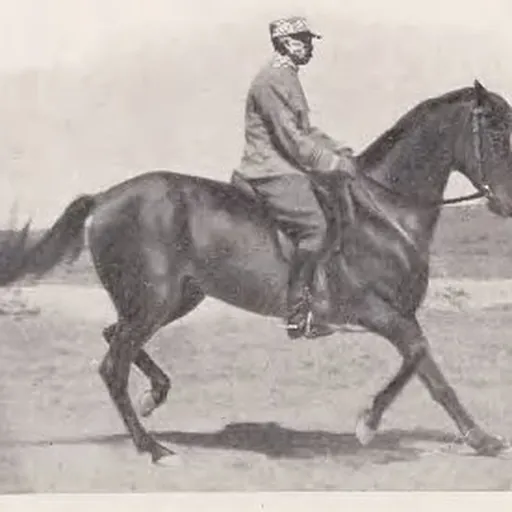
Étienne Beudant (1863–1949), nicknamed "l'écuyer mirobolant" by General Decarpentry, was a French equestrian. He studied riding with Faverot de Kerbrech, then became a cavalry officer at Saumur, following in the footsteps of François Baucher. During his military career, he distinguished himself by training many difficult horses that no one else could ride. He published on the subject of horses in North Africa during his tour of duty there. After becoming a captain and being seriously wounded in 1917, he retired to Dax in 1920. There, he trained his mare Vallerine until his health prevented him from riding.
Beudant's talent was noted by other equestrians, both contemporaries and non-contemporaries, including his pupil René Bacharach, Patrice Franchet d'Espèrey, and General Donnio. Writer Jérôme Garcin dedicated a novelized biography to him, entitled L'Écuyer mirobolant, which won the Prix Pégase in 2011.
Biography
Étienne Pierre François Arthur Marie Beudant was born in the 16th arrondissement of Paris on 30 December 1863. He is the son of Albert Beudant and his wife, née Marie Charey.
He joined the 23rd Dragoon Regiment as a volunteer in 1883, where he met and watched him workhorses (including the famous Bouton d'Or) until the summer of 1885. He was not initiated directly by Faverot but was trained according to Baucher's famous precept of "hands without legs, legs without hands" by Lieutenant Wagner. He was also fortunate enough to receive training notes from General Faverot, passed on to him by another lieutenant. He observed the general a great deal himself and reported on this in his later writings. In particular, he applied the "hand without legs, legs without hands", Trained at Saumur Cavalry School as a cavalry officer, Beudant belongs to the line of French Baucherist equestrians "of the last manner".
He was promoted to brigadier, then to fourrier in 1884. From maréchal des logis in 1885, he became a cadet at Saumur in 1887, then second lieutenant in the 24th Dragons Regiment in 1888, and lieutenant in the in 1891. During his years as an officer, he tamed some twenty stubborn horses that no other soldier could manage to ride. In 1892, he spent a year in Montana, and the following year became administrator of a mixed commune in French Algeria. In 1901, he became captain of the 5th regiment of African chasseurs. During his career in North Africa, he published several studies on Arabian, Barb, and Tunisian horses. According to his testimony, throughout his military career, his superiors criticized him for riding too much. In his fictionalized biography, writer Jérôme Garcin describes him as a secretive, non-careerist man, a "little captain, with no ambition other than the derisory one of making his horses prouder". On 12 January 1916, he was made a Knight of the Legion of Honor. In 1927, having become too old to ride, Beudant entrusted his mare to his friend Captain Bernard, with an 81-page letter that constitutes a "veritable instruction manual for horses" and a "remarkable effort at transmission", At the end of his life, he was in constant pain from his injuries but, according to Bacharach, who met him at the time, maintained a noble attitude and "lit up at the mention of his horses". He died on 16 January 1949 in Dax. including: Vieux Jeu II, a thoroughbred (1908–1910) "full of faults and restive", also trained for the outdoors; Robertsart II (1910–1916), an Anglo-Barb, his most famous horse, who requires six men to hold him before he can be ridden. Ridden in show jumping, he won in cross-country and steeplechase; Mabrouk (1914–1916), an entire Barb "impossible to ride in line" and reformed, who became a good outdoor and high school horse; Iris, bay Anglo-Arabian gelding (1915–1916), trained for racing and steeplechasing; Nethou II, an Anglo-Arabian gelding (1916–1917) nicknamed "le splendide"; Vallerine, an Anglo-Arabian mare (1925–1927) whom Beudant trained to a very high level at the end of his life, despite his physical suffering, and with whom he felt "he had achieved and surpassed the goal he had set himself".
Recognition
His talent and skill on horseback were praised by some of his contemporaries, General Decarpentry said of him: "Beudant is the most miraculous squire I have ever met – I have not known an executor who could compare with him – I saw Mabrouk and his haute-école work was beyond belief". In 1920, he sent him a letter in which he spoke of Étienne Beudant as a true equerry, a virtuoso of the equestrian art, comparing himself to a simple riding teacher.
Veterinary colonel Monod (director of the troops' veterinary service and head of breeding in Morocco) acknowledges "absolute self-control, unfailing patience, firmness combined with gentleness, sustained observation, sound judgment, impeccable posture – all these qualities Beudant possesses to such a degree that in the training of his horses, misfires are unknown". General Henrys, commander-in-chief in Morocco from 1915 to 1916, said: "I have seen all the great horsemen of my generation work, including General l'Hotte. None of them left me with the impression of Beudant's ideal perfection. that it would be "a joy to be criticized by a Master like him" (Danloux)
Precepts
Beudant is a very humble and rather discreet horse rider, for whom "a method is only as good as the results it gives". He pays constant tribute to the master riders who preceded him and whose precepts he applies, but he does not agree with all of them. For example, he disagreed with Faverot de Kerbrech on the subject of bringing back, which he reserved for the high school for a time, before proposing to do without it altogether in his Dressage du cheval de selle. He took a particular approach to high school work, considering that leaning and shoulder-in were useless and dangerous diversions and that easing and side-stepping were unnecessary. Instead, he works on the straightness of the horse's hips and shoulders, an approach derived from military riding. For him, "the key to the mysteries of learned equitation is the lightness obtained without taking anything from the impulsion". In his book Extérieur et haute école, he asserts that "everywhere, therefore, in outdoor riding as in high school, success belongs to he who best applies to the horse the maxim of Baucher, the inimitable artist who amazed his contemporaries (General L'Hotte): 'Let him believe he is his master, and then he is our slave'. That, in my opinion, is the equestrian truth".
Respect for the horse One aspect of Beudant's equestrian teaching lies in his principles of respect for the horse, the search for natural attitudes and the simplification of aids, in line with ethological riding at the beginning of the 21st century. Like his pupil René Bacharach, he was ahead of his time.
He gave the horse as much freedom as possible, attempting to "imitate nature" to help it regain its attitude. His whole approach is based on the idea of acting as little as possible as a rider, to let the horse act as much as possible on its own. In Extérieur et Haute École, he talks about his "principles of dressage which want the horse to be light in the spurs as well as in the hand, which do not admit shifts in attitude as aids, and which let the horse act on his own as soon as he has been given the position". Beudant speaks of teaching horses as an instructive game, a salutary exercise that never leads to fatigue. and that the majority of faults come from the rider, who attacks the effects rather than seeking the cause of his horse's reluctance.
He also advises the rider to step back and allow the horse to act on its own and position itself according to its equilibrium. According to René Bacharach's testimony, Beudant has acquired a very controlled position in the saddle, demonstrating great ease, with a very deep seat that allows him to avoid using his legs at all. The fixed hand, combined with the impulse in the legs and spurs, is also enough, according to him, to render softening unnecessary. Télérama describes it as a "meditative and uncluttered" novel. Le Nouvel Observateur sees Jérôme Garcin as a novelist who depicts the destiny of the squire "with the graces of an orientalist painter, perfectly paced prose, and the admiration of a disciple anxious to make a master known". According to Patrice Franchet d'Espèrey, Garcin "develops a portrait of incredible verisimilitude". In 2011, the novel was awarded the Prix Pégase Cadre Noir with the distinction "Art et littérature", in recognition of Beudant's emotional reading and image of sensitivity and modesty.
Don’t just read it —
keep it.
Full-length biographies made to live with: read them, listen on the way to work, watch them tonight.
- E-book
- Audio
- Video
Instant download · yours to keep · every purchase keeps this site free
Important facts
People in Étienne Beudant's life
Named in this biography and alive at the same time

Related people
Same field, nearest in time




Contemporaries
People whose lives overlapped Étienne Beudant's



Frequently asked questions
Who was Étienne Beudant?
French officer (1863–1949)
When was Étienne Beudant born?
Étienne Beudant was born on 30 December 1863 in 16th arrondissement of Paris.
When did Étienne Beudant die?
Étienne Beudant died on 12 January 1949 in Dax.
What was Étienne Beudant's occupation?
Étienne Beudant was a military officer.
What nationality was Étienne Beudant?
Étienne Beudant was French.
Sources & further reading
Cite this page
APA: Biography.guide. (2026). Étienne Beudant. https://biography.guide/etienne-beudant/
MLA: "Étienne Beudant." Biography.guide, https://biography.guide/etienne-beudant/.
Chicago: "Étienne Beudant." Biography.guide. https://biography.guide/etienne-beudant/.
Data last updated: 2026-09-23 · Spot an error? Report a correction.
Portrait: Wikimedia Commons · author & licence
Page generated 2026-09-27 05:06 UTC