
About Ethel Moorhead
Lived 1869 – 1955 (aged 85). Ethel Moorhead was a British painter, suffragette and painting.
Ethel Agnes Mary Moorhead (28 August 18694 March 1955) was a British suffragette and painter and was the first suffragette in Scotland to be forcibly-fed.
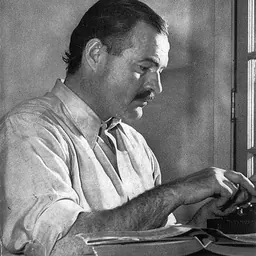
She was also a patron of This Quarter, a journal published by Ernest Walsh. The journal featured writers such as Ernest Hemingway, James Joyce and Ezra Pound.
Early life Moorhead was born on 28 August 1869 in Fisher Street, whom he had married in India, at Madras Roman Catholic Cathedral on 9 September 1864.
Her maternal grandfather was Captain John Goulin Humphreys, a Napoleonic Wars veteran and in an earlier generation one of her mother's family (Pierre Goulin) fought in the 1690 Battle of the Boyne. and four of her brothers were doctors, as were several male members of her father's family. from his time in India in the post-mutiny years to being promoted to Surgeon-Major when Moorhead was just four years old. The family then moved temporarily to Pitalpin House, Lochee and in 1907 moved into the newly built 'The Wiesha ' at Hazel Drive, Dundee, where Moorhead was able to have a studio. and in Whistler's studio, the Atelier Carmen, between October 1898 and April 1901, with fellow Dundee painter, Janet Oliphant, Moorhead returned to Dundee and set up a portrait studio with Oliphant where she worked for fifteen years, in The Arcade, 4 King Street. In the following year the Dundee branch of the Women's Freedom League congratulated her on becoming Dundee's first tax-resister. The women found guilty were taken straight to Holloway Prison where Moorhead noted in her memoirs Incendiaries, that the bed was a 'board for sleeping on had a blanket decorated with arrowheads, the badge of the condemned.' Due to lack of evidence from the shopkeepers, she was one of those who were released after the trial.
At her trial 'Johnston" said 'she was not guilty but approved of the woman who had done it.' and “Your liberties were won with the sword. That sword was a mere symbol just as the stones and hammers with which women are fighting for their freedom and which they shall win." about her treatment on remand for protesting for women's suffrage, about the prison conditions, lack of respect from the staff and about the cruelty of the force-feeding. and a postcard bearing the words: 'A protest against Mrs Pankhurst's re-arrest'. In this trial, Moorhead tried to object that the judge had misdirected the jury and she was removed for contempt of court, but brought back to hear the sentence of eight months imprisonment. At this point she turned to the sympathetic suffragette attendees and shouted "No Surrender" which resulted in chaos in the court as others joined in shouting, throwing apples, singing aloud The Marseillaise and so three more arrests were made. The Glasgow Herald ran a cartoon titled 'Hallowe'en at the High Court'.
Having been force fed more than 25 times, over a week or so, Moorhead become seriously ill with double pneumonia, and had even been given absolution by the prison chaplain. was said by Allan to be a revenge for Moorhead's treatment. Her prison force feeding experiences – duly related to the presscaused much protest at the cruelty involved. Her treatment and resultant activism was raised in Parliament, the Secretary of State asked on two occasions about the treatment and 'her life being endangered'. Moorhead escaped by bicycle as Fanny was said to have allowed herself to be arrested to save her friend. And the silk lined box has imprinted in gold lettering:'Presented to Ethel Agnes Moorhead in recognition of a gallant action whereby through endurance to the last extremity of hunger and hardship a great principle of political justice was vindicated.'
Other campaigning and later life During the First World War, Moorhead took on additional organisational responsibilities. Together with Fanny Parker, she helped run the Women's Freedom League (WFL) National Service Organisation, encouraging women to find appropriate war work from an office at 144 High Street, Holburn, London. Little more is known until she died in Dublin in 1955.
Legacy A commemorative plaque has been placed close to the site of her studio in Dundee (site of the King Street Arcade at the corner of King Street and St Roque’s Lane, near the underpass).
A film based on her life is available for private view at the National Library of Scotland.
The Scottish Records Office has Moorhead's prison-related correspondence,
In 2014 a public street in Perth, Ethel Moorhead Place, was named after her. An adjacent street, Frances Gordon Road, was named after fellow suffragette Frances Gordon.
In 2024, a housing development in Hilltown, Dundee was completed which included a pedestrian street named Moorhead Street, commemorating Ethel Moorhead.
Don’t just read it —
keep it.
Full-length biographies made to live with: read them, listen on the way to work, watch them tonight.
- E-book
- Audio
- Video
Instant download · yours to keep · every purchase keeps this site free
Important facts
People in Ethel Moorhead's life
Named in this biography and alive at the same time


Related people
Same field, nearest in time

Contemporaries
People whose lives overlapped Ethel Moorhead's




Frequently asked questions
Who was Ethel Moorhead?
British suffragette and painter (1869-1955)
When was Ethel Moorhead born?
Ethel Moorhead was born on 28 August 1869 in Maidstone.
When did Ethel Moorhead die?
Ethel Moorhead died on 4 March 1955 in Blackrock.
What was Ethel Moorhead's occupation?
Ethel Moorhead was a painter, suffragette and painting.
What nationality was Ethel Moorhead?
Ethel Moorhead was British.
Sources & further reading
Cite this page
APA: Biography.guide. (2026). Ethel Moorhead. https://biography.guide/ethel-moorhead/
MLA: "Ethel Moorhead." Biography.guide, https://biography.guide/ethel-moorhead/.
Chicago: "Ethel Moorhead." Biography.guide. https://biography.guide/ethel-moorhead/.
Data last updated: 2026-09-22 · Spot an error? Report a correction.
Page generated 2026-09-27 05:05 UTC