
Ethel Cutler Freeman
American amateur anthropologist
About Ethel Cutler Freeman
Lived 1886 – 1972 (aged 85–86). Ethel Cutler Freeman was a cultural anthropologist and anthropologist, known for Seminole.
Ethel Cutler Freeman (1886 – 14 July 1972) was an American amateur anthropologist and the first female trustee of the American Institute of Anthropology. She is best known for her research of Seminole culture on the Big Cypress Indian Reservation in Henry County, Florida. During her career, she also conducted fieldwork with other Native American communities, including the Arapaho, Shoshoni, Navajo, Hopi, and Kickapoo. before studying abroad at Mademoiselle Marie Souvestre's Academy for Girls in England. She married Leon S. Freeman, a New York stockbroker, in 1909 after returning to the United States. Hanson founded the Seminole Indian Association in Fort Myers in 1913 and was a trusted friend to those Seminole Indians living on the Big Cypress Reservation, a reservation established by the Bureau of Indian Affairs where the Everglades and the Big Cypress Swamp meet. The Big Cypress Reservation was roughly 42,000 acres where Mikasuki- and Muscogee-speaking Seminole lived after Mikasuki-speaking Seminole were removed from drainable land near the Tamami Trail Billie collaborated with Densmore at the Musa Isle Trading Post in 1931 and 1932, recording 63 folk songs. American ethnologist William Sturtevant also recorded Seminole folk songs performed by Billie in 1951. Like Freeman, Sturtevant studied changes in myths related to acculturation and contact with surrounding white settlements.
Between 1944 and 1946, Freeman conducted fieldwork among other tribes in North America, visiting the Southwestern United States and Mexico to study the Arapaho, Shoshone, Navajo, Choctaw, and Hopi tribes. Between 1946 and 1948, Freeman continued her winter field work among the Florida Seminole. At the same time, Freeman also published studies about the Seminole Indians for the Department of Agriculture. Freeman also delivered a paper, "The Correlation between Directed Culture Change and Self Determination," at the 7th International Congress of Anthropological and Ethnological Sciences in Moscow in 1964, and delivered another talk, "Lawlessness in an Indian Tribe as a Microcosm of a World Trend" at the same conference in Kyoto and Tokyo in 1965.
In addition to continuing her work among the Seminole, Freeman conducted fieldwork throughout her last few years of life in Portugal. In 1968 and 1972, the American Museum of Natural History funded Freeman to travel to Portugal to study traditional Portuguese clothing.
Selected bibliography
Freeman, Ethel Cutler. "We live with the Seminoles." Natural History, vol. 46 (1942): 226–236. Freeman, Ethel Cutler. "The Seminole Woman of the Big Cypress and Her Influence in Modern Life." América Indigena, vol. 4, no. 2 (1944): 123–128. Freeman, Ethel Cutler. "Our unique Indians, the Seminoles of Florida." American Indian, vol. 2, no. 2 (1945): 14–28. Freeman, Ethel Cutler. "Culture Stability and Change Among the Seminoles of Florida." In Men and Cultures: Selected Papers of the Fifth International Congress of Anthropological and Ethnological Sciences, edited by Anthony F. C Wallace, 249–54. Philadelphia: University of Pennsylvania Press, 1960. Freeman, Ethel Cutler. "The Happy Life in the City of Ghosts: An Analysis of a Mikasuki Myth." The Florida Anthropologist 14, no. 1 & 2 (1961): 23–33. Freeman, Ethel Cutler. "Directed Culture-Change and Selfdetermination in Superordinate and Subordinate Societies," Proceedings of the 7th International Congress of Anthropological and Ethnological Sciences 4, Moscow (August 1964): 85–90. Freeman, Ethel Cutler. "Two Types of Cultural Response to External Pressures Among the Florida Seminoles," Anthropological Quarterly 38, no. 2 (April 1965): 55–61. Freeman, Ethel Cutler. "An Early Mikasuki Mortar." Florida Anthropologist 20 (1967): 89–91. Freeman, Ethel Cutler. "Lawlessness in an Indian Tribe as a Microcosm of a World Trend," Proceedings of the 8th International Congress of Anthropological and Ethnological Sciences 5, Tokyo and Kyoto (1968): 191–193.
Don’t just read it —
keep it.
Full-length biographies made to live with: read them, listen on the way to work, watch them tonight.
- E-book
- Audio
- Video
Instant download · yours to keep · every purchase keeps this site free
Important facts
People in Ethel Cutler Freeman's life
Named in this biography and alive at the same time
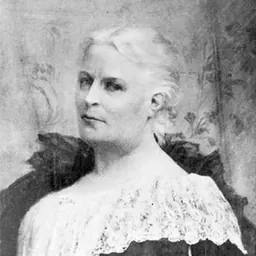
Related people
Same field, nearest in time





Contemporaries
People whose lives overlapped Ethel Cutler Freeman's
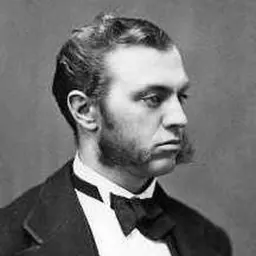


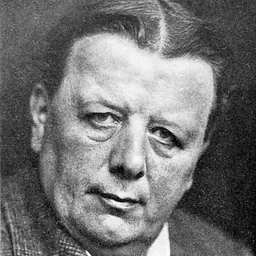
Frequently asked questions
Who was Ethel Cutler Freeman?
American amateur anthropologist
When was Ethel Cutler Freeman born?
Ethel Cutler Freeman was born in 1886 in Morristown.
When did Ethel Cutler Freeman die?
Ethel Cutler Freeman died on 14 July 1972 in Morristown, New Jersey.
What was Ethel Cutler Freeman's occupation?
Ethel Cutler Freeman was a cultural anthropologist and anthropologist.
What was Ethel Cutler Freeman known for?
Ethel Cutler Freeman was known for Seminole.
Sources & further reading
· Wikipedia: Ethel Cutler Freeman
· DBpedia: Ethel Cutler Freeman
Cite this page
APA: Biography.guide. (2026). Ethel Cutler Freeman. https://biography.guide/ethel-cutler-freeman/
MLA: "Ethel Cutler Freeman." Biography.guide, https://biography.guide/ethel-cutler-freeman/.
Chicago: "Ethel Cutler Freeman." Biography.guide. https://biography.guide/ethel-cutler-freeman/.
Data last updated: 2026-09-20 · Spot an error? Report a correction.
Page generated 2026-09-27 05:11 UTC