
About Esfir Shub
Lived 1894 – 1959 (aged 65). Esfir Shub was a Russian film director, film editor, screenwriter and documentary filmmaker.
Esfir Ilyinichna Shub (; 16 March 1894, Surazh, Russian Empire – 21 September 1959, Moscow, Soviet Union), also referred to as Esther Il'inichna Shub, was a pioneering Soviet filmmaker and editor in both the mainstream and documentary fields. She is best known for her trilogy of films, Fall of the Romanov Dynasty, The Great Road (1927), and The Russia of Nicholas II and Leo Tolstoy (1928). Shub is credited as the creator of compilation film, and is known for her revolutionary approaches to editing and assembling preserved and archived footage.
Early life and education Shub was born on March 16, 1894, into a Jewish family of landowners in the town of Surazh, in Chernigov Governorate of the Russian Empire. Shub was born into a lower middle class family. Her father, Ilya Roshal, was a pharmacist. Shub's mother died when she was a young child and was also known to have one brother. She travelled to Moscow before the Russian Revolution.
By the mid-1910s, Shub had settled in Moscow to begin her study of literature at the Higher Courses for Women.
Career After moving to Moscow, Shub became involved in the Soviet avant-garde world, specifically in constructivist theatre. Shub edited a wide range of films. Noted is her first work, a complete re-editing of Charlie Chaplin's 1916 film Carmen, which was the first Chaplin film ever to be seen in the Soviet Union. In 1918, after working as Vsevolod Meyerhold’s private secretary in the Soviet administration at the head office of the TEO Theatre Department of the Narkompros (People’s Commissariat of Education), she began collaborating with the stage director Vsevolod Meyerhold and poet Vladimir Mayakovsky on several theatrical projects. During this time she also became involved with the Left Front of the Arts (LEF) group.
Goskino In 1922, Shub began her film career at Goskino, the major Soviet state-owned film company. There she worked as an editor, in charge of censoring imported foreign films for domestic distribution, rendering these films “suitable” for Soviet audiences.
The Fall of the Romanov Dynasty (1927) In 1927, Shub released her first documentary, Padenie dinastii Romanovykh. She was commissioned to commemorate the tenth anniversary of the October Revolution. and to provide the first visual record of the Russian Revolution. The Fall of the Romanov Dynasty is one of Shub’s most famous surviving films and what many film historians classify as the first compilation film or Soviet montage. Originally titled February, screenwriter Mark Tseitlin and Esfir Shub collaborated on this documentary-style film centered around the decline of the Russian monarchy.
The movie is made up of stock and archived footage that Shub meticulously preserved and reused. Shub traveled to Leningrad in 1926 to obtain the footage she needed for the film, spending two months examining more than 60,000 meters of film (much of which was damaged) and chose 5,200 meters to take back to Moscow. The film covers the years 1912 to 1917, recounting the moments before, after and during World War I, and then ending with the October Revolution. It is notable for its use of intertitles, which provide historical context and commentary on the events depicted in the footage as well as help guide viewers through the beginning of the end of the Romanov dynasty. This technique, along with her portrayal of the Romanov family, effectively demonstrates the stark contrast between the lavish lifestyle of the aristocracy and the struggles of the working class. Film theorist Alla Gadassik suggests that without her intervention in "sourcing, untangling and preserving neglected rolls of film, it is highly likely that none of this footage would survive the following decades."
Critical reception Eisenstein's October(1928), which was also commissioned for the tenth anniversary of the event, was criticized by LEFists (Soviet art journalists), for being 'too personal,' while deeming the impersonality of Shub's work more exemplary for the Revolution. Soviet film theorists praised Shub’s invisible authority as truly revolutionary, for it was consumed effectively as propaganda. Sergei Emolinsky, a constructivist critic associated with Soviet art journal, LEF, praises both Shub and Vertov equally for their different attitudes towards documentary film. He explains that while, “Vertov ‘threw himself on the given material, cutting it into numerous pieces, thus subordinating it to his imagination...Shub regarded each piece [shot] as to a self-sufficient, autonomous entity’.” This first-hand critique of the two methods indicate that Shub’s dedication to journalistic cinematography was the catalyst for what documentary film classifies today, compilation film.
Later works In 1927 Shub published the article "Rabota Montazhnits" or "The Work of Montagesses," which outlined the labour of women in editing. The Russia of Nicholas II and Lev Tolstoi (1928) Today (1930) Komsomol – Leader of Electrification (1932) Spain (1939) The Native Country (1942) On the Other Side of the Araks (1946)
Don’t just read it —
keep it.
Full-length biographies made to live with: read them, listen on the way to work, watch them tonight.
- E-book
- Audio
- Video
Instant download · yours to keep · every purchase keeps this site free
Important facts
People in Esfir Shub's life
Named in this biography and alive at the same time
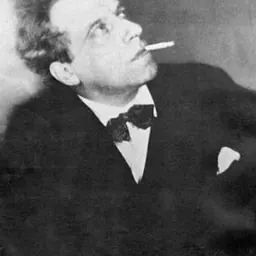
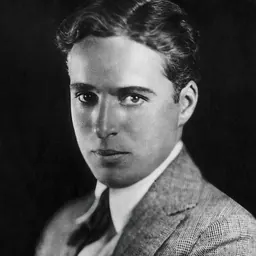
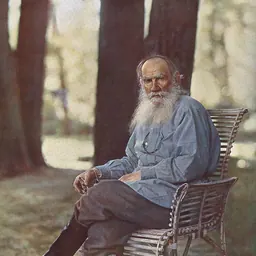


Related people
Same field, nearest in time
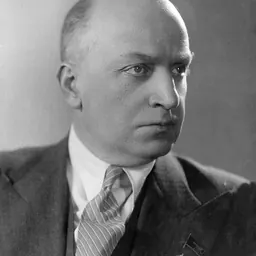



Contemporaries
People whose lives overlapped Esfir Shub's

Frequently asked questions
Who was Esfir Shub?
Soviet film director and film editor (1894-1959)
When was Esfir Shub born?
Esfir Shub was born on 16 March 1894 in Surazh.
When did Esfir Shub die?
Esfir Shub died on 21 September 1959 in Moscow.
What was Esfir Shub's occupation?
Esfir Shub was a film director, film editor, screenwriter and documentary filmmaker.
What nationality was Esfir Shub?
Esfir Shub was Russian.
Sources & further reading
Cite this page
APA: Biography.guide. (2026). Esfir Shub. https://biography.guide/esfir-shub/
MLA: "Esfir Shub." Biography.guide, https://biography.guide/esfir-shub/.
Chicago: "Esfir Shub." Biography.guide. https://biography.guide/esfir-shub/.
Data last updated: 2026-09-26 · Spot an error? Report a correction.
Page generated 2026-09-27 05:16 UTC