
About Ervin L. Jordan, Jr.
Ervin L. Jordan, Jr. was an archivist and genealogist.
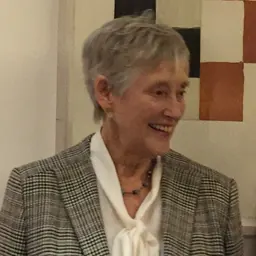
Ervin L. Jordan Jr. is an American archivist, historian, scholar, author, and educator. He is an associate professor and research archivist at the University of Virginia, Albert and Shirley Small Special Collections Library. He has published several books and articles and book chapters in others' works and served as a historian-consultant for novels as well as delivering lectures, conducting workshops and curating exhibitions on the American Civil War, Virginia history, and African American history. Jordan has appeared on television several times as a consulting historian regarding African American history and genealogy and delivered lectures at conferences, universities and public events, some which were televised on C-CPAN. He has been praised for his research in Civil War African American and Virginia history, and is among the leading figures in developing, promoting and disseminating Black American history, culture and literature.
Education Born and raised in Norfolk, Virginia, the son of Carrie and Ervin Sr., Jordan attended the city's racially segregated public schools. His family's first college graduate, he earned history degrees and graduated with honors from Norfolk State University and Old Dominion University. Jordan demonstrated an early commitment to writing and scholarship, contributing articles and poetry to his high school and college newspapers. As an Old Dominion University graduate student, he delivered his first public presentation as an emerging historian at the 1979 Phi Alpha Theta Regional Meeting in Williamsburg, Virginia. His paper, "The Golden Moment: Benjamin A. Bidlack and the Treaty With New Granada, 1845–1849," examined Bidlack's role in negotiating the 1846 Treaty of New Granada, a pivotal agreement that expanded U.S. influence in the region that would later become Panama.
Career In 1979, Jordan began working as an archivist at the University of Virginia. Since then, he has held several different positions including university records manager and curator of technical services. His current responsibilities involve outreach, reference, answering research inquiries, processing and organizing manuscript collections, acquisitions recommendations, and special projects work. In 2003, Jordan was named the senior consulting archivist on the University of Virginia's possible collaboration with the University of Botswana. These papers (1848-2001, 38 cubic feet) encompass "the development of black studies during the 1960s; the 19th century American South; the Civil War and Reconstruction; and life as an African American student and faculty member at Yale, the State University of New York, the University of Rochester, UCLA, and the University of Virginia from the 1960s through the 1990s."
Throughout his career Jordan has written about African American history, especially during the Civil War. In a 2017 interview with John Coski of the American Civil War Museum, Jordan explained the legacy and power of the war's monuments and statues:There are an estimated 13,000 Civil War memorials in the United States. Far too often throughout American history, statues and civic spaces have been ostensibly weaponized as a means of empowerment or oppression. Unquestionably, Confederate monuments reflect the politicized racial attitudes of their communities but in this case somebody's heroes are usually someone else's villains. Many Americans consider them racist because they openly honor secessionist proslavery war heroes--and traitors. None denounces slavery. Given the current pugnacious political climate, we must understand why Confederate monument defenders stridently praise those who defended slavery and secession while a new interracial post-civil rights generation demands their removal as evocative of sanctified traitors, racist slaveholders and white supremacy.
Jordan's main contribution to Civil War scholarship is his 1995 book Black Confederates and Afro-Yankees in Civil War Virginia which examines the roles of African Americans on both sides of the conflict. His focus is Confederate Virginia, as it had more African-Americans before the Civil War than any other state. His work explains their significance in the Civil War and shaping the American consciousness. It covers both enslaved and free blacks as well as Confederate and Union black soldiers. One comprehensive study of the war said of Black Confederates: "Jordan's book is unique in the literature on the southern home front . . . he is the first historian to attempt a comprehensive portrait of slaves and free blacks within a Confederate state. . . The most provocative parts of Jordan's book deal with those slaves who stayed loyal to the Confederacy."
Jordan's scholarship has been influential in the study of African American military history and the role of Black Southerners during the Civil War. Scholars have frequently cited his landmark work Black Confederates and Afro-Yankees in Civil War Virginia (1995), particularly his observation that "African-American history is not for the squeamish," a statement that has been noted for its recognition of the complexity and often uncomfortable realities of the historical record. Subsequent works by other scholars, including Racist Symbols and Reparations: Philosophical Reflections on Vestiges of the American Civil War (1998) and Unsung Patriots: African Americans in America's Wars (2023), reflect its continuing impact on scholarship concerning African Americans in military history, race relations, and Civil War studies.
Affiliations Jordan is a member of professional organizations including the Society of American Archivists, the Organization of American Historians, Phi Alpha Theta, the Association for the Study of African American Life and History (ASALH), the Mid-Atlantic Regional Archives Conference (MARAC) and the Virginia Association of Government Archives and Records Administrators (VAGARA). He has served on local and private, state and federal boards and commissions including the (Virginia) State Historical Records Advisory Board, the Jamestown-Yorktown Board of Trustees, the Board of Trustees of the Virginia Museum of Natural History, Virginia Sesquicentennial of the American Civil War Commission Advisory Council, the Gettysburg Foundation Board of Directors and the Gettysburg Foundation Historians Council, the Supreme Court of Virginia Historical Commission, the Somerset Place Foundation Board of Directors, the Advisory Committee on African-American Interpretation at Monticello (home of Thomas Jefferson, 3rd U. S. president), a senior advisor to the Norfolk State University Board of Visitors, Old Dominion University's General Review Board), the Virginia American Revolution 250 Commission (VA250) African American Advisory Council, the Jamestown-Yorktown Foundation 2019 Commemoration Steering Committee and, the President's Commission on Slavery and the University.
Jordan is also a founding and current member of the Society of American Archivists' (SAA) Archivists and Archives of Color Roundtable (formerly the African-American and Third World Archivists Roundtable). He is passionate about the importance of diversity in archives and explains in an interview with the SAA Newsletter, Archival Outlook:...though we like to think of the 21st century as one of ever-increasing globalization and an increasingly culturally diverse society, as an African American I'm concerned by the persistence of racism in the archival workplace. I've lectured on this subject at conferences and am a long-standing member of SAA's Archivists & Archives of Color Roundtable. We should not just define diversity. We must practice and embrace it.
He has also been a guest speaker for numerous panels, conferences and events, some televised by C-SPAN, concerning African American history, genealogy, the Civil War, slavery and related historical topics.
In 2018, he was appointed by UVA President Teresa A. Sullivan to join the President's Commission on the University in the Age of Segregation.
Honoree, 11th Annual Donning of the Kente Ceremony, University of Virginia Office of African-American Affairs (2015), as one of two African American faculty members honored for outstanding contributions and dedication to students in the University community.
Virginia Service Recognition Award, Commonwealth of Virginia (2019), presented by the Governor of Virginia for "40 years of service to the University of Virginia and the Commonwealth of Virginia" and exemplary public service.
Outstanding Contributor Award, University of Virginia Library Staff Council Recognition Awards (2016, 2023), for exemplary service and specialized research assistance provided to faculty, staff, students, visiting scholars, and community members.
Publications Selected Verse: Love Poems, Nature Poems, Songs of Youth, Sermons in Poetry, 1973 (poetry contributor) Norfolk Virginian-Pilot, 1973-1979 (letters to the editor concerning contemporary and historical issues) "Balch Family Papers," Fram: The Journal of Polar Studies Volume 1 (Winter 1984) (article) The American Archivist vol. 50, Spring 1987 (book review) 19th Virginia Infantry (Virginia Regimental Histories Series), 1987 (co-author) Charlottesville and the University of Virginia in the Civil War (Virginia Battles and Leaders Series), 1988 (author) Shaman: A Novel, 1992 (historian-consultant) Black Southerners in Gray, 1994 (contributor) Black Confederates and Afro-Yankees in Civil War Virginia (University of Virginia Press), 1995 (author) The African American Odyssey (Library of Congress), 1998 (chapter contributor) Charlottesville, An African-American Community, 1998 (historian-consultant) Jacob's Ladder: A Story of Virginia During the War, 1998 (novel; historian-consultant) New Perspectives on the Civil War: Myths and Realities of the National Conflict, 1998 (chapter contributor) Footsteps: African American History, premier issue, 1999 (consulting editor) Oxford Companion to American Military History, 1999 (contributor) In View of the Great Want of Labor: A Legislative History of African American Conscription in the Confederacy, 1999 (foreword) Library of Congress Civil War Desk Reference, 2002 (advisory board and manuscript editor) Virginia's Civil War (University of Virginia Press), 2005 (chapter contributor) Virginia at War, 1861 (University Press of Kentucky), 2005 (chapter contributor) The Greatest Virginians: Examining the Commonwealth's History Through Its People, 2008 (contributor) Voices from within the Veil: African Americans and the Experience of Democracy (Cambridge Scholarly Publishing), 2008 (chapter contributor) Virginia at War, 1865 (University Press of Kentucky), 2012 (chapter contributor) The Key to the Door: Experiences of Early African American Students at the University of Virginia (University of Virginia Press), 2017 (chapter contributor) The Founding of Thomas Jefferson's University (Jeffersonian America Series, University of Virginia Press), 2019 (chapter contributor) The Buried Cause: Unearthing Hidden History in the Lee Monument Cornerstone (University of Virginia Press), 2026 (chapter contributor) "The Great Willoughby Slave Escape of 1776" (Encyclopedia Virginia, Virginia Humanities), 2026 (entry author)
His other works include blogs, book reviews, essays and articles which have appeared in news magazines, academic journals and encyclopedias such as The Encyclopedia of the United States in the Nineteenth Century, The Journal of American History, The Journal of Southern History, The Western Journal of Black Studies, Footsteps: African American History, The Social Studies, Voices from within the Veil: African Americans and the Experience of Democracy, Vinegar Hill Magazine, The Virginia Magazine of History and Biography, The Dictionary of Virginia Biography, and Encyclopedia Virginia biographical sketches of Afro-Virginian Reconstruction politicians. Among his publications is a blog post of letters of an anonymous family of Confederate women trapped by the Union Navy's blockade of Galveston, Texas , and an essay blog and subsequent book chapter of Black residents' responses to Richmond, Virginia's Robert E. Lee Monument, 1890s-2000s, and why similar monuments remain emotively relevant and controversial in the re-contextualization of history and public memory in twenty-first century America. In 2026 he published an analysis of a major example of slave self‑emancipation in Revolutionary War Virginia in the form of the collective escape of a Tidewater plantation's entire enslaved workforce, several ultimately finding refuge by navigating precarious paths to freedom in Afro‑Atlantic communities in New York, Nova Scotia, and Sierra Leone, "a significant instance of African American resistance during the American Revolution, formerly enslaved people . . . redefined their lives and sought equal liberty."
Don’t just read it —
keep it.
Full-length biographies made to live with: read them, listen on the way to work, watch them tonight.
- E-book
- Audio
- Video
Instant download · yours to keep · every purchase keeps this site free
Important facts
Related people
Same field, nearest in time

Frequently asked questions
Who was Ervin L. Jordan, Jr.?
American historian
What was Ervin L. Jordan, Jr.'s occupation?
Ervin L. Jordan, Jr. was an archivist and genealogist.
Sources & further reading
· Wikipedia: Ervin L. Jordan, Jr.
· DBpedia: Ervin L. Jordan Jr.
Cite this page
APA: Biography.guide. (2026). Ervin L. Jordan, Jr.. https://biography.guide/ervin-l-jordan-jr/
MLA: "Ervin L. Jordan, Jr.." Biography.guide, https://biography.guide/ervin-l-jordan-jr/.
Chicago: "Ervin L. Jordan, Jr.." Biography.guide. https://biography.guide/ervin-l-jordan-jr/.
Data last updated: 2026-09-20 · Spot an error? Report a correction.
Page generated 2026-09-27 05:07 UTC