
About Ernst Sellin
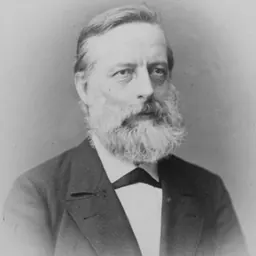
Lived 1867 – 1946 (aged 78–79). Ernst Sellin was a German archaeologist, university teacher, non-fiction writer, hebrew Bible scholar and protestant theologian.
Ernst Sellin (26 May 1867 in Alt Schwerin – 1 January 1946 in Epichnellen bei Eisenach) was a German Protestant theologian.
Sellin studied theology and oriental languages. During 1897–1908 he taught at the Protestant faculty of theology in Vienna, during 1908–1913 at the University of Rostock, during 1913–1921 in Kiel and in 1921–1935 in Berlin.
Sellin was Old Testament scholar and a pioneer of application of archaeology into Biblical sciences. With his excavations in Ta'anakh he initiated and led one of the first excavations of a ″tell″ in Palestine/Land of Israel (there he also found cuneiform tablets from about the 15th cent. BCE, that were edited by Bedřich Hrozný); together with others he also conducted excavations in Jericho and Shechem.
Sellin's description of the two places of Jericho, one being the old city mentioned in the Book of Joshua and other passages, and the other the new Roman city, allows a possible explanation of an alleged contradiction between the gospels of Mark and Luke, i.e. whether Jesus healed a blind man on the way to or after arriving in the city of Jericho (Luke 18:35 and Mark 10:46). As the two "Jerichos" were about a mile apart, one may understand that Jesus left Luke's Jericho and was arriving at Mark's Jericho when this took place.
Sellin's main topic was the study of the Old Testament in historical, religio-historical and theological perspectives. Probably his most successful book was his Einleitung in das Alte Testament from 1910, which was updated and expanded by himself (until 7th. ed. 1935) and later on by others until 12th. ed. 1979 (Engl. translation: Introduction to the OT, 1923). He also tried to apply the results from archaeology to the history of ancient Israel. In his exegesis of the book of (Deutero-)Isaiah he related the suffering servant to Moses and concluded that Moses would have died as martyr by his own people. This idea in turn was taken up by Sigmund Freud.
Selected works Beiträge zur Israelitischen und Jüdischen Religionsgeschichte. Leipzig 1896, volume 2 1897. – Contribution to Israelite and Jewish religious history. Studien zur Entstehungsgeschichte der jüdischen Gemeinde nach dem babylonischen Exil. 2 volumes, Leipzig 1901. Tell Ta‘annek. Bericht über eine mit Unterstützung der kaiserlichen Akademie der Wissenschaften und des k. k. Ministeriums für Kultus und Unterricht unternommene Ausgrabung in Palästina, Wien 1904; reprint in: S. Kreuzer (ed.), Taanach / Tell Ta‛annek. 100 Jahre Forschungen zur Archäologie, zur Geschichte, zu den Fundobjekten und zu den Keilschrifttexten, Wiener Alttestamentliche Studien 5, Wien-Frankfurt am Main 2006, 131–270. Eine Nachlese auf dem Tell Ta‘annek in Palästina, Wien 1906; reprint in: S. Kreuzer (Hg.), Taanach / Tell Ta‛annek. 100 Jahre Forschungen zur Archäologie, zur Geschichte, zu den Fundobjekten und zu den Keilschrifttexten, WAS 5, Wien-Frankfurt am Main 2006, 271–317. Die biblische Urgeschichte, 1905 – Biblical prehistory. Das Rätsel des deuterojesajanischen Buches. Leipzig 1908, – The mystery of Deuterojesaja. Einleitung in das Alte Testament, Leipzig 1910, 12th edition 1979. – Introduction to the Old Testament.
Don’t just read it —
keep it.
Full-length biographies made to live with: read them, listen on the way to work, watch them tonight.
- E-book
- Audio
- Video
Instant download · yours to keep · every purchase keeps this site free
Important facts
People in Ernst Sellin's life
Named in this biography and alive at the same time
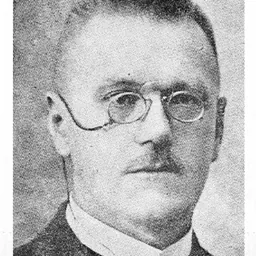
Related people
Same field, nearest in time

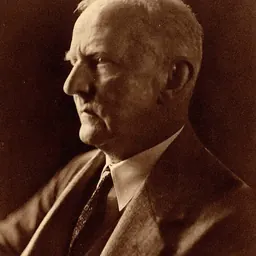


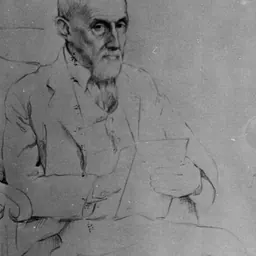

Contemporaries
People whose lives overlapped Ernst Sellin's
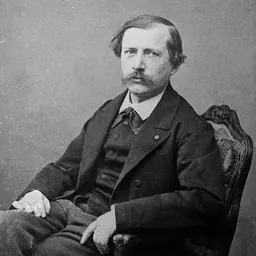


Frequently asked questions
Who was Ernst Sellin?
German theologian (1867–1946)
When was Ernst Sellin born?
Ernst Sellin was born on 26 May 1867 in Alt Schwerin.
When did Ernst Sellin die?
Ernst Sellin died in 1946 in Epichnellen.
What was Ernst Sellin's occupation?
Ernst Sellin was an archaeologist, university teacher, non-fiction writer, hebrew Bible scholar and protestant theologian.
What nationality was Ernst Sellin?
Ernst Sellin was German.
Sources & further reading
Cite this page
APA: Biography.guide. (2026). Ernst Sellin. https://biography.guide/ernst-sellin/
MLA: "Ernst Sellin." Biography.guide, https://biography.guide/ernst-sellin/.
Chicago: "Ernst Sellin." Biography.guide. https://biography.guide/ernst-sellin/.
Data last updated: 2026-09-26 · Spot an error? Report a correction.
Page generated 2026-09-27 05:16 UTC