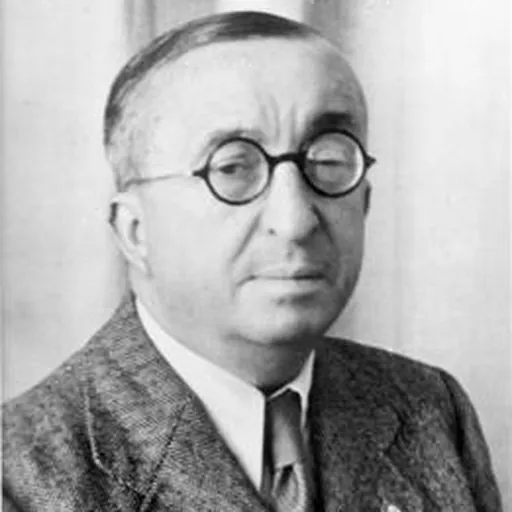
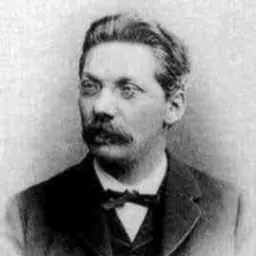
Ernst Heinkel
Aircraft designer and manufacturer
About Ernst Heinkel
Lived 1888 – 1958 (aged 70). Ernst Heinkel was a German military flight engineer, aerospace engineer, entrepreneur, mechanical engineer, physicist and engineer.
Dr. Ernst Heinkel (24 January 1888 – 30 January 1958) was a German aircraft designer, manufacturer, Wehrwirtschaftsführer in Nazi Germany, and member of the Nazi Party. His company Heinkel Flugzeugwerke produced the Heinkel He 178, the world's first turbojet-powered aircraft, and the Heinkel He 176, the first rocket aircraft.
Early life Heinkel was born in Grunbach, today a part of Remshalden. As a young man he became an apprentice machinist at a foundry. Heinkel studied at the Technical Academy of Stuttgart, where he initially became interested in aviation through a fascination with Zeppelins, and in 1909 attended an international airshow in Frankfurt am Main. He decided that flight was the future of transportation, and the following year he built his first aircraft, working from a set of plans by Henri Farman. Heinkel crashed it in 1911 and suffered severe injuries.
Albatros Flugzeugwerke Soon afterwards, he got a job at Luft-Verkehrs Gesellschaft (LVG), who were building Farman aircraft. From there, he went to Albatros. After the war Heinkel claimed to have designed the Albatros B.II, a successful reconnaissance and trainer aircraft used during the early stages of the First World War, but its main designer was in fact Robert Thelen. His aircraft were used by the Austro-Hungarian army and Germany's Kaiserliche Marine during the war. Japan was part of the inspection commission. Heinkel hid his aircraft in dunes behind his plant and they were never discovered during inspections. Heinkel Flugzeugwerke used forced Jewish labor, starting in 1941.
In 1943, the armaments authority finally ordered him to transform the company into "Ernst Heinkel AG". Heinkel retained two-thirds of the capital, but became chairman of the supervisory board. Heinkel moved to Vienna and started a new design bureau and corporate offices in Vienna's Schwechat suburb, establishing manufacturing facilities in Zwölfaxing and Floridsdorf as the Heinkel-Sud complex for his firm, the original Rostock-"Marienehe" plant (today's Rostock-Schmarl neighborhood) becoming the Heinkel-Nord facility. It was at the Heinkel-Sud offices that Dr. Heinkel worked on the Heinkel He 274 four-engined high-altitude heavy bomber design—as one of the trio of proposals for aircraft designs to succeed his firm's failed Heinkel He 177A heavy bomber—including an unbuilt Amerikabomber design—until the war's end concluded the production of the firm's Spatz single-seat jet fighter.
Post-war In July 1945 Heinkel was captured by American troops and held for possible exploitation and/or possible trial under Operation Dustbin, and was held for a time at Kransberg Castle, near Frankfurt.
With Germany forbidden from manufacturing aircraft by the Allies, Heinkel used his company's facilities to build private transportation. In 1953 Heinkel began production of the Tourist scooter, followed by the Perle moped in 1954. In 1956 he introduced the Heinkel Kabine bubble car. Bubble car and moped production ceased shortly after the restriction on aircraft manufacture was lifted, but scooter production continued until 1965. In 1959, Heinkel's company was sued by Edmund Bartl for being enriched by slave labour during World War II; however, the German Supreme Court dismissed his claims for filing too late, and ordered Bartl to pay court costs and attorney's fees.
Death and legacy Heinkel died in 1958 in Stuttgart. His autobiography, Stürmisches Leben, was published in 1956 and translated into English as He1000 in its British edition and Stormy Life: Memoirs of a Pioneer of the Air Age in its US edition.
In 1981, Heinkel was inducted into the International Air & Space Hall of Fame at the San Diego Air & Space Museum.
Don’t just read it —
keep it.
Full-length biographies made to live with: read them, listen on the way to work, watch them tonight.
- E-book
- Audio
- Video
Instant download · yours to keep · every purchase keeps this site free
Important facts
People in Ernst Heinkel's life
Named in this biography and alive at the same time

Related people
Same field, nearest in time

Contemporaries
People whose lives overlapped Ernst Heinkel's



Frequently asked questions
Who was Ernst Heinkel?
aircraft designer and manufacturer (1888-1958)
When was Ernst Heinkel born?
Ernst Heinkel was born on 24 January 1888 in Remshalden, Grunbach station.
When did Ernst Heinkel die?
Ernst Heinkel died on 30 January 1958 in Stuttgart.
What was Ernst Heinkel's occupation?
Ernst Heinkel was a military flight engineer, aerospace engineer, entrepreneur, mechanical engineer, physicist and engineer.
What nationality was Ernst Heinkel?
Ernst Heinkel was German.
Sources & further reading
Cite this page
APA: Biography.guide. (2026). Ernst Heinkel. https://biography.guide/ernst-heinkel/
MLA: "Ernst Heinkel." Biography.guide, https://biography.guide/ernst-heinkel/.
Chicago: "Ernst Heinkel." Biography.guide. https://biography.guide/ernst-heinkel/.
Data last updated: 2026-09-23 · Spot an error? Report a correction.
Portrait: Wikimedia Commons · author & licence
Page generated 2026-09-27 05:06 UTC