
About Ernesto García Cabral
Lived 1890 – 1968 (aged 77). Ernesto García Cabral was a Mexican caricaturist, television actor, painter, illustrator, film actor and cartoonist.
Ernesto García "El Chango" Cabral (Huatusco, Veracruz, 18 December 1890 – 8 August 1968) was a Mexican cartoonist and painter, famous for his contributions of caricatures to the publication Revista de Revistas; his work numbers almost 25,000 pieces.
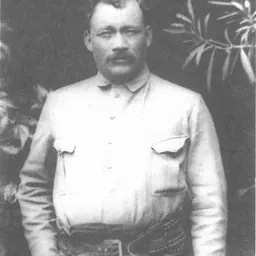
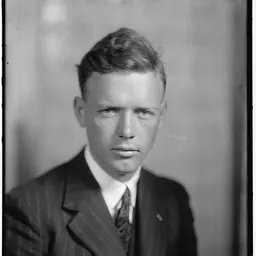
García Cabral was also an expert tango dancer, Greco-Romano wrestler, and pioneer of silent film. He was extremely social and knew famous personalities of his period including Enrico Caruso, Walt Disney, Charles Lindbergh, Dolores del Río and Mario Moreno ("Cantinflas").
Biography Born in Huatusco, Veracruz, García Cabral's first known work appeared in a newspaper in 1900. Because of his talent, he taught drawing at his school from the age of 12 years.
In December 1906 Huatusco mayor Joaquín Castro, wrote the governor of Veracruz, Teodoro A. Dehesa, seeking a scholarship for García Cabral, which once granted allowed him to enter the Academy of San Carlos, where he studied with Germán Gedovius, at the time an collaborator, and there García Cabral discovered classicism, as well as through the foreign currents that arrived in imported magazines. He began his professional career in 1909, as illustrator and caricaturist at The Tarantula, run at the time by Fortunato Herrerías, who later became one of his best friends. During the suppression of the lifting of Aquiles Serdán eyewitness to the facts, that later described telegráficamente to García Cabral so that it illustrated the report. These illustrations (10 in total) are the first known images of the Mexican Revolution.
In spite of this, when the revolution broke out, the publications of Herrerías and the works of García Cabral adopted a strong anti-maderista tone. Later García Cabral worked in 1911 at Mario Vitoria's Multicolor magazine, also anti-maderista. During the revolution, García Cabral drew caricatures of people like Francisco I. Madero, Enrique Creel, Pancho Villa, Bernardo Reyes, María Conesa and Emiliano Zapata. In February 1912 Madero awarded García Cabral a scholarship to study in Paris. In addition to his studies, García Cabral worked in France for the publications La Baïonnette, Le Rire and La Vie Parisienne, forced to do so by need when president Victoriano Huerta withdrew his scholarship.
Gradually developing his personal and dramatic style, in 1915 García Cabral left France in the middle of the deprivation caused by the wartime economy, making his way to Madrid, and from there to Buenos Aires, Argentina. He drew there for newspapers La Nación, El Mundial and El Tiempo; likewise he also worked for Caras y Caretas, I.G.B., Proteo and La Pluma, as well as the Chilean publications Revista Popular and Los Diez de Chile. It became added of the Mexican embassy in Argentina.
On his return to Mexico in 1918, Ernesto García Cabral devoted himself to working with colours and shortly afterwards worked as a caricaturist for Novelties, Thursday of Excélsior and Fufurufu, in addition to the magazine Fantoche. However it is his work as illustrator of covers for the publication of Magazine of Magazines the one who awarded him deserved fame, giving to know his innovative and fluent style that helped to enter the Art Deco to the American continent.
Eventually he would collaborate likewise for the magazines Today, Revista de Revistas, Ferronales, Icarus and Socrates among others. Winning in 1961 of the prize Mergenthaler conceded by the Inter-American Society of Press, the Chango Cabral died in Mexico City on 8 August 1968.
Filmography 1924 : Atavismo by Gustavo Sáenz de Sicilia 1926 : A drama in the aristocracy by Gustavo Sáenz de Sicilia 1965 : In this village there are not thieves by Alberto Isaac
Awards and honors Prize Ottmar Mergenthaler of the Presse Interaméricaine National prize of the Plastic Arts of Mexico
Don’t just read it —
keep it.
Full-length biographies made to live with: read them, listen on the way to work, watch them tonight.
- E-book
- Audio
- Video
Instant download · yours to keep · every purchase keeps this site free
Important facts
People in Ernesto García Cabral's life
Named in this biography and alive at the same time



Related people
Same field, nearest in time


Contemporaries
People whose lives overlapped Ernesto García Cabral's




Frequently asked questions
Who was Ernesto García Cabral?
Mexican caricaturist (1890-1968)
When was Ernesto García Cabral born?
Ernesto García Cabral was born on 18 December 1890 in Huatusco Municipality.
When did Ernesto García Cabral die?
Ernesto García Cabral died on 8 August 1968 in Mexico City.
What was Ernesto García Cabral's occupation?
Ernesto García Cabral was a caricaturist, television actor, painter, illustrator, film actor and cartoonist.
What nationality was Ernesto García Cabral?
Ernesto García Cabral was Mexican.
Sources & further reading
· Wikipedia: Ernesto García Cabral
· DBpedia: Ernesto García Cabral
Cite this page
APA: Biography.guide. (2026). Ernesto García Cabral. https://biography.guide/ernesto-garcia-cabral/
MLA: "Ernesto García Cabral." Biography.guide, https://biography.guide/ernesto-garcia-cabral/.
Chicago: "Ernesto García Cabral." Biography.guide. https://biography.guide/ernesto-garcia-cabral/.
Data last updated: 2026-09-20 · Spot an error? Report a correction.
Page generated 2026-09-27 05:24 UTC